
Guide to Daily Supplements for Joint Pain Relief

Finding relief from daily joint pain can feel like a constant uphill battle, especially when every step or movement becomes a challenge. Addressing mobility concerns matters because it directly affects independence and quality of life, particularly for women in the United States who want to stay active as they age. This guide empowers you to develop a personalized supplement strategy, backed by research on effective nutrients and practical steps for improving joint comfort and overall wellness.
Table of Contents
- Step 1: Assess Current Mobility And Wellness Needs
- Step 2: Identify Essential Nutrients For Joint Support
- Step 3: Select High-Quality Daily Supplements
- Step 4: Establish A Personalized Supplement Routine
- Step 5: Monitor Progress And Adjust As Needed
Quick Summary
| Key Point | Explanation |
|---|---|
| 1. Assess your mobility and wellness | Conduct a self-evaluation and consult a healthcare provider to understand current joint health and develop a personalized improvement strategy. |
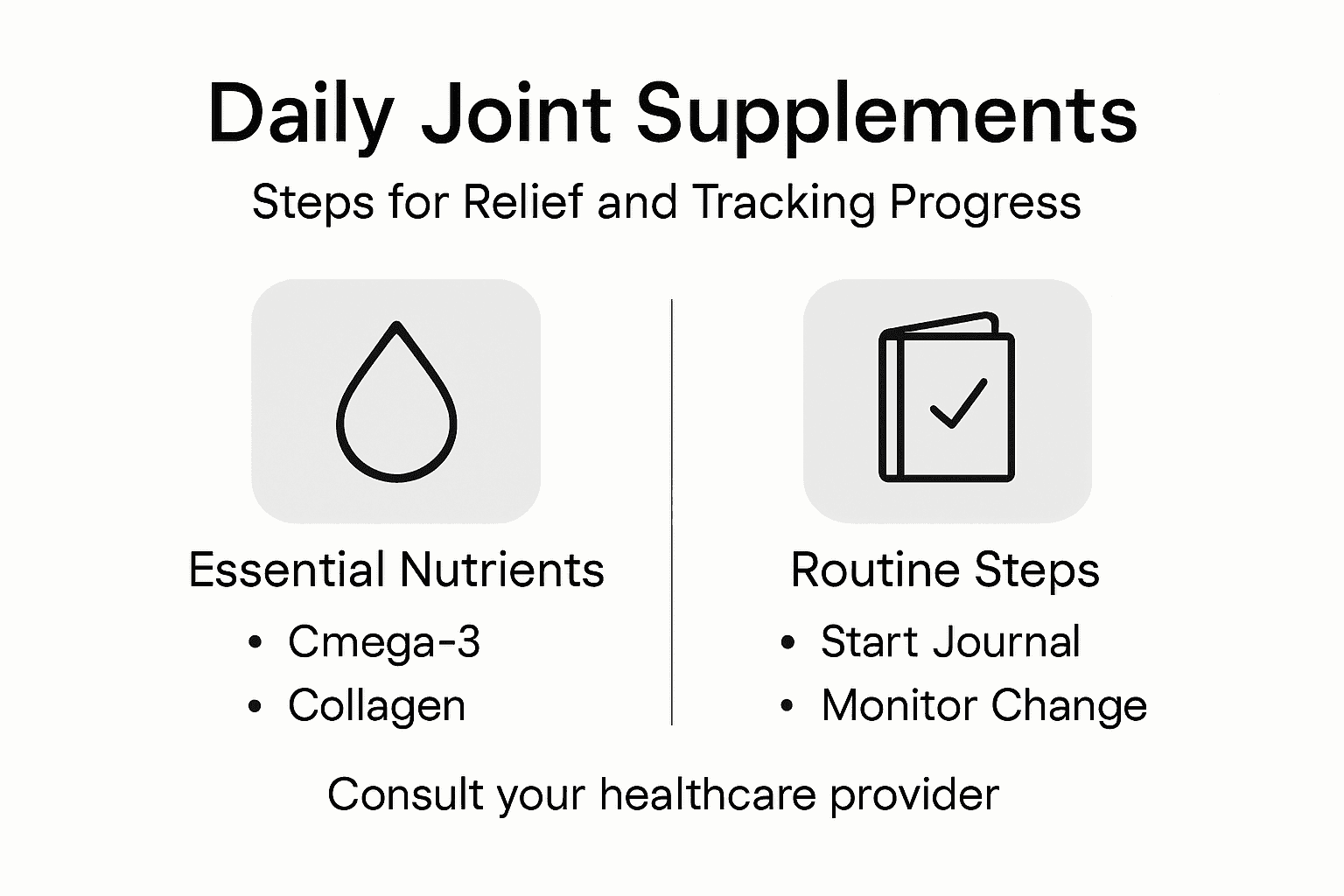
| 2. Identify nutrients for joint health | Focus on key nutrients like Omega-3 and Collagen that support joint wellness and discuss dietary options with your healthcare provider. |
| 3. Choose high-quality supplements | Select supplements based on third-party testing, transparency, and clinical research to ensure safety and effectiveness. |
| 4. Establish a consistent routine | Tailor a personalized supplement regimen that considers individual health needs and maintains communication with healthcare professionals. |
| 5. Monitor progress and adjust strategies | Regularly track symptoms and supplement effects, adjusting your routine as necessary in collaboration with your healthcare provider for optimal joint health management. |
Step 1: Assess current mobility and wellness needs
To take control of your joint health journey, you’ll need a comprehensive assessment of your current mobility and wellness status. This critical first step helps you understand exactly where you are and develop a personalized strategy for improvement.
Start by conducting a thorough self-evaluation of your physical capabilities and discomfort levels. Improving mobility requires understanding your current limitations before designing an effective intervention plan. Track these key indicators:
- Range of motion in major joints
- Daily pain levels and frequency
- Specific movements that trigger discomfort
- Current exercise tolerance
- Sleep quality and energy levels
Consult your healthcare provider for a professional assessment. Managing arthritis effectively involves understanding joint damage and creating a comprehensive wellness strategy. A medical professional can help you:
- Conduct comprehensive physical examinations
- Order necessary diagnostic tests
- Evaluate underlying conditions
- Develop personalized treatment recommendations
Your mobility assessment is the foundation for developing a targeted, effective wellness plan.
Pro Tip: Keep a detailed journal tracking your symptoms, pain levels, and physical capabilities to share with your healthcare provider during evaluations.
Step 2: Identify essential nutrients for joint support
Understanding the right nutrients can make a significant difference in managing joint health and reducing discomfort. Your goal is to discover which specific supplements might help support your joint wellness and potentially alleviate pain.
Glucosamine and chondroitin are key components for cartilage health, offering potential benefits for joint structure and resilience. When exploring nutritional support, consider these essential nutrients:
- Omega-3 fatty acids for reducing inflammation
- Collagen to support joint tissue repair
- Vitamin D for bone strength
- MSM for potential pain reduction
- Type II collagen for cartilage maintenance
Supplements like omega-3 and specific vitamins can support joint health, though research shows mixed results. Consult your healthcare provider to determine the most appropriate combination for your specific needs:

Here’s a quick overview of key nutrients and how they support joint health:
| Nutrient | Main Benefit | Typical Sources |
|---|---|---|
| Omega-3 | Reduces inflammation | Fish oil, flaxseed |
| Collagen | Supports tissue repair | Bone broth, supplements |
| Vitamin D | Enhances bone strength | Sunlight, fortified milk |
| MSM | May reduce joint pain | Supplements, certain foods |
| Type II Collagen | Maintains cartilage | Chicken, supplements |
- Review your current health status
- Discuss potential supplement interactions
- Consider diagnostic testing
- Develop a personalized supplement strategy
Not all supplements work equally for every individual - personalization is key to effective joint support.
Pro Tip: Introduce new supplements gradually and track your body’s response, noting any changes in pain levels or mobility.
Step 3: Select high-quality daily supplements
Choosing the right supplements requires careful consideration and a strategic approach to ensure you’re supporting your joint health effectively. Your goal is to find supplements that offer genuine benefits while minimizing potential risks.
Supplement selection demands understanding potential interactions and evidence and careful evaluation of your specific health needs. When selecting supplements, focus on these critical quality indicators:
- Third-party testing certification
- Transparent ingredient lists
- Clinically researched formulations
- Reputable manufacturer credentials
- Clear dosage recommendations
Many joint support supplements lack strong scientific evidence, so your selection process should be thorough and deliberate. Follow these steps to make an informed choice:
Compare key supplement selection criteria to ensure you choose wisely:
| Criteria | Importance | How to Verify |
|---|---|---|
| Third-party testing | Ensures product safety | Look for certification labels |
| Transparent ingredients | Shows full formulation | Read product packaging |
| Manufacturer reputation | Reflects quality control | Research company history |
| Clinical research | Validates supplement benefits | Check published studies |
- Consult with your healthcare provider
- Research scientific studies
- Check for potential medication interactions
- Start with recommended dosages
- Monitor your body’s response
Quality and individual response matter more than trendy supplement claims.
Pro Tip: Purchase supplements from established manufacturers with clear quality control processes and always verify ingredient purity before long-term use.
Step 4: Establish a personalized supplement routine
Creating an effective supplement routine requires a strategic and thoughtful approach tailored specifically to your unique joint health needs. Your goal is to develop a consistent plan that maximizes potential benefits while minimizing risks.
A personalized supplement routine demands careful management and ongoing communication with your healthcare provider. Develop your routine by considering these critical factors:
- Specific health conditions
- Current medication interactions
- Individual tolerance levels
- Consistent timing of intake
- Gradual introduction of supplements
Patient-centered approaches prioritize safety and individual response to supplement management. Follow these strategic steps to build your routine:
- Schedule a comprehensive consultation
- Start with lowest recommended dosages
- Track your body’s response carefully
- Adjust dosages under professional guidance
- Reassess every 3-4 months
Your supplement routine is a dynamic process, not a static prescription.
Pro Tip: Maintain a detailed journal documenting supplement intake, dosages, and any physical changes to help your healthcare provider make informed recommendations.
Step 5: Monitor progress and adjust as needed
Successful joint health management requires ongoing attention and strategic adaptation of your supplement routine. Your goal is to create a responsive system that evolves with your changing physical needs and wellness goals.
Effective pain self-management involves continuous monitoring and thoughtful adjustments to your approach. Track these critical indicators of your supplement routine’s effectiveness:
- Pain intensity levels
- Range of motion
- Overall mobility
- Energy and fatigue patterns
- Sleep quality
Regular assessment ensures optimal treatment effectiveness and helps you stay proactive about your joint health. Implement these strategic monitoring steps:
- Create a detailed symptom tracking journal
- Schedule quarterly reviews with healthcare provider
- Document supplement intake and physical responses
- Be prepared to modify your approach
- Maintain open communication with your medical team
Your supplement routine is a living strategy, not a permanent prescription.
Pro Tip: Use a digital health app or spreadsheet to systematically record your symptoms, supplement intake, and physical changes for more precise tracking and easier communication with your healthcare provider.
Take Control of Joint Pain with Targeted Daily Supplements
Managing joint pain requires a clear understanding of your unique mobility challenges and the right nutritional support to rebuild strength and reduce discomfort. This guide highlighted the importance of personalizing your supplement routine with essentials like omega-3 fatty acids, collagen, and vitamin D all to support cartilage health and enhance your daily mobility. If you are seeking high-quality, research-backed supplements that prioritize purity and effectiveness, it is time to explore solutions tailored to your needs.
Discover our collection of trusted options in Best Sellers – Asli Nutrition and experience the benefits of premium formulations designed to support joint health. Dont wait to improve your wellness journey. Visit Asli Nutrition today to start your personalized approach and unlock the full potential of your daily supplement routine.
Frequently Asked Questions
How can I assess my current joint health before starting daily supplements?
To assess your current joint health, conduct a self-evaluation of your range of motion, pain levels, and specific movements that trigger discomfort. Maintain a detailed journal of your findings to share with your healthcare provider for a comprehensive assessment.
What essential nutrients should I consider for joint pain relief?
Key nutrients for joint pain relief include Omega-3 fatty acids, Collagen, Vitamin D, MSM, and Type II Collagen. Identify which of these supplements align with your health needs and consider discussing them with your healthcare provider.
How do I choose high-quality daily supplements for joint support?
Select daily supplements by looking for third-party testing certifications, transparent ingredient lists, and reputable manufacturers. Review clinical research that supports their effectiveness before making a decision.
What should I include in my routine for taking joint supplements?
Establish a routine that considers the specific timings and dosages for each supplement. Start with the lowest recommended doses and document your body’s responses for ongoing evaluation.
How often should I monitor my progress after starting a supplement routine?
Monitor your progress regularly, ideally every 3-4 months, to evaluate pain levels, mobility, and overall well-being. Adjust your supplement routine as needed based on your observations and in consultation with your healthcare provider.
Can I combine different supplements for joint health?
Yes, you can combine different supplements, but it’s crucial to consult with your healthcare provider first to avoid potential interactions. Follow their guidance closely as you introduce new supplements to ensure safety and effectiveness.