
How to Choose Supplements for Joint Pain Naturally

Finding the right path to joint relief can feel overwhelming when daily discomfort interrupts your routine. Many women across the United States face challenges with mobility as they age, searching for natural solutions that actually work. Understanding your unique health profile and seeking professional guidance is the foundation for making confident choices about supplements. This guide highlights effective strategies to help you assess, select, and track joint health supplements for improved comfort and lasting flexibility.
Table of Contents
- Step 1: Assess Your Joint Health And Personal Needs
- Step 2: Consult Your Healthcare Provider For Guidance
- Step 3: Research Ingredients Proven For Joint Support
- Step 4: Compare Product Quality And Certifications
- Step 5: Verify Results And Adjust Your Supplement Plan
Quick Summary
| Key Insight | Explanation |
|---|---|
| 1. Assess Your Joint Health | Conduct a thorough personal health review to understand your joint condition and lifestyle. |
| 2. Seek Professional Guidance | Consult with a healthcare provider for tailored supplement strategies and safety assessments. |
| 3. Research Effective Ingredients | Investigate scientifically-backed ingredients to identify effective options for joint health supplements. |
| 4. Check Product Quality | Look for certifications and third-party testing to ensure the quality and safety of supplements. |
| 5. Monitor Supplement Effectiveness | Track your symptoms and adjust your supplement strategy as needed for optimal results. |
Step 1: Assess Your Joint Health and Personal Needs
Effectively managing joint pain starts with understanding your unique health profile and specific needs. This critical first step involves a comprehensive evaluation of your current joint condition, lifestyle factors, and potential nutritional deficiencies that might contribute to discomfort.
To begin your assessment, focus on three key areas of investigation. First, conduct a thorough personal health review by tracking your joint pain symptoms, including frequency, intensity, and specific locations of discomfort. Consider factors like duration of pain, movements that trigger discomfort, and any impact on daily activities. Carefully evaluate joint health with a healthcare professional who can provide specialized insights into your specific condition.
Your assessment should include:
- Detailed pain tracking and documentation
- Physical examination by a medical professional
- Comprehensive nutrient and blood tests
- Review of current medications and potential interactions
- Understanding your overall fitness and muscle strength
Working with a healthcare provider allows you to develop a personalized approach to joint health. Some individuals might benefit from physical therapy to strengthen supporting muscles, while others may require targeted nutritional supplementation. Personalized assessment is key to developing an effective joint pain management strategy.
Professional medical guidance can help you identify the most appropriate supplements and treatment approaches for your specific joint health needs.
Pro tip: Keep a detailed journal of your joint pain symptoms, including triggers, intensity, and duration, to provide your healthcare provider with comprehensive information for accurate diagnosis and treatment planning.
Step 2: Consult Your Healthcare Provider for Guidance
Navigating joint health supplements requires professional medical guidance to ensure your safety and develop an effective treatment strategy. This step involves creating a collaborative partnership with a healthcare professional who can provide personalized recommendations based on your unique health profile.
Professional medical consultation is crucial for understanding the complex landscape of joint health supplements. A healthcare provider can help you assess potential interactions with existing medications, evaluate your specific symptoms, and recommend targeted supplement strategies. They bring critical expertise in understanding how different supplements might impact your overall health.
When consulting your healthcare provider, be prepared to discuss:
- Your complete medical history
- Current medications and supplements
- Specific joint pain symptoms and duration
- Any existing chronic conditions
- Previous treatments and their effectiveness
- Your lifestyle and fitness level
Some healthcare providers may not be extensively trained in complementary medicine, so consider seeking an integrative medicine specialist who understands both traditional and alternative approaches. Ask specific questions about supplement efficacy, potential side effects, and recommended dosages.
Professional medical guidance helps you develop a safe and personalized approach to managing joint health through targeted supplementation.
Pro tip: Bring a detailed written record of your symptoms, current medications, and any previous supplement experiences to your healthcare consultation for the most comprehensive assessment.
Step 3: Research Ingredients Proven for Joint Support
Understanding the science behind joint health supplements is crucial for making informed decisions about your wellness journey. This step involves diving deep into research-backed ingredients that can potentially provide natural relief from joint pain and support overall joint function.
When exploring joint support supplements, focus on ingredients with scientifically validated benefits. Several key ingredients have demonstrated promising results in clinical research for managing joint health and reducing inflammation.
Key ingredients to research include:
- Curcumin: A powerful natural anti-inflammatory compound
- Omega-3 fish oil: Effective for reducing inflammatory responses
- Glucosamine and chondroitin: Components of cartilage with mixed research results
- Boswellia serrata: Herbal extract showing potential pain reduction
- SAM-e: A compound that may help with joint comfort
- Avocado-soybean unsaponifiables: Showing moderate improvements in joint function
Carefully evaluate the scientific evidence for each supplement, paying attention to:
- Specific research studies
- Clinical trial results
- Potential interactions with existing medications
- Recommended dosages
- Individual variations in effectiveness
Understand research limitations and recognize that not all supplements work equally for everyone. Some ingredients show promising results, while others have inconsistent or limited evidence.
Here’s a comparison of common joint health supplement ingredients and their main attributes:
| Ingredient | Main Benefit | Research Strength |
|---|---|---|
| Curcumin | Reduces joint inflammation | Moderate to strong |
| Omega-3 fish oil | Lowers inflammatory response | Strong clinical trials |
| Glucosamine and Chondroitin | Supports cartilage structure | Mixed evidence |
| Boswellia serrata | May decrease joint pain | Promising but limited |
| SAM-e | Eases joint discomfort | Moderate evidence |
| Avocado-soybean unsaponifiables | Improves joint function | Moderate findings |
Not all supplements are created equal. Rigorous scientific research is the key to identifying truly effective joint support ingredients.
Pro tip: Cross-reference multiple scientific sources and medical publications to build a comprehensive understanding of each supplement’s potential benefits and limitations.
Step 4: Compare Product Quality and Certifications
Choosing high-quality joint health supplements requires careful examination beyond just ingredient lists. This step focuses on understanding how to evaluate product quality and identify supplements that meet rigorous safety and manufacturing standards.

Supplement quality verification is critical because dietary supplements are not tightly regulated by the FDA. Without proper oversight, product ingredients and quality can vary dramatically between brands.
Key certification and quality indicators include:
- Third-party testing certifications
- NSF International verification
- USP (United States Pharmacopeia) seal
- ConsumerLab certification
- Verified manufacturing practices
- Transparent ingredient sourcing
When evaluating supplement quality, look for:
- Clear ingredient lists
- Verified manufacturing standards
- Independent laboratory testing results
- Accurate dosage information
- Transparent company practices
Research brand reputation thoroughly. Reputable manufacturers will provide detailed information about their product testing, ingredient sourcing, and quality control processes.
Use this table to help identify reputable supplement brands:
| Certification or Practice | What It Ensures | Why It Matters |
|---|---|---|
| Third-party testing | Purity and ingredient accuracy | Reduces risk of contamination |
| USP or NSF Seal | Rigorous quality standards | Confirms manufacturing safety |
| ConsumerLab Certification | Independent ingredient review | Verifies label claims |
| Transparent sourcing | Discloses ingredient origin | Promotes consumer trust |
| Good manufacturing practices | Adheres to federal guidelines | Ensures consistent quality |
Not all supplements are created equal. Rigorous certification and independent testing are your best defense against low-quality products.
Pro tip: Always request and review a product’s certificate of analysis from the manufacturer to understand its precise composition and purity.
Step 5: Verify Results and Adjust Your Supplement Plan
Tracking your body’s response to joint health supplements is crucial for understanding their effectiveness and making informed adjustments. This step involves carefully monitoring your symptoms, progress, and overall joint function to ensure your supplement strategy delivers the desired relief.
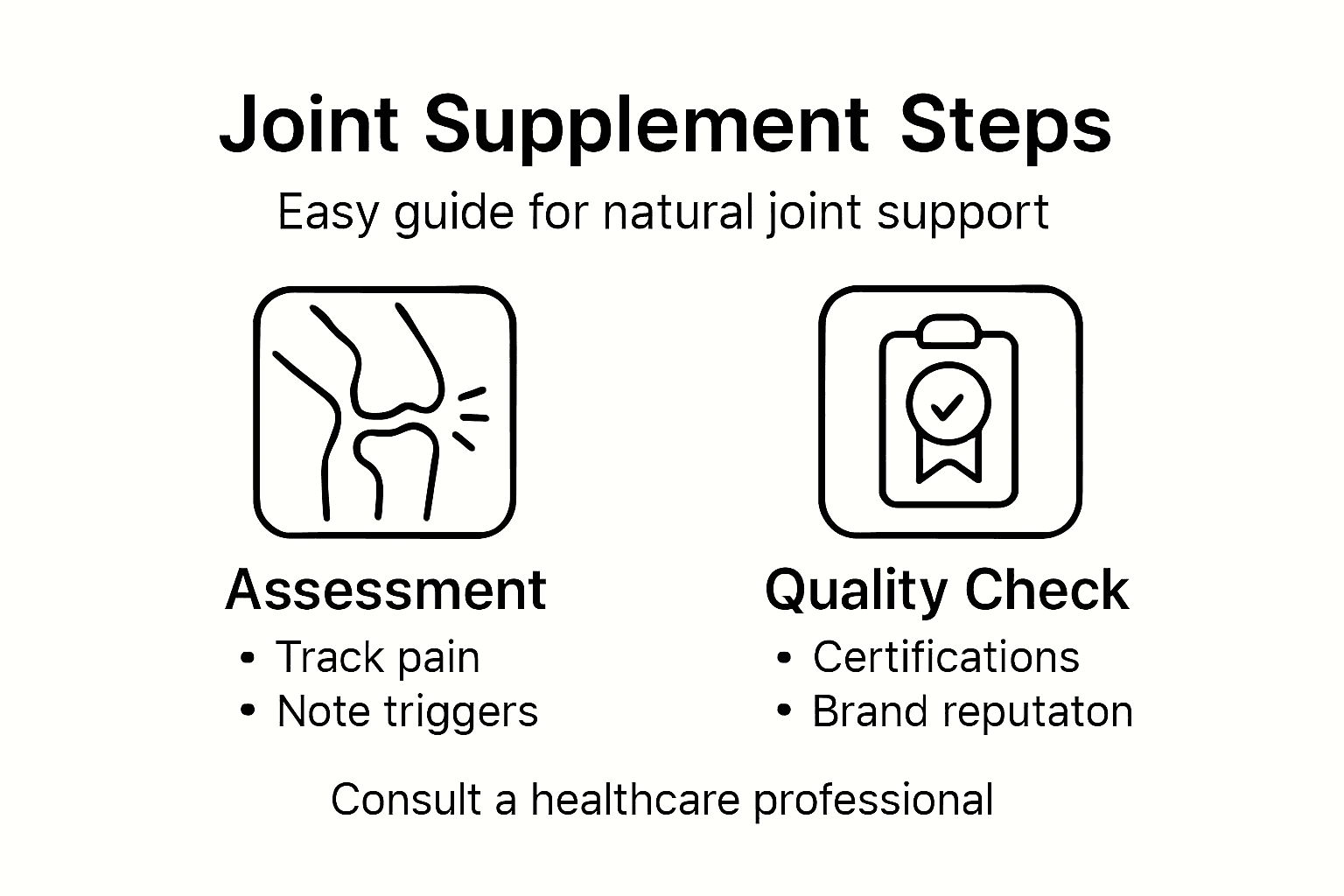
Ongoing supplement evaluation is essential because individual responses can vary dramatically. What works perfectly for one person might produce minimal results for another, making personalized tracking and adaptation critical to your joint health journey.
Establish a comprehensive tracking system by monitoring:
- Pain intensity levels
- Joint mobility and flexibility
- Daily physical function
- Energy and overall well-being
- Any potential side effects
Your evaluation process should include:
- Create a detailed symptom journal
- Record supplement intake consistently
- Note changes in joint comfort
- Schedule regular check-ins with healthcare provider
- Be open to modifying your supplement strategy
Recognize the importance of patience. Supplement effects can take weeks or months to become fully apparent, so avoid making hasty conclusions about their effectiveness.
Individual supplement responses vary. Consistent monitoring and professional guidance are key to finding your optimal joint health solution.
Pro tip: Take periodic photographs of your mobility and range of motion to visually document subtle improvements that might be challenging to track through written notes alone.
Take Control of Your Joint Health Naturally Today
Managing joint pain requires a personalized and informed approach to choosing the right supplements backed by quality and science. This article highlights the challenges of finding effective ingredients like curcumin and omega-3 fish oil while emphasizing the importance of professional guidance and product quality. If you are looking to address inflammation and improve joint function with trusted solutions you are in the right place.
Discover our carefully crafted formulas in Our SIGNATURES – Asli Nutrition designed for natural joint support that meet the highest standards of quality and transparency.
Start your journey toward stronger, more comfortable joints now by exploring our Best Sellers – Asli Nutrition and learn why countless customers trust Asli Nutrition for effective supplements tailored to your unique needs. Don’t wait to experience the relief and freedom that comes with choosing supplements that are safe, researched, and personalized just for you.
Frequently Asked Questions
What are the first steps to assess my joint health before choosing supplements?
To assess your joint health, begin by tracking your pain symptoms, including frequency, intensity, and specific locations of discomfort. Conduct a thorough personal health review, and consider working with a healthcare professional for a comprehensive evaluation.
How can I choose the right joint health supplements for my specific needs?
Choosing the right supplements involves consulting with a healthcare provider who can guide you based on your unique health profile and existing medications. Prepare to discuss your symptoms and any chronic conditions during this consultation to ensure personalized recommendations.
What ingredients should I look for in joint support supplements?
Focus on scientifically backed ingredients like Curcumin, Omega-3 fish oil, and Glucosamine and Chondroitin. Research the benefits and potential side effects of these ingredients to determine which may be most effective for you based on clinical studies.
How can I verify the quality of joint health supplements?
Verify the quality of supplements by checking for third-party testing certifications such as NSF International or USP seals. Ensure that the product has a clear ingredient list and follows good manufacturing practices for safety and effectiveness.
How long should I track my progress after starting joint health supplements?
Track your progress consistently for at least 30–60 days after starting any new joint health supplements. Monitor changes in pain intensity, mobility, and overall well-being to evaluate their effectiveness and discuss findings with your healthcare provider to adjust your plan as needed.