
Anti-Inflammatory Diets: Natural Relief for Joint Pain

Stiff knees and aching joints can make everyday activities harder than they should be. Chronic inflammation does not just impact comfort, it also affects long-term health. Many American women are discovering that adopting an anti-inflammatory diet rich in fruits, vegetables, whole grains, and healthy fats offers a natural way to reduce joint pain and promote wellness. This guide explains how to use whole, nutrient-dense foods and targeted supplements to manage inflammation and support your body’s healing process.
Table of Contents
- What Are Anti-Inflammatory Diets?
- Types of Anti-Inflammatory Eating Patterns
- Key Foods and Foods to Avoid
- Role of Supplements in Joint Pain Relief
- Common Myths and Mistakes to Avoid
Key Takeaways
| Point | Details |
|---|---|
| Anti-Inflammatory Diets Focus on Whole Foods | These diets emphasize nutrient-dense foods like fruits, vegetables, whole grains, lean proteins, and healthy fats to combat chronic inflammation. |
| Prevent Chronic Diseases | Research shows that anti-inflammatory diets may help in preventing and managing conditions such as obesity, diabetes, and cardiovascular diseases. |
| Supplements Can Complement Diet | Certain supplements like glucosamine and curcumin can support joint health and reduce inflammation but should be integrated with dietary and medical guidance. |
| Myths About Inflammation | Common misconceptions can lead to ineffective diets; understanding the complexities of inflammation is crucial for effective health strategies. |
What Are Anti-Inflammatory Diets?
Anti-inflammatory diets represent a strategic nutritional approach designed to combat chronic inflammation within the human body. These specialized eating patterns focus on consuming whole, nutrient-dense foods that actively reduce inflammatory responses and support long-term health. Emerging research suggests that such diets can significantly impact how our bodies manage systemic inflammation.
At its core, an anti-inflammatory diet centers around consuming foods that naturally lower inflammatory markers while avoiding those known to trigger inflammatory responses. These diets prioritize whole foods like fruits, vegetables, whole grains, lean proteins, and healthy fats. Key characteristics include:
- Emphasizing plant-based ingredients
- Limiting processed and refined foods
- Incorporating foods rich in omega-3 fatty acids
- Selecting complex carbohydrates over simple sugars
- Consuming lean proteins and plant-based protein sources
Comprehensive nutritional studies reveal that anti-inflammatory diets can potentially help prevent or manage various chronic conditions, including obesity, diabetes, cardiovascular diseases, and autoimmune disorders. The primary mechanism involves modulating systemic inflammation pathways through strategic dietary choices.
Anti-inflammatory diets are not about strict restrictions, but rather about creating a sustainable eating pattern that supports your body’s natural healing processes. The Mediterranean and plant-based diets have demonstrated the most consistent evidence of reducing inflammatory biomarkers and promoting overall wellness.
Pro tip: Start by gradually incorporating more anti-inflammatory foods into your diet, focusing on whole foods and reducing processed ingredients to create a sustainable nutritional approach.
Types of Anti-Inflammatory Eating Patterns
Comprehensive nutritional research reveals several distinctive dietary approaches that demonstrate significant potential for reducing systemic inflammation. While multiple eating patterns exist, some stand out for their robust scientific evidence and proven health benefits.
The Mediterranean Diet emerges as the gold standard among anti-inflammatory eating patterns. Characterized by its emphasis on whole foods, this diet includes:
- Fresh fruits and vegetables
- Whole grains
- Lean proteins like fish
- Healthy fats such as olive oil
- Moderate red wine consumption
- Limited red meat intake
- Abundant use of herbs and spices
Plant-Based Diets represent another powerful approach to combating inflammation. These dietary patterns completely eliminate or dramatically reduce animal products, focusing instead on nutrient-dense plant foods. Systematic reviews demonstrate that vegetarian and vegan diets can significantly lower inflammatory biomarkers.
Additional anti-inflammatory eating patterns include the DASH diet, Nordic diet, and emerging research-backed approaches like the Paleo Diet. While these diets differ in specific recommendations, they share core principles of prioritizing whole foods and minimizing processed ingredients.
Not all anti-inflammatory diets look identical, but they consistently emphasize whole, unprocessed foods that support natural healing processes.
Pro tip: Experiment with different anti-inflammatory eating patterns to find the approach that best suits your personal health needs and lifestyle preferences.
Here’s a side-by-side comparison of anti-inflammatory diet patterns and their unique features:
| Diet Pattern | Main Characteristics | Sample Foods |
|---|---|---|
| Mediterranean | Emphasizes healthy fats, fish, wine | Olive oil, fish, whole grains |
| Plant-Based | Focuses on plant foods, low animal products | Leafy greens, legumes, nuts |
| DASH | Limits sodium, balanced nutrients | Low-fat dairy, lean meats |
| Nordic | Whole grains, fish, canola oil | Berries, rye bread, salmon |
| Paleo | Excludes grains, dairy, processed foods | Vegetables, nuts, lean meats |
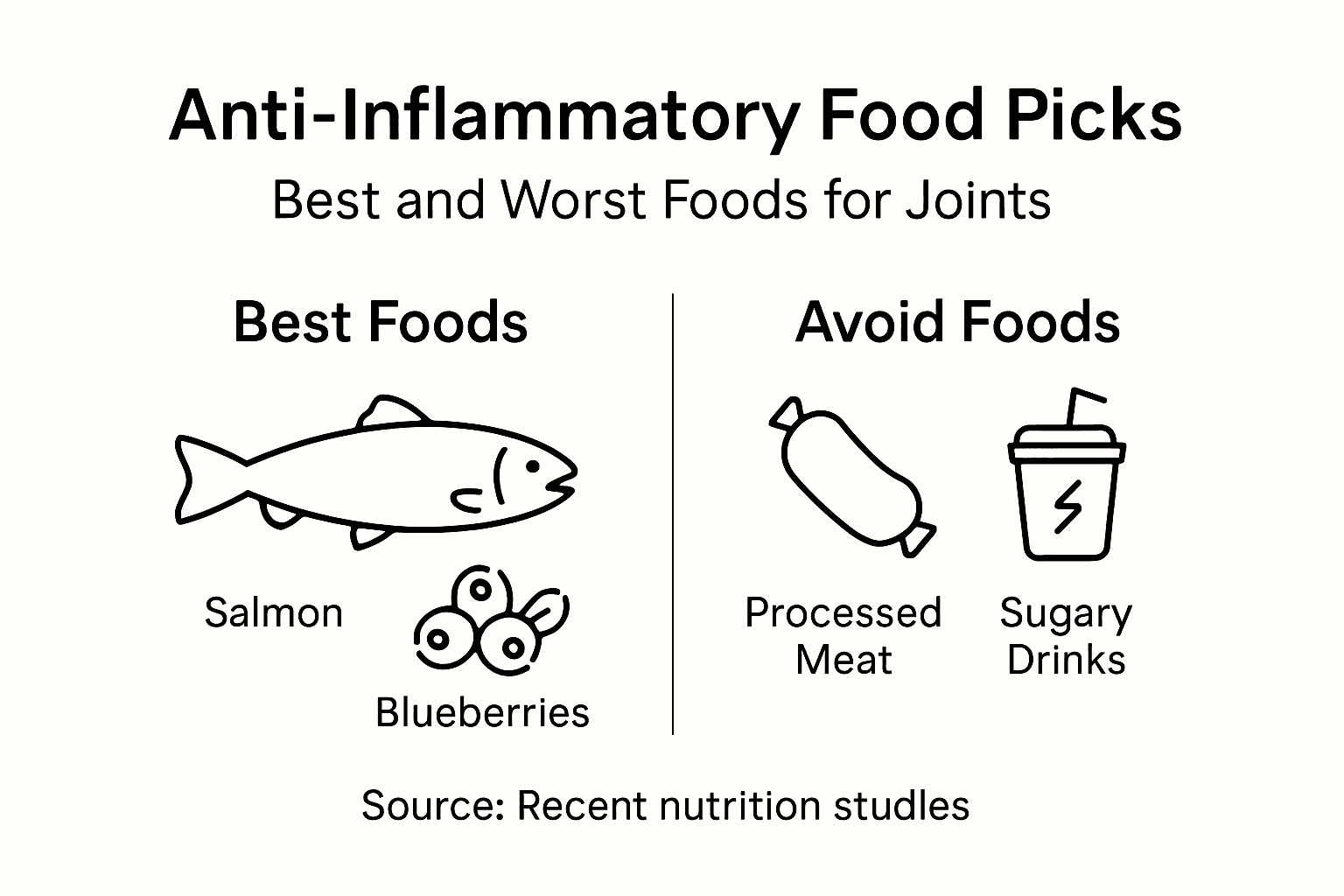
Key Foods and Foods to Avoid
Nutrition experts highlight specific foods that can dramatically reduce inflammation and support overall joint health. Understanding which foods to embrace and which to limit is crucial for managing chronic inflammation and promoting wellness.
The Anti-Inflammatory Food Arsenal includes powerful nutritional allies that combat inflammation naturally:
- Wild-caught fatty fish (salmon, sardines)
- Colorful fruits and vegetables
- Berries and dark leafy greens
- Nuts and seeds
- Extra virgin olive oil
- Turmeric and other anti-inflammatory spices
- Fermented foods like yogurt and sauerkraut
- Green tea
Dietary recommendations emphasize the importance of avoiding foods that can trigger inflammatory responses. Inflammatory Food Triggers to minimize or eliminate include:
- Processed and refined sugars
- Saturated and trans fats
- Full-fat dairy products
- Refined grains
- Processed meats
- Foods high in sodium
The key is balance and mindful food choices. While no single food is a magic bullet, consistently selecting anti-inflammatory options can significantly impact your body’s inflammatory responses and overall health.
Small dietary changes can create profound improvements in managing chronic inflammation and supporting joint health.
Pro tip: Gradually replace inflammatory foods with nutrient-dense alternatives, creating sustainable dietary habits that support long-term wellness.

Role of Supplements in Joint Pain Relief
Dietary supplements represent a promising complementary approach to managing joint pain and inflammation. These natural compounds can provide targeted support for joint health, offering potential relief beyond traditional treatment methods.
Key Inflammation-Fighting Supplements that have demonstrated clinical potential include:
- Glucosamine
- Chondroitin
- Curcumin
- Boswellia serrata extract
- Avocado soybean unsaponifiables
- Hydrolyzed collagen peptides
Collagen supplementation research reveals fascinating insights into how these nutritional compounds may support joint function. Hydrolyzed collagen peptides, in particular, show promise in modulating immune responses and potentially protecting cartilage from inflammatory damage.
The most effective supplements work by targeting specific inflammatory pathways, reducing joint stiffness, and supporting overall cartilage health. While supplements can offer significant benefits, they should be considered part of a comprehensive approach that includes diet, exercise, and medical guidance.
Supplements are not a magic solution, but a strategic tool in managing joint health and reducing inflammation.
Pro tip: Consult with a healthcare professional before starting any new supplement regimen to ensure safety and compatibility with your individual health needs.
The table below summarizes supplements commonly used for joint pain and their primary effects:
| Supplement | Proposed Benefit | Suggested Use |
|---|---|---|
| Glucosamine | May support cartilage health | Taken orally, often with chondroitin |
| Curcumin | May reduce joint inflammation | Found in turmeric extract |
| Boswellia serrata | May decrease stiffness | Used in herbal supplement blends |
| Collagen peptides | May enhance joint mobility | Mixed into drinks or smoothies |
Common Myths and Mistakes to Avoid
Common misconceptions about inflammation can lead women to make ineffective or potentially harmful dietary choices. Understanding the nuanced reality of inflammation helps create more realistic and sustainable health strategies.
Top Inflammation Myths to be aware of include:
- Inflammation is always harmful
- Anti-inflammatory diets can completely eliminate disease risk
- Chronic inflammation is easily self-diagnosed
- Entire food groups must be eliminated
- One diet fits all body types
- Supplements are a magic solution
Anti-inflammatory diet approaches are frequently misunderstood as restrictive, bland eating programs. In reality, these dietary strategies are flexible and can incorporate diverse, flavorful ingredients that support overall wellness.
Misconceptions often arise from oversimplified health narratives. Inflammation is a complex biological process critical for healing and immune response. Not all inflammation is bad, and targeted nutritional approaches require personalized understanding rather than one-size-fits-all solutions.
Wellness is about balance, not perfection. Understanding nuanced nutritional science matters more than following rigid dietary rules.
Pro tip: Consult a registered dietitian or healthcare professional to develop a personalized anti-inflammatory approach tailored to your unique health profile.
Discover Natural Relief with Targeted Anti-Inflammatory Support
If you are struggling with persistent joint pain caused by chronic inflammation, finding the right nutritional strategy is key. This article highlights the power of anti-inflammatory diets along with supplements like glucosamine, curcumin, and collagen peptides to help reduce inflammation and support joint health. You deserve a sustainable and effective approach that fits your lifestyle and brings real comfort.
Take control of your joint wellness today by exploring Our SIGNATURES – Asli Nutrition to find scientifically formulated supplements designed to complement your anti-inflammatory diet. Browse our Best Sellers – Asli Nutrition for trusted favorites that target stiffness and inflammation naturally. Visit Asli Nutrition now to start your journey toward lasting joint relief and feel the difference that focused nutrition can make.
Frequently Asked Questions
What is an anti-inflammatory diet?
An anti-inflammatory diet is a nutritional approach aimed at reducing chronic inflammation by focusing on whole, nutrient-dense foods while avoiding those known to trigger inflammation. It emphasizes fruits, vegetables, whole grains, lean proteins, and healthy fats.
What foods should I include in my anti-inflammatory diet?
You should include wild-caught fatty fish, colorful fruits and vegetables, nuts and seeds, extra virgin olive oil, turmeric, and fermented foods. These foods help combat inflammation and promote overall health.
Are there specific supplements that can help with joint pain?
Yes, supplements such as glucosamine, curcumin, and collagen peptides have shown promise in reducing joint inflammation and improving joint health. However, it’s essential to consult a healthcare professional before starting any new supplement regimen.
Can an anti-inflammatory diet help with conditions other than joint pain?
Yes, research suggests that anti-inflammatory diets can also help manage chronic conditions such as obesity, diabetes, cardiovascular diseases, and autoimmune disorders by modulating systemic inflammation.
Recommended
- 🌿 The Science Behind Turmeric & Ginger: Nature’s Anti-Inflammatory Duo – Asli Nutrition
- Turmeric & Ginger Capsules - Anti-Inflammatory Joint Support | Asli Nutrition
- Turmeric and Ginger Supplement Benefits – Asli Nutrition
- Everyday Joint Support – Asli Nutrition
- Why Address Joint Pain for Better Mobility