
Supplements for Aging: Easing Joint Pain Naturally

Stiff joints and morning aches can make each day harder for many American women navigating their forties, fifties, and beyond. With so many supplement options promising relief, finding what truly supports healthy aging feels confusing. Learning about effective, research-backed supplements is a smart first step toward greater comfort and stronger movement. This guide breaks down trusted options for joint support, highlights key ingredients, and explains how supplements fit into a holistic approach to wellness.
Table of Contents
- What Are Supplements for Aging?
- Key Types of Joint Support Supplements
- How Supplements Work to Ease Pain
- Evaluating Safety and Effectiveness
- Comparing Supplements to Other Solutions
- Common Mistakes and What to Avoid
Key Takeaways
| Point | Details |
|---|---|
| Importance of Supplements for Aging | Dietary supplements can support health functions that decline with age, particularly for women over 40. Always research and choose high-quality products. |
| Key Supplements for Joint Health | Popular supplements include Glucosamine, Omega-3 Fish Oil, and Curcumin, which provide varying levels of support for joint health. Consult healthcare professionals for personalized advice. |
| Holistic Management Strategies | Joint pain management should include a combination of supplements, physical therapy, lifestyle changes, and medical interventions for optimal results. |
| Safeguarding Supplement Use | Avoid self-medicating and always disclose supplement use to healthcare providers to prevent adverse interactions and ensure safety. |
What Are Supplements for Aging?
As women navigate the complex journey of aging, understanding supplements for aging becomes increasingly important. These targeted nutritional products are specifically designed to support bodily functions that naturally decline with time. Unlike prescription medications, dietary supplements offer a complementary approach to maintaining health and addressing age-related challenges.
Supplements for aging are specifically formulated nutritional products that aim to address common health concerns experienced by individuals over 40. They typically include ingredients that support:
- Joint health and flexibility
- Bone density maintenance
- Immune system function
- Cognitive performance
- Energy metabolism
- Hormonal balance
The regulatory landscape for supplements differs significantly from prescription medications. While drugs undergo rigorous FDA approval processes, supplements have less stringent requirements. This means consumers must be diligent in researching and selecting high-quality products that genuinely support their health goals.
Most supplements for aging target specific physiological needs that naturally diminish with time. For women over 40, these might include nutrients that support joint health, reduce inflammation, enhance energy levels, and promote overall wellness. These products are not miraculous solutions but rather strategic nutritional support designed to complement a healthy lifestyle.
Pro tip: Always consult with a healthcare professional before starting any new supplement regimen to ensure safety and compatibility with your individual health profile.
Key Types of Joint Support Supplements
As women over 40 seek natural solutions for joint health, understanding the key supplements for joint support becomes crucial. These targeted nutritional products offer potential relief and support for common age-related joint challenges.
The most prominent joint support supplements include:
- Glucosamine and Chondroitin: Natural compounds that support cartilage health
- Omega-3 Fish Oil: Helps reduce inflammation and joint discomfort
- Curcumin: Potent anti-inflammatory agent from turmeric
- Collagen Peptides: Supports joint tissue repair and flexibility
- Boswellia Serrata: Natural extract with anti-inflammatory properties
Research indicates varying levels of effectiveness for these supplements. Arthritis-related studies suggest that while some supplements show promising results, individual responses can differ significantly. Glucosamine and chondroitin, for instance, may provide moderate relief for osteoarthritis symptoms, particularly when taken consistently over time.
Here’s a quick comparison of popular joint support supplements and their main benefits:
| Supplement | Primary Benefit | Best For |
|---|---|---|
| Glucosamine & Chondroitin | Cartilage support and joint comfort | Osteoarthritis relief |
| Omega-3 Fish Oil | Reduces inflammation | Rheumatoid arthritis aid |
| Curcumin | Strong anti-inflammatory effects | Stiffness and mobility |
| Collagen Peptides | Promotes joint flexibility | Tissue repair and aging |
| Boswellia Serrata | Herbal inflammation control | Enhancing joint comfort |
Omega-3 fatty acids stand out for their potential to reduce inflammation, with more pronounced benefits for rheumatoid arthritis compared to osteoarthritis. Curcumin and Boswellia serrata extracts have also demonstrated notable anti-inflammatory properties that can support joint comfort and mobility for women experiencing age-related joint challenges.

Pro tip: Consult with a healthcare professional to develop a personalized supplement strategy that addresses your specific joint health needs and potential interactions with existing medications.
How Supplements Work to Ease Pain
Understanding how supplements address joint pain requires exploring their complex interactions within the body. These natural compounds work through multiple mechanisms to potentially reduce inflammation, support tissue repair, and alleviate discomfort associated with aging and joint conditions.
The primary pain-reduction mechanisms of supplements include:
- Anti-Inflammatory Action: Neutralizing inflammatory compounds
- Cartilage Support: Protecting and potentially repairing connective tissues
- Cellular Repair: Promoting healing at the molecular level
- Metabolic Regulation: Balancing biochemical processes that contribute to pain
- Oxidative Stress Reduction: Minimizing cellular damage
Natural compounds like curcumin demonstrate remarkable anti-inflammatory properties comparable to some pharmaceutical interventions. Omega-3 fatty acids specifically target inflammatory pathways, offering particular benefits for rheumatoid arthritis sufferers. SAM-e emerges as a unique supplement that not only addresses physical pain but potentially supports mood regulation during chronic discomfort.
Natural supplement research indicates modest yet promising results for managing musculoskeletal pain. While not miracle cures, these supplements represent a complementary approach to supporting joint health and managing age-related discomfort.
Pro tip: Document your supplement intake, tracking pain levels and mobility to discuss detailed progress with your healthcare provider.
Evaluating Safety and Effectiveness
Navigating the world of joint health supplements requires careful evaluation of scientific evidence. Women over 40 must approach supplement choices with a critical and informed perspective, understanding that not all products deliver the promised benefits.
Key considerations for supplement safety and effectiveness include:
- Scientific Research: Examining peer-reviewed studies and clinical trials
- Individual Variability: Recognizing that responses differ between individuals
- Potential Interactions: Understanding possible conflicts with existing medications
- Quality of Ingredients: Assessing supplement purity and manufacturing standards
- Long-Term Impact: Considering potential effects beyond immediate symptoms
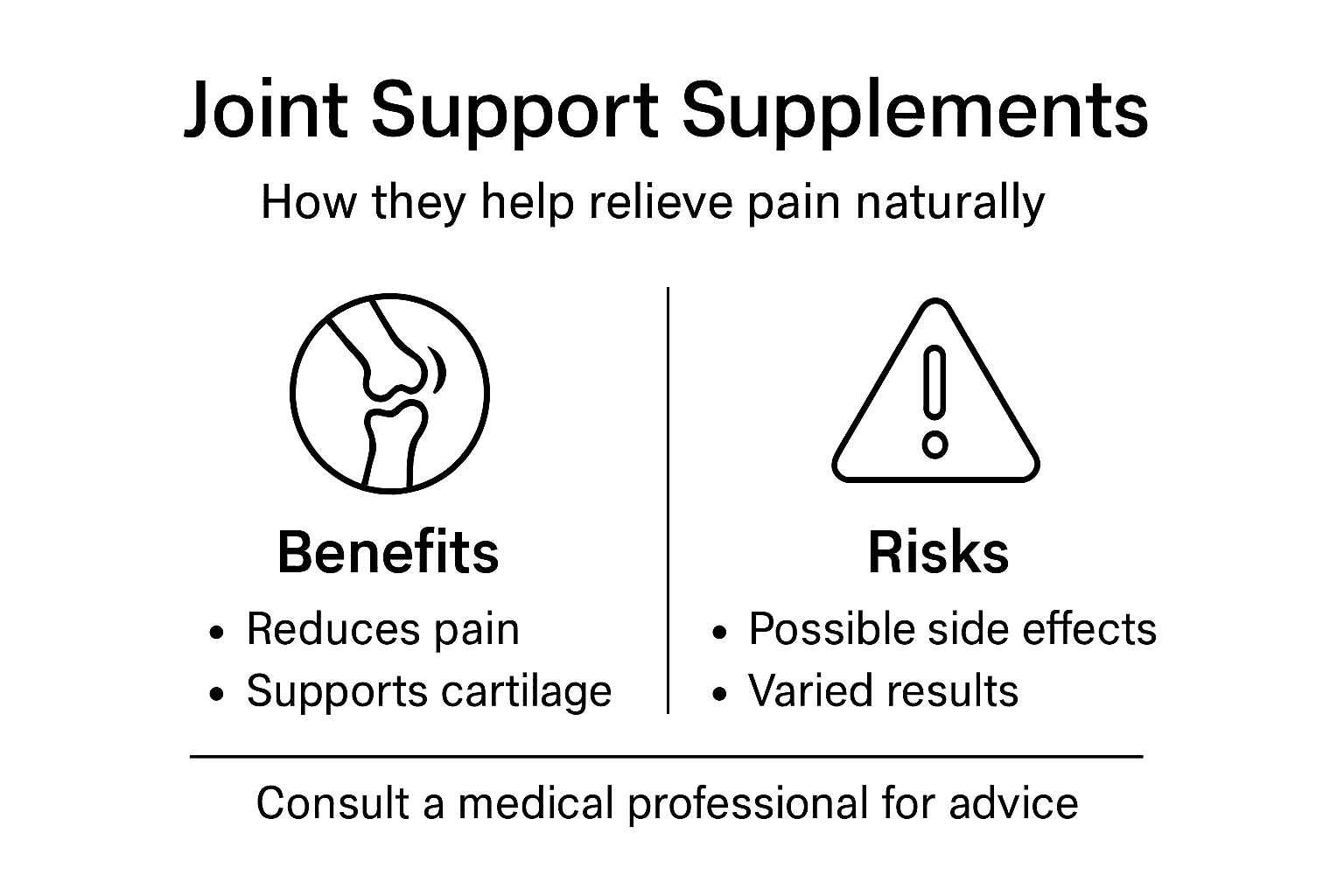
Glucosamine and chondroitin studies reveal inconsistent results, highlighting the complexity of supplement effectiveness. While some individuals report significant improvements, others experience minimal or no benefits. The safety profile remains generally favorable, but long-term comprehensive studies are still limited.
Most supplement research indicates modest potential rather than dramatic transformations. Women should approach these nutritional supports as complementary strategies, not miracle solutions. Consulting healthcare professionals, monitoring personal responses, and maintaining realistic expectations are crucial steps in supplement management.
Pro tip: Maintain a detailed journal tracking supplement intake, documenting any changes in pain levels, mobility, and overall well-being to discuss meaningful insights with your healthcare provider.
Comparing Supplements to Other Solutions
When addressing joint pain, comprehensive management strategies extend far beyond simply taking supplements. Women over 40 need a holistic approach that integrates multiple treatment modalities to effectively manage joint health and reduce discomfort.
Different solutions for joint pain management include:
- Pharmaceutical Interventions: Prescription pain medications
- Physical Therapy: Targeted exercises and rehabilitation
- Lifestyle Modifications: Diet and weight management
- Alternative Therapies: Acupuncture, massage, chiropractic care
- Surgical Options: Joint replacement or repair procedures
Lifestyle medicine approaches emphasize that supplements should be viewed as complementary, not primary, solutions. While nutritional supplements can provide support, they work most effectively when integrated with comprehensive health strategies such as regular exercise, balanced nutrition, and professional medical guidance.
The most effective joint pain management typically combines multiple approaches. Supplements can play a supportive role, but they cannot replace fundamental lifestyle changes, physical therapy, or medical treatments. Women should view supplements as one tool in a broader health optimization strategy, always consulting healthcare professionals to develop personalized, comprehensive care plans.
This table summarizes different joint pain management strategies and their typical roles:
| Approach | Primary Role | Considerations |
|---|---|---|
| Supplements | Support joint health | Use as part of overall plan |
| Physical Therapy | Improve mobility and function | Requires regular sessions |
| Prescription Drugs | Reduce severe pain or inflammation | Risk of side effects |
| Surgery | Correct structural joint issues | Reserved for severe cases |
Pro tip: Create a multi-dimensional health plan that includes supplements, exercise, nutrition, and regular medical consultations to address joint health holistically.
Common Mistakes and What to Avoid
Navigating the complex world of joint health supplements requires careful attention to potential pitfalls and risks. Women over 40 must approach supplement use with informed caution to protect their health and avoid unintended consequences.
Common mistakes in supplement use include:
- Self-Medicating: Taking supplements without professional guidance
- Ignoring Interactions: Failing to disclose supplement use to healthcare providers
- Unverified Sources: Purchasing from unreliable or unregulated manufacturers
- Dosage Errors: Consuming incorrect amounts or combinations
- Unrealistic Expectations: Treating supplements as miracle solutions
Supplement safety research highlights critical risks associated with uninformed supplement use. Some supplements can interact negatively with prescription medications, potentially worsening existing health conditions or creating unexpected side effects. The assumption that ‘natural’ automatically means ‘safe’ is dangerously misleading.
Most supplement-related complications arise from lack of professional medical oversight. Women should view supplements as precise health tools requiring expert guidance, not over-the-counter quick fixes. Comprehensive consultation, third-party product verification, and transparent communication with healthcare providers are essential strategies for safe supplement integration.
Pro tip: Create a detailed supplement log documenting brands, dosages, and any physical reactions to share comprehensively with your healthcare provider.
Support Your Joint Health Naturally with Asli Nutrition
Finding reliable ways to ease joint pain naturally is a challenge many women face as they age. This article highlights how targeted supplements can support joint comfort, flexibility, and inflammation control—key concerns for women over 40 striving to maintain an active lifestyle. If you want to complement your joint care routine with effective nutritional support, explore Our SIGNATURES – Asli Nutrition where carefully formulated options can help address these specific needs.
Take action today by visiting https://aslinutrition.store and browse through Best Sellers – Asli Nutrition to discover supplements crafted for holistic joint health. Don’t let age-related discomfort slow you down. Start supporting your joints now with trusted solutions designed to work alongside your healthy lifestyle.
Frequently Asked Questions
What are the most common supplements for aging that support joint health?
Common supplements for aging that support joint health include glucosamine and chondroitin, omega-3 fish oil, curcumin, collagen peptides, and Boswellia serrata. These supplements target joint discomfort and help improve flexibility.
How do supplements work to alleviate joint pain?
Supplements work to alleviate joint pain through various mechanisms, including reducing inflammation, supporting cartilage repair, promoting cellular repair, and minimizing oxidative stress. This multi-faceted approach helps to relieve discomfort associated with aging and joint conditions.
Are there any risks associated with taking joint support supplements?
Yes, there are potential risks associated with taking joint support supplements, including interactions with medications and side effects. It’s essential to consult with a healthcare professional before starting any new supplement regimen to ensure safety and effectiveness based on individual health needs.
How can I evaluate the effectiveness of joint support supplements?
To evaluate the effectiveness of joint support supplements, consider reviewing scientific research and clinical studies, monitoring individual response over time, and consulting healthcare professionals. Keeping a journal of pain levels and mobility can also provide insights into their impact.