
Herbal Joint Supplements: Relief and Mobility for Women

Constant joint pain can turn daily movement into a struggle. For many American women, finding gentle yet effective ways to ease stiffness and discomfort matters more than ever. Herbal joint supplements offer natural plant-based support, with ingredients like turmeric and Boswellia Serrata gaining attention for their anti-inflammatory benefits. Explore how these remedies can help improve mobility and provide relief, giving women new options for managing joint health without relying on pharmaceuticals.
Table of Contents
- What Are Herbal Joint Supplements?
- Key Herbal Ingredients And Their Benefits
- How Herbal Joint Supplements Work
- Comparing Herbal And Conventional Options
- Safety Considerations And Fda Regulation
- Common Mistakes And Proper Usage
Key Takeaways
| Point | Details |
|---|---|
| Herbal Joint Supplements | These natural formulations support joint health and reduce inflammation, providing an alternative to pharmaceuticals for chronic pain management. |
| Key Ingredients | Important herbal ingredients include Turmeric, Ginger, Boswellia Serrata, Devil’s Claw, and White Willow Bark, each with unique anti-inflammatory benefits. |
| Consultation is Essential | Women should always consult healthcare providers before starting herbal supplements to ensure safety and compatibility with existing medications. |
| Gradual Effects | Herbal supplements offer a gradual improvement in joint health, requiring consistent use and combined efforts with a healthy lifestyle for optimal results. |
What Are Herbal Joint Supplements?
Herbal joint supplements are natural, plant-based formulations designed to support joint health and reduce inflammation for women experiencing chronic pain and mobility challenges. These botanical products offer an alternative approach to managing joint discomfort without immediately turning to pharmaceutical interventions.
Traditionally, herbal joint supplements derive from various plant sources known for their anti-inflammatory and pain-relieving properties. Natural extracts with therapeutic potential can include ingredients like:
- Turmeric (containing curcumin)
- Boswellia serrata
- Ginger root
- Devil’s claw
- White willow bark
Unlike conventional medications, herbal supplements work by targeting inflammation and supporting joint tissue health through natural mechanisms. These supplements often contain concentrated plant compounds that can help reduce swelling, improve circulation, and potentially slow down joint degradation.
However, it’s crucial to understand that herbal supplements are not regulated with the same stringency as pharmaceutical drugs. Herbal medicine approaches require careful consideration and professional medical guidance. Women considering these supplements should consult healthcare providers to ensure compatibility with their specific health conditions and existing medications.
Pro tip: Always discuss herbal supplement plans with your healthcare provider and keep a detailed journal tracking your joint pain symptoms and supplement usage to monitor potential improvements.
Key Herbal Ingredients and Their Benefits
Herbal supplements offer powerful natural solutions for women experiencing joint pain and inflammation. Key herbal ingredients provide targeted support for joint health through their unique therapeutic properties and anti-inflammatory mechanisms.
The most prominent herbal ingredients for joint relief include:
- Turmeric (Curcumin): Considered the gold standard of anti-inflammatory herbs
- Ginger: Reduces inflammation and supports joint mobility
- Boswellia Serrata: Helps decrease joint swelling and improve flexibility
- Devil’s Claw: Traditional remedy for arthritis symptoms
- White Willow Bark: Natural pain-relieving properties
Each herbal ingredient works differently to address joint discomfort. Popular herbal supplements for arthritis target inflammation through various biochemical pathways, potentially reducing pain and improving overall joint function.
Turmeric, for instance, contains curcumin, a powerful compound that interrupts inflammatory signals in the body. Ginger works similarly by blocking pro-inflammatory enzymes, while Boswellia serrata helps prevent cartilage breakdown and supports joint tissue health.

Here’s a comparison of key herbal ingredients and their unique benefits for joint health:
| Herbal Ingredient | Primary Benefit | Typical Use Case | Notable Compound |
|---|---|---|---|
| Turmeric | Reduces inflammation | Chronic joint pain | Curcumin |
| Ginger | Eases stiffness | Mobility support | Gingerol |
| Boswellia Serrata | Protects cartilage | Arthritis symptoms | Boswellic acids |
| Devil’s Claw | Relieves mild pain | Osteoarthritis | Harpagoside |
| White Willow Bark | Natural analgesic | Occasional discomfort | Salicin |
Women should approach herbal supplements as complementary treatments, understanding that individual responses can vary. Consulting with healthcare professionals helps ensure safe and effective integration of these natural remedies into their joint health management strategy.
Pro tip: Consider keeping a detailed journal tracking your joint pain symptoms, herbal supplement intake, and any changes in mobility to help you and your healthcare provider assess the effectiveness of your chosen supplements.
How Herbal Joint Supplements Work
Herbal joint supplements work through complex biochemical mechanisms to address joint pain and inflammation at their cellular roots. These natural compounds target multiple pathways in the body, providing comprehensive support for joint health and mobility.
The primary mechanisms of herbal joint supplements include:
- Reducing Inflammation: Blocking pro-inflammatory enzymes
- Supporting Tissue Repair: Providing nutrients for cartilage regeneration
- Improving Circulation: Enhancing blood flow to joint areas
- Protecting Connective Tissues: Preventing further joint degradation
- Modulating Immune Response: Balancing inflammatory signals
Curcumin from turmeric, for instance, interrupts inflammatory pathways by blocking NF-kB, a key molecule that triggers inflammation. Omega-3 fatty acids work similarly, reducing inflammatory markers and providing lubrication to joint tissues. Supplements for joint pain relief demonstrate remarkable potential in managing chronic joint discomfort by addressing underlying inflammatory processes.
Each herbal ingredient operates through unique biochemical mechanisms. Boswellia serrata contains boswellic acids that inhibit inflammatory enzymes, while ginger compounds like gingerols interrupt pain signaling pathways. These natural compounds work synergistically to provide comprehensive joint support, offering women a holistic approach to managing joint health.
It’s important to understand that herbal supplements are not instant solutions but work progressively to support joint function. Consistent use, combined with a healthy lifestyle, can help women experience meaningful improvements in joint mobility and pain management.
Pro tip: Consider tracking your supplement intake, joint pain levels, and mobility improvements in a detailed journal to help your healthcare provider understand your body’s specific response to herbal supplements.
Comparing Herbal and Conventional Options
Joint support strategies present complex choices for women seeking relief from chronic pain and mobility challenges. Understanding the nuanced differences between herbal and conventional treatments can help make more informed healthcare decisions.
Key differences between herbal and conventional approaches include:
-
Pharmaceutical Treatments:
- Rapid symptom relief
- Standardized dosages
- Extensively researched mechanisms
- Potential for significant side effects
-
Herbal Supplements:
- Gradual, holistic healing approach
- Natural ingredient base
- Fewer documented side effects
- Less rigorous scientific validation
Herbal supplements use alternative regulatory standards compared to conventional medications. While pharmaceutical drugs undergo stringent testing and approval processes, herbal remedies often lack comprehensive clinical research demonstrating their long-term effectiveness and safety profiles.
Conventional treatments like nonsteroidal anti-inflammatory drugs (NSAIDs) provide quick pain relief by directly targeting inflammation. Herbal alternatives, such as turmeric and Boswellia, work more subtly by modulating inflammatory responses and supporting overall joint health. This means herbal options might require longer consistent use to experience noticeable improvements.
Below is a summary table comparing herbal supplements and pharmaceutical drugs for joint pain management:
| Aspect | Herbal Supplements | Pharmaceutical Drugs |
|---|---|---|
| Onset of Relief | Slow and gradual | Fast, often immediate |
| Common Risks | Interaction with medications | Gastrointestinal issues |
| Regulation Level | Minimal oversight | Strict FDA regulation |
| Typical User Experience | Holistic improvement over time | Symptom focus, short-term relief |
Women considering alternative treatments should prioritize consultation with healthcare professionals. Understanding individual health conditions, potential interactions, and personal medical history remains crucial when exploring joint pain management strategies.
Pro tip: Always maintain open communication with your healthcare provider about any herbal supplements you’re considering, and bring detailed documentation of your symptoms and potential reactions.
Safety Considerations and FDA Regulation
Dietary supplement regulation presents complex challenges for consumers seeking natural joint health solutions. Understanding the regulatory landscape is crucial for making informed decisions about herbal joint supplements.
Key safety considerations include:
-
Manufacturing Standards:
- No mandatory pre-market safety testing
- Manufacturers responsible for product safety
- Limited government oversight
- Potential for inconsistent quality
-
Consumer Protection:
- FDA can intervene after product release
- Requires reporting of adverse events
- No guaranteed effectiveness or safety
- Independent testing recommended
Herbal supplements lack pharmaceutical-level regulation which means women must take extra precautions. Product verification becomes critical, with independent testing organizations offering the most reliable quality assessments.
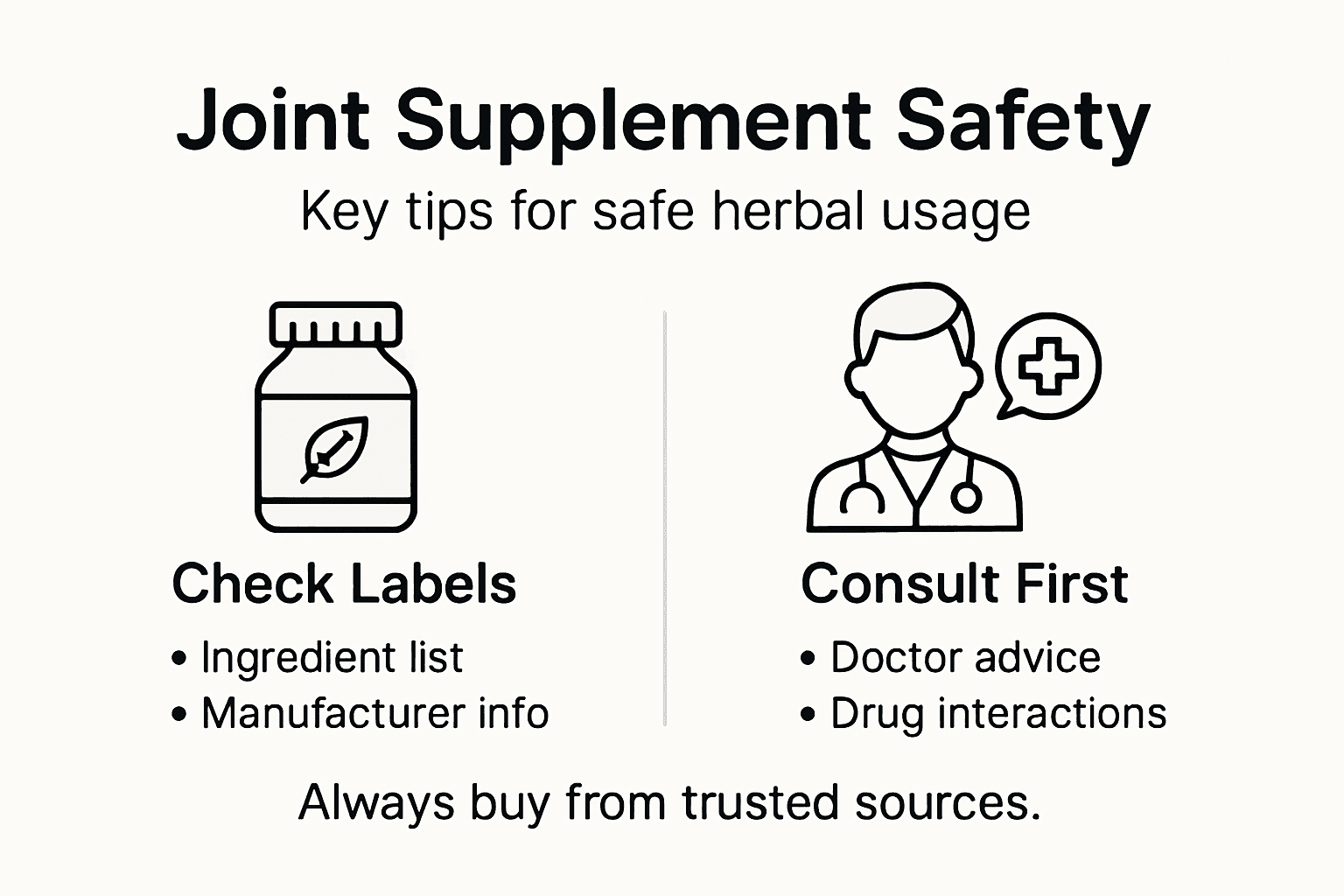
Potential risks associated with unregulated herbal supplements include unexpected interactions with prescription medications, inconsistent ingredient concentrations, and undisclosed contaminants. Women with pre-existing health conditions or those taking multiple medications face higher risks and should exercise additional caution.
Transparency and professional medical guidance are paramount. Always discuss supplement plans with healthcare providers, review product certifications, and choose brands with rigorous third-party testing and clear ingredient documentation.
Pro tip: Request independent lab test results from supplement manufacturers and consult your healthcare provider about potential interactions with your current medications.
Common Mistakes and Proper Usage
Herbal supplement usage requires careful navigation through potential pitfalls that can compromise health and effectiveness. Women must approach herbal joint supplements with informed, strategic decision-making.
Common mistakes women make with herbal supplements include:
-
Self-Diagnosis Errors:
- Assuming ‘natural’ means completely safe
- Skipping professional medical consultation
- Ignoring potential medication interactions
- Replacing prescribed treatments
-
Usage Misconceptions:
- Inconsistent dosing
- Purchasing from unreliable sources
- Overlooking potential side effects
- Expecting immediate results
Herbal supplement practices require careful consideration to minimize health risks. Proper usage involves understanding individual health contexts, potential interactions, and maintaining transparent communication with healthcare providers.
Dosage and timing matter significantly. Most herbal supplements work best when integrated consistently into a comprehensive health strategy. Women should start with lower doses, monitor their body’s response, and gradually adjust under professional guidance. Tracking symptoms, potential side effects, and overall response becomes crucial for safe and effective supplementation.
Quality sourcing separates responsible supplement use from potential health risks. Always choose products from reputable manufacturers with third-party testing, clear ingredient documentation, and transparent manufacturing processes.
Pro tip: Create a detailed supplement journal documenting dosage, timing, symptoms, and any physical changes to share with your healthcare provider during follow-up consultations.
Discover Natural Relief with Herbal Joint Supplements
Chronic joint pain can disrupt your daily life leaving you searching for safe and effective ways to regain mobility and comfort. The article highlights key challenges women face such as inflammation, stiffness, and the need for holistic healing approaches like turmeric, Boswellia, and ginger. If you are ready to explore natural botanical solutions that work progressively to support your joint health consider our carefully crafted options available at Our SIGNATURES – Asli Nutrition.

Experience the benefits of herbal joint supplements formulated to reduce inflammation and enhance joint flexibility. Don’t wait to take control over your joint wellness make a positive change today by visiting Best Sellers – Asli Nutrition and starting your journey at Asli Nutrition. Your path to renewed mobility and lasting relief starts with informed choices and trusted supplements.
Frequently Asked Questions
What are herbal joint supplements?
Herbal joint supplements are natural, plant-based formulations designed to support joint health and reduce inflammation in women experiencing chronic pain and mobility challenges. They offer an alternative approach to managing joint discomfort without relying solely on pharmaceuticals.
How do herbal joint supplements work?
Herbal joint supplements operate through complex biochemical mechanisms by reducing inflammation, supporting tissue repair, improving circulation, protecting connective tissues, and modulating the immune response. They target multiple pathways to provide comprehensive support for joint health and mobility.
What are the key herbal ingredients for joint health?
Key herbal ingredients commonly used for joint health include turmeric (curcumin), ginger, boswellia serrata, devil’s claw, and white willow bark. Each ingredient has unique benefits, such as reducing inflammation or protecting cartilage.
Are herbal joint supplements safe to use?
While herbal joint supplements generally have fewer documented side effects compared to pharmaceuticals, they lack rigorous regulation and do not undergo the same pre-market safety testing. It’s essential to consult a healthcare provider before starting any herbal supplement to ensure safety and compatibility with existing medications.