
How to Use Supplements Safely for Joint Pain Relief

Finding lasting relief from joint pain can feel complicated when every bottle promises improvement but rarely delivers real comfort. Women across the United States want solutions that fit their individual needs and support safe pain management. This guide empowers you to build a personalized, doctor-reviewed supplement routine by highlighting professional medical guidance and proven strategies, helping you make confident choices for your wellness.
Table of Contents
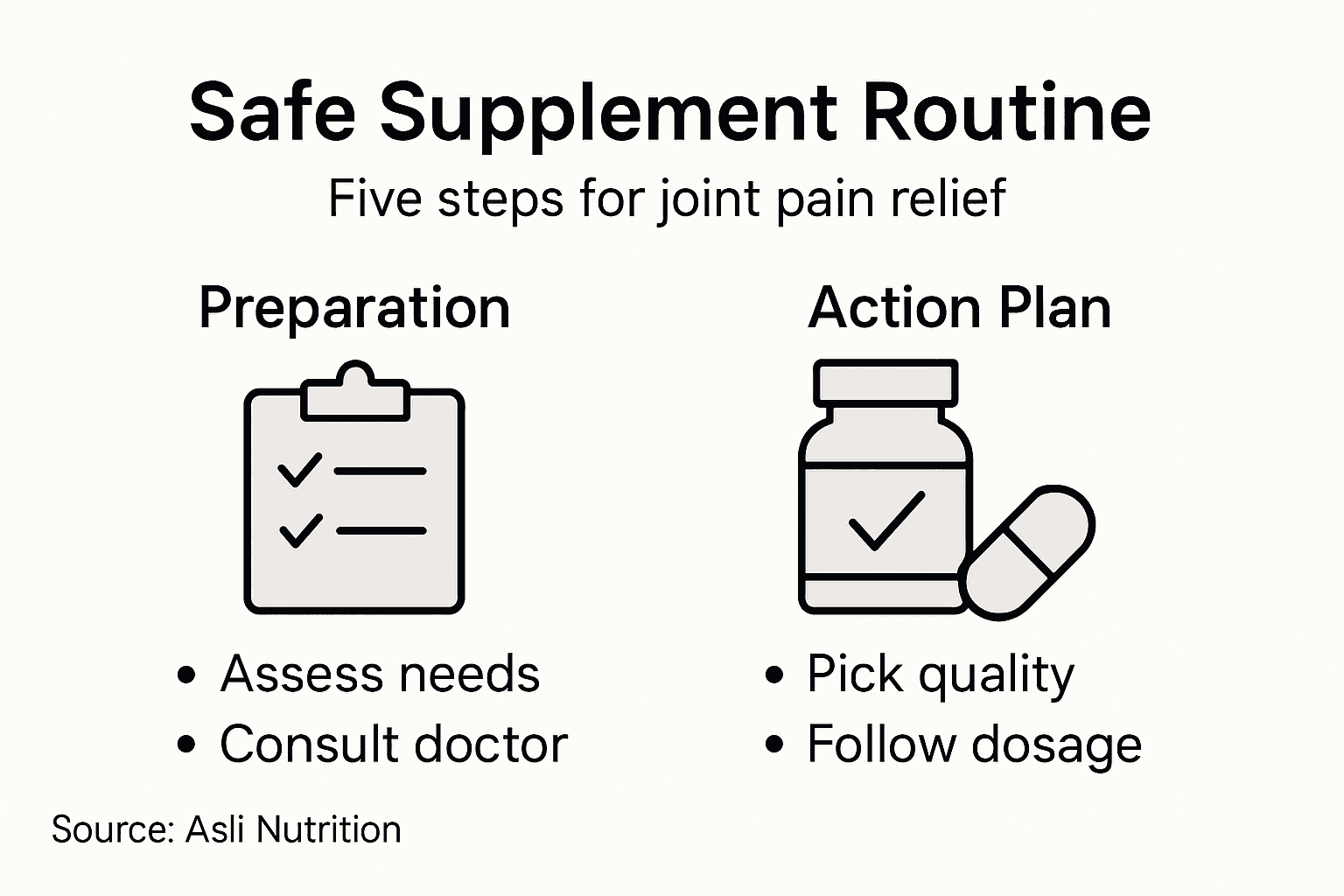
- Step 1: Assess Your Current Health and Pain Needs
- Step 2: Consult Your Healthcare Provider About Supplements
- Step 3: Select High-Quality Supplements for Joint Health
- Step 4: Follow Safe Dosage and Scheduling Practices
- Step 5: Monitor Results and Adjust Your Routine
Quick Summary
| Key Point | Explanation |
|---|---|
| 1. Assess your health needs first | Understand your joint pain and medical history for a personalized plan. Collaborate with healthcare providers for effective strategies. |
| 2. Consult healthcare providers about supplements | Prepare detailed information on medications and symptoms for a transparent discussion on suitable supplements and potential risks. |
| 3. Choose high-quality supplements | Focus on supplements with third-party certifications and proven benefits. Research their effects on joint health to ensure effectiveness. |
| 4. Follow proper dosage and timing | Start with low doses and monitor your body’s response. Adjust based on healthcare provider advice to maximize safety and effectiveness. |
| 5. Regularly monitor and adjust your routine | Keep track of pain levels and mobility changes over time. Adjust your supplement intake based on your observations and professional guidance. |
Step 1: Assess Your Current Health and Pain Needs
Understanding your unique health landscape is the critical first step in safely managing joint pain through supplements. Assessing individual health needs involves a comprehensive approach that goes beyond simply popping pills.
Your assessment should include several key components to create a personalized strategy for joint health. Start by conducting a thorough review of your current medical situation:
- Evaluate your pain levels and specific joint issues
- Review your complete medical history
- Identify any existing chronic conditions
- Document current medications and potential interactions
Working closely with healthcare professionals becomes crucial in this process. A medical expert can help you determine potential nutrient deficiencies and recommend targeted supplement strategies. Comprehensive osteoarthritis management involves more than just supplements - it requires a holistic approach including exercise, weight management, and joint protection.
Make sure to discuss your supplement plans transparently with your healthcare provider. They can help you understand potential risks, recommended dosages, and whether specific supplements align with your unique health profile.
Pro tip: Keep a detailed journal tracking your pain levels, supplement intake, and any changes in your symptoms to help your healthcare provider make more informed recommendations.
Step 2: Consult Your Healthcare Provider About Supplements
Taking charge of your joint health means having an open and honest conversation with your healthcare provider about potential supplement options. Professional medical guidance is crucial in determining the right approach for your specific health needs.
Prepare for your consultation by gathering comprehensive information about your current health status and supplement considerations:
- List all current medications and supplements
- Document your specific joint pain symptoms and duration
- Note any allergies or previous adverse reactions
- Compile your medical history and current health conditions
Understanding potential interactions is critical when discussing supplements. Healthcare professionals recommend carefully evaluating supplement compatibility to ensure they do not negatively interact with existing medications or exacerbate current health conditions.
During your consultation, ask specific questions about recommended dosages, potential side effects, and expected outcomes. Your healthcare provider can help you develop a personalized supplement strategy that addresses your unique joint health needs while minimizing potential risks.
Pro tip: Bring a detailed list of all supplements you are considering and be prepared to discuss each one thoroughly with your healthcare provider.
Step 3: Select High-Quality Supplements for Joint Health
Navigating the world of joint health supplements requires careful consideration and informed decision-making. Scientifically researched supplement choices can make a significant difference in managing joint pain and supporting overall joint health.
When selecting supplements, focus on these critical quality indicators:
- Look for third-party certification seals (USP, NSF)
- Check for transparent ingredient lists
- Verify scientific research behind specific ingredients
- Examine manufacturing standards and purity
- Research potential clinical evidence
Understanding supplement quality is crucial for effective joint health management. Trusted supplement selection strategies emphasize the importance of choosing products with proven effectiveness and minimal contaminants.
Consider targeting specific supplements known for joint health support, such as glucosamine, chondroitin, omega-3 fish oil, curcumin, and collagen peptides. Each supplement offers unique benefits, so matching them to your specific joint health needs becomes essential for optimal results.

Here’s a quick comparison of popular joint health supplements and their unique benefits:
| Supplement | Key Benefit | Scientific Support |
|---|---|---|
| Glucosamine | Supports cartilage repair | Widely studied for OA pain |
| Chondroitin | Reduces joint stiffness | Moderate clinical results |
| Omega-3 Fish Oil | Decreases inflammation | Strong evidence in studies |
| Curcumin | Eases joint discomfort | Growing scientific interest |
| Collagen Peptides | Boosts joint flexibility | Emerging clinical evidence |
Quality supplements are an investment in your long-term joint health and mobility.
Pro tip: Cross-reference supplement ingredients with your healthcare provider and request recommendations for brands that have demonstrated clinical effectiveness.
Step 4: Follow Safe Dosage and Scheduling Practices
Establishing a safe and effective supplement routine requires careful attention to dosage and timing. Supplement safety guidelines are critical for maximizing benefits while minimizing potential risks.
When developing your supplement schedule, consider these essential guidelines:
- Start with the lowest recommended dosage
- Introduce new supplements gradually
- Space supplements appropriately throughout the day
- Monitor your body’s response carefully
- Track any potential side effects or interactions
Understanding supplement interactions is crucial for safe consumption. Supplement intake recommendations emphasize the importance of consistent monitoring and professional guidance.
Different supplements require different approaches to dosing. For instance, omega-3 fish oils might be best taken with meals, while glucosamine could have specific timing recommendations. Your healthcare provider can help you create a personalized supplement schedule that aligns with your specific health needs and existing medication regimen.
Consistency and professional guidance are key to safe supplement use.
Pro tip: Use a dedicated supplement tracking app or journal to record your intake, timing, and any physical responses, which can provide valuable insights for your healthcare provider.
Step 5: Monitor Results and Adjust Your Routine
Tracking your supplement journey is essential for understanding how these interventions impact your joint health. Ongoing supplement assessment allows you to make informed decisions about your wellness strategy.
To effectively monitor your supplement results, implement these systematic tracking methods:
- Document pain levels before starting supplements
- Record changes in mobility and discomfort weekly
- Note any side effects or unexpected reactions
- Photograph joint areas to track physical improvements
- Schedule regular check-ins with your healthcare provider
Understanding individual supplement responses is critical for long-term success. Joint health supplement evaluation requires patience and careful observation to determine what works best for your unique body.
The following table highlights ways to monitor your joint supplement regimen for optimal results:
| Method | Purpose | Recommended Frequency |
|---|---|---|
| Pain diary | Track daily discomfort changes | Record every day |
| Mobility assessment | Evaluate movement improvement | Weekly review |
| Side effect log | Identify adverse reactions | As needed after changes |
| Provider check-in | Adapt plan based on progress | Every 1-3 months |
Remember that supplement effectiveness can vary widely between individuals. What works wonderfully for one person might produce minimal results for another. Your willingness to adjust and collaborate with healthcare professionals will be key to finding the most effective joint health strategy.
Personal health is a journey of continuous learning and adaptation.
Pro tip: Create a digital or physical health journal that provides a comprehensive snapshot of your supplement experience, making it easier to discuss progress with your healthcare provider.
Safely Support Your Joint Health with Quality Supplements
Managing joint pain requires more than guesswork It means choosing high-quality supplements that fit your unique needs while staying within safe dosage and scheduling guidelines This article highlighted key challenges including evaluating supplement quality monitoring interactions and seeking professional guidance to maximize benefits without risk
If you are ready to take charge of your joint wellness explore Our SIGNATURES – Asli Nutrition for carefully curated products designed to support joint comfort and mobility
Start your journey today with trusted, quality supplements from Asli Nutrition Empower your health by selecting safe and effective solutions that align with your personalized joint care plan Visit our Best Sellers – Asli Nutrition to discover proven favorites crafted to enhance joint function Take control now for a more active and pain-free tomorrow
Frequently Asked Questions
How do I assess my current health needs before using supplements for joint pain relief?
Start by evaluating your pain levels and documenting any specific joint issues. Create a comprehensive review that includes your medical history, current medications, and any chronic conditions, to better discuss your needs with a healthcare provider.
What should I discuss with my healthcare provider about supplements for joint pain?
When consulting your healthcare provider, bring a list of your current medications and specific symptoms. Ask about potential interactions, recommended dosages, and how the supplements may affect your overall health, ensuring your approach is safe and effective.
How do I choose high-quality supplements for joint pain relief?
Select supplements by looking for third-party certification seals, transparent ingredient lists, and verified scientific research. Make sure to choose products with proven effectiveness and free from contaminants to support your joint health optimally.
What are the safe dosage practices for supplements aimed at relieving joint pain?
Start with the lowest recommended dosage and introduce new supplements gradually to monitor your body’s response. Space out your supplement intake throughout the day and keep track of any side effects to ensure a safe routine.
How can I effectively monitor my results while using supplements for joint pain?
Document your pain levels and any changes in mobility consistently to track your progress. Schedule regular check-ins with your healthcare provider to adapt your supplement strategy based on your observations and experiences.
What should I include in a journal for tracking my supplement use for joint health?
Create a health journal that records your daily pain levels, supplement intake, side effects, and any physical changes you observe. This information will be valuable for discussions with your healthcare provider to refine your joint health plan.