
Role of Turmeric in Easing Joint Pain Naturally

Stiff joints can turn everyday errands into a real struggle, especially for American women juggling busy schedules and family life. When swelling and discomfort make simple tasks harder, finding a natural way to soothe inflammation feels urgent. Discover how the power of turmeric, with its anti-inflammatory and antioxidant effects, could help restore your mobility and make movement less painful.
Table of Contents
- What Is Turmeric And How It Works
- Curcumin: The Key Active Ingredient
- Forms Of Turmeric Supplements Available
- Turmeric’s Effects On Inflammation And Pain
- Safety, Risks, And Recommended Dosage
- Comparing Turmeric To Other Joint Remedies
Key Takeaways
| Point | Details |
|---|---|
| Curcumin’s Benefits | Curcumin is the primary active ingredient in turmeric, offering significant anti-inflammatory and antioxidant properties that can help alleviate joint pain and stiffness. |
| Enhancing Absorption | To maximize curcumin absorption, combine turmeric with black pepper and healthy fats during meals. |
| Supplement Forms | Turmeric supplements are available in various forms including capsules and powders; choose based on your lifestyle and needs for effective joint relief. |
| Safety and Dosage | Consult a healthcare provider before starting turmeric supplements, especially if on medications, and adhere to recommended dosages to avoid gastrointestinal issues. |
What Is Turmeric and How It Works
Turmeric is a bright yellow spice that comes from the rhizomes, or underground stems, of the Curcuma longa plant. This plant belongs to the ginger family and thrives in warm climates, with most commercial production happening in Southeast Asia and India. If you’ve seen it used in curry powders or golden milk lattes, that’s turmeric at work. But the real magic isn’t just its color or flavor.
The secret ingredient in turmeric is curcumin, a compound that gives the spice its distinctive golden hue. Curcumin is responsible for most of turmeric’s health-related benefits, particularly its anti-inflammatory and antioxidant effects. This matters to you specifically because inflammation is often the root cause of joint pain and stiffness that makes climbing stairs or opening jars feel like a chore.
For thousands of years, traditional medicine systems in Asia have used turmeric to address joint pain, skin issues, and digestive problems. Modern research is now catching up with what practitioners have known for centuries. When your joints feel achy and swollen, inflammation is usually the culprit. Curcumin works by targeting the inflammatory pathways in your body, potentially reducing that painful swelling.
Here’s something important: curcumin alone doesn’t absorb very well into your bloodstream. Your body struggles to process it efficiently when taken solo. However, combining curcumin with piperine, a compound found in black pepper, can boost its bioavailability significantly. This means your body actually uses more of the turmeric you consume.
Taking turmeric with healthy fats like olive oil or coconut oil also enhances absorption. This is why traditional golden milk recipes include coconut milk or ghee. The fat helps your digestive system break down and utilize the curcumin more effectively, getting it where it needs to go to reduce your joint inflammation.
Pro tip: Pair turmeric supplements with a meal containing healthy fats and black pepper to maximize how much curcumin your body actually absorbs and uses.
Curcumin: The Key Active Ingredient
Curcumin is the star player in turmeric’s therapeutic toolkit. This bright yellow compound belongs to a chemical group called polyphenols and is responsible for turmeric’s distinctive color and most of its health-promoting effects. When you consume turmeric, curcumin is what’s actually doing the work to reduce inflammation and ease your joint discomfort.
The reason curcumin matters so much for joint pain is straightforward: it tackles inflammation at the molecular level. Unlike over-the-counter pain relievers that simply mask symptoms, curcumin works to address the underlying inflammatory pathways causing your stiffness and ache. Research shows curcumin exhibits multiple therapeutic effects including antioxidant and anti-inflammatory properties, making it particularly valuable for women like you experiencing age-related joint changes.
Here’s the reality check: curcumin on its own has a major weakness. Your body processes it quickly, and most of what you consume gets metabolized before it can do much good. This poor bioavailability means you may absorb only a small fraction of the curcumin you ingest. This is why that black pepper tip from earlier matters so much. Piperine essentially tells your digestive system to slow down and absorb more curcumin, making your supplement work significantly harder for you.
The challenge with curcumin has driven innovation in how it’s extracted and formulated. Modern supplement manufacturers now use advanced techniques to improve absorption and stability, ensuring more of this powerful compound reaches your joints where it can reduce inflammation. When evaluating turmeric supplements, look for ones that specifically mention enhanced bioavailability or include piperine.
Your body can’t store curcumin, so consistent daily intake matters more than occasional high doses. Think of it like watering a plant daily rather than flooding it once a month. Regular exposure keeps the anti-inflammatory effects working continuously to support your joint comfort and mobility.
Pro tip: Choose turmeric supplements formulated with black pepper extract or enhanced absorption technology, and take them consistently with meals containing fat for maximum curcumin delivery to your joints.
Forms of Turmeric Supplements Available
Turmeric comes in multiple forms, and choosing the right one depends on your lifestyle, preferences, and how quickly you need results. You can find it as ground spice in your kitchen cabinet, fresh root at the grocery store, or as a concentrated supplement. Each form has distinct advantages and absorption rates that affect how well it actually works for your joint pain.
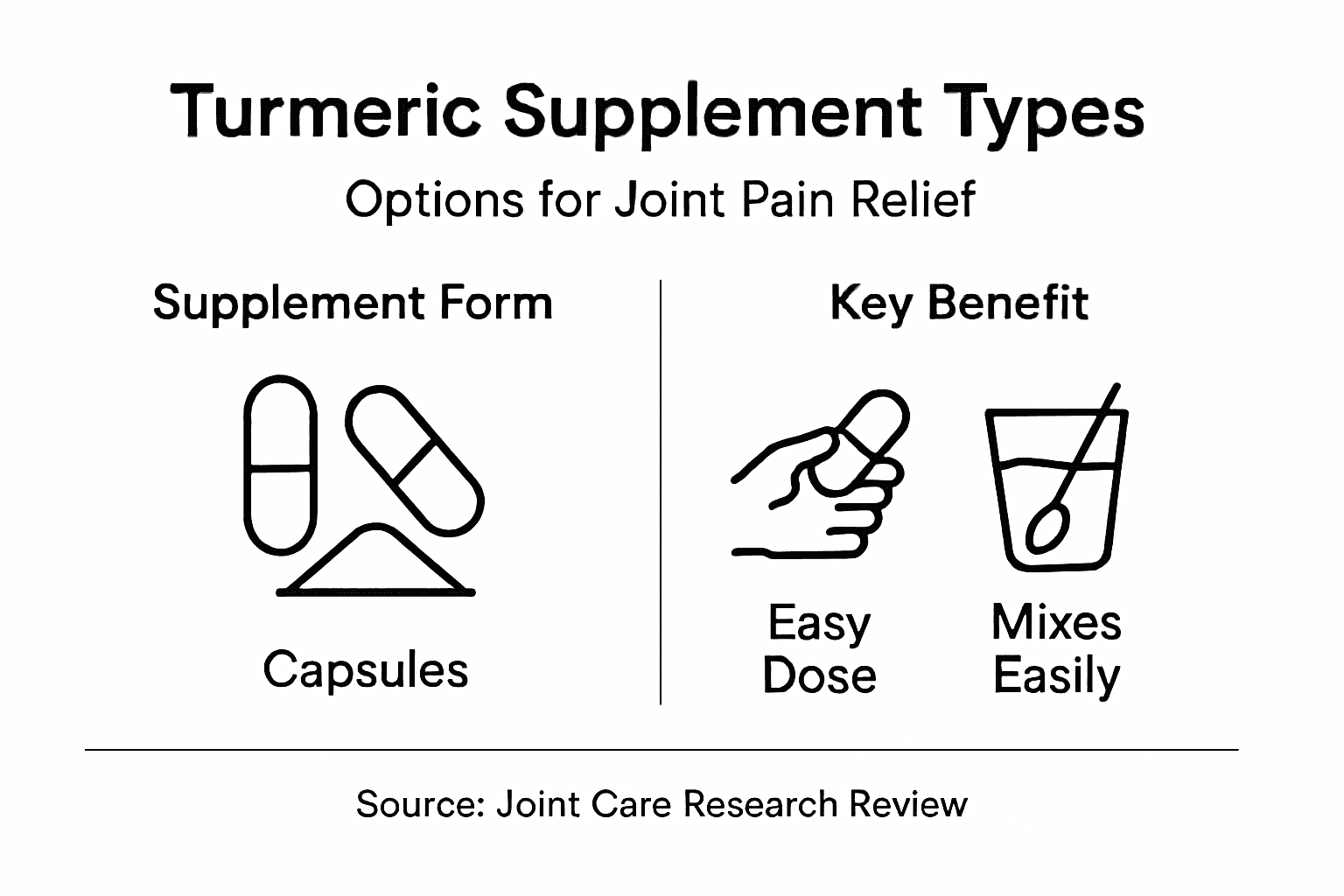
The most popular supplement form is capsules. These are convenient, portable, and contain measured doses of curcumin so you know exactly how much you’re getting with each pill. Capsules are ideal if you have a busy schedule and need to pop a supplement with breakfast. Tablets work similarly but are sometimes larger and can be harder to swallow. Both deliver curcumin directly to your digestive system without the earthy taste of ground turmeric.
Powders offer flexibility if you enjoy golden milk lattes or want to add turmeric to smoothies and soups. The advantage here is that you control the dose and can pair it immediately with fat for better absorption. Ground turmeric from your spice rack is the most affordable option, though it contains less concentrated curcumin than supplement-grade powders. Turmeric dietary supplements in various formulations allow you to choose what fits your routine best.
Topical ointments and creams are available for localized joint pain, particularly for osteoarthritis affecting specific areas like knees or hands. These work differently than oral supplements since they target inflammation at the skin surface rather than systemically. Some women find them helpful for quick relief during flare-ups, though they work best alongside oral supplements for comprehensive support.
Here’s what matters most: check the curcumin content on the label. Quality varies dramatically between products. Look for supplements that specify curcumin percentage and include piperine or other absorption enhancers. Your body can only benefit from what it actually absorbs, so a cheaper product with minimal curcumin might waste your money.
Pro tip: Compare curcumin content per serving across products and choose formulations that include black pepper extract or enhanced bioavailability technology for maximum effectiveness.
Here’s a quick comparison of common turmeric supplement forms and their key characteristics:
| Supplement Form | Concentration of Curcumin | Absorption Method | Ideal Use Case |
|---|---|---|---|
| Capsules | High, standardized dose | Oral | Daily, precise dosing |
| Powder | Moderate, flexible dose | Oral | Recipe integration |
| Topical Cream | Low, localized effects | Skin absorption | Immediate joint relief |
| Fresh Root | Low, natural content | Oral | Culinary use, smoothies |
Turmeric’s Effects on Inflammation and Pain
Inflammation is the root cause of most joint pain you experience. Your body’s immune system overreacts to stress, injury, or aging, triggering a cascade of inflammatory signals that make your joints swell, stiffen, and hurt. Turmeric works differently than typical pain relievers because it addresses this underlying inflammation rather than just masking the discomfort.

Curcumin tackles inflammation by blocking the molecular pathways your body uses to create inflammatory signals. Think of it as turning down the volume on your immune system’s alarm. Research shows curcumin may reduce osteoarthritis discomfort and improve mobility through these anti-inflammatory mechanisms. Women in your age group who start turmeric supplementation often report noticeable improvements in joint flexibility and reduced morning stiffness within weeks.
The pain relief isn’t immediate like ibuprofen. Curcumin works gradually, accumulating in your system over time to reduce chronic inflammation. This approach means you’re not just treating symptoms; you’re addressing what’s actually causing the problem. Clinical evidence suggests that oral curcumin can improve joint pain, stiffness, and overall function, though results vary based on dosage, supplement quality, and individual factors.
Your joints contain synovial fluid that lubricates movement. When inflammation increases, this fluid becomes less effective and your joints feel creaky and painful. By reducing inflammation, turmeric helps restore this protective mechanism, making stairs and everyday activities feel easier again. The cumulative effect means consistent daily use matters more than occasional doses.
Many women notice improved mobility before they realize their pain has decreased. They start moving more freely, reaching higher shelves, or taking longer walks without thinking about it. That’s turmeric working to restore function, not just ease discomfort.
Pro tip: Start turmeric supplementation consistently and give it at least 4 to 8 weeks to show full effects, as anti-inflammatory benefits build gradually rather than appearing immediately.
Safety, Risks, and Recommended Dosage
Turmeric is generally safe when you consume it as a spice in food. Your grandmother’s curry dishes posed no health risk, and neither does occasional golden milk. The conversation changes when you move to concentrated supplements, which deliver much higher doses of curcumin than you would ever eat naturally. That’s when you need to be thoughtful about safety.
Most people tolerate turmeric supplements well, but some experience mild gastrointestinal discomfort like nausea or upset stomach. This typically happens when you take supplements on an empty stomach or exceed recommended doses. Taking your supplement with food significantly reduces this risk. Stop taking it temporarily if you experience persistent digestive issues and consult your healthcare provider.
The real concerns emerge with high doses or long-term use, particularly with enhanced formulations designed for maximum absorption. High-bioavailability turmeric can potentially cause liver injury with extended use at elevated doses. This doesn’t mean turmeric supplements are dangerous, but it means you can’t just keep increasing doses hoping for faster results. More is not better.
Medication interactions are critical. If you take blood thinners like warfarin, turmeric supplements may amplify their effects, increasing bleeding risk. Similarly, turmeric can interact with chemotherapy drugs and certain diabetes medications. This is non-negotiable: tell your doctor about any supplements you’re considering, especially if you’re on prescription medications.
Clinical trials typically use 500 to 2,000 mg of curcumin daily divided into multiple doses. Most over-the-counter supplements fall within this range. Start at the lower end and assess how your body responds before increasing. If you have gallbladder issues, avoid high-dose turmeric entirely.
Pro tip: Always consult your healthcare provider before starting turmeric supplements, especially if you take blood thinners, diabetes medications, or chemotherapy drugs, and never exceed the recommended dosage on the label.
Comparing Turmeric to Other Joint Remedies
You’ve probably tried ibuprofen or other over-the-counter pain relievers for your joint discomfort. They work fast, which feels great initially, but they come with trade-offs. NSAIDs like ibuprofen reduce inflammation effectively, but regular use can cause stomach ulcers, acid reflux, and kidney issues, especially for women over 40 taking them consistently.
Turmeric offers a fundamentally different approach. Instead of just blocking pain signals, curcumin reduces inflammation similarly to NSAIDs but with fewer gastrointestinal side effects. You’re not masking symptoms; you’re addressing the underlying problem. Clinical trials show comparable pain reduction at doses around 1,000 mg daily, without the stomach damage that comes with long-term NSAID use.
The trade-off is speed. NSAIDs work within an hour; turmeric takes weeks to show full effects. For acute pain flare-ups, NSAIDs win. For chronic joint management, turmeric wins because it’s safer for extended use. Many women find success combining both strategies: taking turmeric daily for baseline inflammation control and using NSAIDs occasionally when pain spikes.
Other popular alternatives like glucosamine and chondroitin have mixed research support and vary widely in quality. Turmeric’s curcumin demonstrates efficacy comparable to some NSAIDs like ibuprofen, making it a stronger evidence-based choice for joint pain management. Physical therapy and strength training remain essential regardless of supplement choice.
Some women use topical creams, heating pads, or prescription medications alongside turmeric. The goal is finding what works for your body without compromising long-term health. Turmeric’s safety profile makes it an excellent foundation for a comprehensive joint-care strategy.
The real advantage turmeric holds is sustainability. You can take it daily for years without the health risks associated with chronic NSAID use or the cost of prescription medications.
This table summarizes turmeric’s anti-inflammatory action compared to other joint remedies:
| Remedy | Target Mechanism | Speed of Relief | Long-Term Safety |
|---|---|---|---|
| Turmeric | Reduces inflammation | Weeks to months | Excellent for daily use |
| NSAIDs | Blocks pain signals | Within an hour | Risks with prolonged use |
| Glucosamine | Supports cartilage | Varies, uncertain | Generally safe |
| Chondroitin | Supports cartilage | Varies, uncertain | Generally safe |
Pro tip: Use turmeric as your daily anti-inflammatory foundation and reserve NSAIDs for acute pain flare-ups rather than relying on either alone for joint pain management.
Discover Natural Relief with Turmeric Supplements Tailored for Joint Support
If you are struggling with joint pain and inflammation caused by age or daily stress you are not alone. This article highlights how curcumin in turmeric works to reduce inflammation at its source rather than just masking discomfort. Achieving consistent absorption through supplements combined with black pepper and healthy fats is key to unlocking turmeric’s full potential for joint comfort and mobility.
At Asli Nutrition, we understand your goal of easing joint stiffness and improving flexibility naturally. That is why we offer premium turmeric supplements crafted with enhanced bioavailability and added piperine to maximize curcumin absorption. Explore our Our SIGNATURES – Asli Nutrition collection for expertly formulated products that help support your joint health and reduce inflammation safety.
Take control of your joint health now by choosing supplements trusted by many for quality and effectiveness. Visit Best Sellers – Asli Nutrition for customer favorite turmeric options and start a daily routine that supports long-term joint comfort. Don’t wait for pain to hold you back—begin your natural joint relief journey today at Asli Nutrition.
Frequently Asked Questions
What is turmeric and how does it help with joint pain?
Turmeric is a bright yellow spice derived from the Curcuma longa plant, mainly known for its active compound, curcumin. Curcumin has potent anti-inflammatory and antioxidant properties that help reduce inflammation, which is often the root cause of joint pain and stiffness.
How can I increase the absorption of curcumin from turmeric?
Curcumin is not easily absorbed by the body on its own. To enhance absorption, combine turmeric with piperine, a compound found in black pepper, and take it with healthy fats like olive oil or coconut oil. This method allows for better usage of curcumin in your body.
What forms of turmeric supplements are available for joint pain relief?
Turmeric supplements come in various forms, including capsules, powders, and topical creams. Capsules provide a standardized dose, powders allow for flexibility in recipes, and topical creams offer localized relief for specific joint areas.
How long does it take for turmeric to show effects on joint pain?
Turmeric’s anti-inflammatory benefits tend to build gradually and may take 4 to 8 weeks of consistent use to show noticeable improvements in joint pain and stiffness. Unlike traditional pain relievers, turmeric addresses the root cause of inflammation over time.