
How to Manage Stress Naturally for Women with Joint Pain

Sleepless nights, a stiff back each morning, and constant worries about health can feel overwhelming as you move through midlife. For many American women, joint pain and persistent stress seem to show up together, making daily life more challenging. Identifying what triggers these symptoms brings real control, setting the stage for relief through gentle routines, mindful breathing, and targeted supplements—tools that truly nurture your body and mind.
Table of Contents
- Step 1: Assess Current Stress and Pain Triggers
- Step 2: Implement Gentle Daily Movement Routines
- Step 3: Incorporate Mindful Breathing and Relaxation
- Step 4: Choose Supportive Supplements for Stress Relief
- Step 5: Track Progress and Adjust Your Routine
Quick Summary
| Key Insight | Explanation |
|---|---|
| 1. Identify Stress and Pain Triggers | Recognize what causes stress and pain to empower your response and guide future strategies. |
| 2. Implement Gentle Movement Routines | Engage in low-impact activities daily to strengthen joints and reduce stress, enhancing overall well-being. |
| 3. Practice Mindful Breathing | Use box breathing and body scanning to relieve tension, helping to manage stress effectively and improve pain perception. |
| 4. Choose Supportive Supplements | Consider supplements like Omega-3 and Curcumin to address joint pain and support emotional resilience, but consult a healthcare provider first. |
| 5. Track Your Progress | Monitor stress and pain levels to understand which strategies work for you, allowing for personalized adjustments and celebrating small wins. |
Step 1: Assess Current Stress and Pain Triggers
Understanding what causes your stress and pain is the first step toward managing both effectively. You cannot control what you do not recognize, so taking time to identify your specific triggers gives you real power over your response to them. This assessment becomes your roadmap for the strategies you will use moving forward.
Start by thinking about the last week or two. When did you feel the most stressed or experience increased joint pain? Was it related to work demands, relationship tensions, financial worries, or health concerns? Identifying stress triggers such as these helps you understand what drains your energy and worsens your physical symptoms. Write down the situations that stand out to you, no matter how small they seem.
Next, pay attention to patterns in your physical response. Does your neck tighten when you are anxious about money? Do your knees ache more on days when you have difficult conversations? Notice whether your pain flares up alongside specific emotional states like frustration, sadness, or worry. Sometimes stress and joint pain feed each other in a cycle that is hard to break unless you see the connection clearly.
Consider what you can actually influence versus what lies outside your control. You might not be able to change your work situation entirely, but you can influence how you respond to it. Understanding this difference, combined with effective stress management strategies like deep breathing and self-care, helps you focus your energy where it matters most.
Gather your observations in one place. A simple notebook, phone notes, or even a basic spreadsheet works perfectly. Include what happened, how you felt emotionally, and where you experienced physical symptoms. After a week of tracking, patterns will emerge that surprise you.
Pro tip: Keep your stress and pain journal for at least 10 days before making changes, so you capture a true picture of your triggers and the connections between your emotions and physical symptoms.
Step 2: Implement Gentle Daily Movement Routines
Gentle movement is one of the most effective tools for managing joint pain and stress simultaneously. When you move your body regularly, you strengthen the muscles supporting your joints, improve flexibility, and release tension that stress builds up in your shoulders, neck, and back. The key is starting slowly and choosing activities that feel good rather than painful.
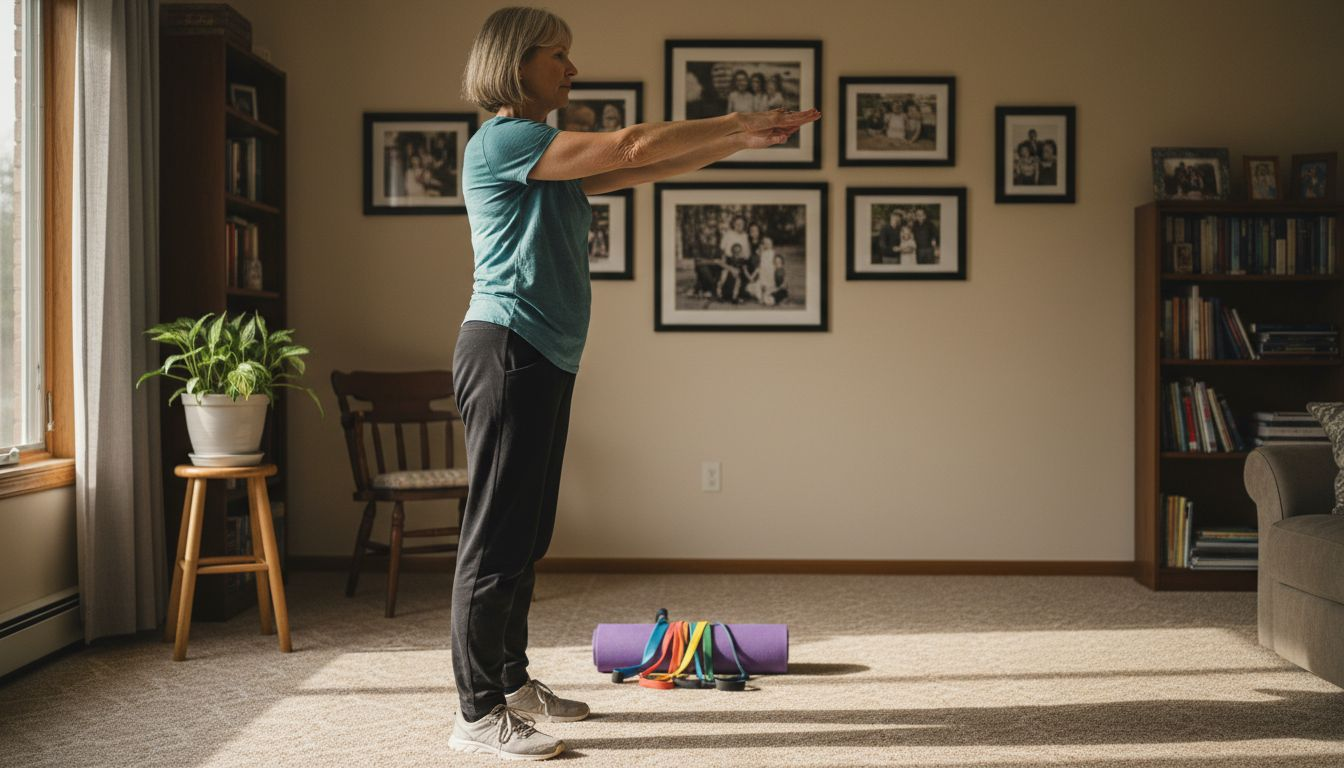
Begin with low-impact activities that are forgiving on your joints. Walking at a comfortable pace for 15 to 20 minutes daily is a perfect starting point. Swimming or water aerobics work beautifully too because the water supports your body weight while you move, reducing strain on your knees and hips. Physical activity helps manage chronic pain by improving both strength and mood, creating a positive cycle where you feel better physically and emotionally.
Add range-of-motion exercises to your routine three or four times weekly. These gentle movements warm up your joints and prevent stiffness from building up. Simple shoulder rolls, gentle neck stretches, and slow hip circles take only five minutes but make a real difference in how your body feels throughout the day. You can do these while watching television or listening to a podcast.
Consider activities like yoga, tai chi, or Pilates if they appeal to you. These practices combine movement with mindfulness, addressing both your physical and mental stress at once. Start with beginner-level classes designed for people with joint concerns. Low-impact activities strengthen muscles around your joints and improve balance, which becomes increasingly valuable as you age.
Most importantly, listen to your body. Some days you will feel stronger than others, and that is completely normal. What matters is consistency over intensity. Moving gently every single day beats pushing yourself hard once a week and then recovering from soreness.
Pro tip: Schedule your movement routine at the same time each day, perhaps after breakfast or during your lunch break, to build it into your habit pattern and increase the likelihood you will stick with it.
Step 3: Incorporate Mindful Breathing and Relaxation
Your breath is a powerful tool that you control completely, making it one of the most reliable ways to calm your nervous system when stress rises. Unlike exercise or other stress management strategies, breathing exercises work instantly and require no equipment or special location. You can practice them anywhere, anytime you need relief.
Start with a simple technique called box breathing. Inhale slowly through your nose for a count of four, hold for four, exhale through your mouth for four, and pause for four. Repeat this cycle five to ten times. This rhythmic pattern signals to your body that it is safe to relax, reducing the physical tension that amplifies joint pain. Mindful breathing exercises reduce stress impact while increasing body awareness, which helps you notice and release tension before it worsens.
Combine breathing with gentle body scanning. Lie down comfortably and slowly bring your attention from your toes all the way to the top of your head, noticing any tension without trying to fix it. This practice builds awareness of where stress settles in your body. Many women find that their jaw, shoulders, and lower back hold the most tension. Mindfulness meditation helps manage pain through body awareness and non-judgmental observation, which reduces anxiety and pain perception over time.
Practice for just ten minutes daily to see real changes. You can do this first thing in the morning before your day becomes hectic, during lunch if stress builds midday, or before bed to help you sleep better. Consistency matters more than duration. Even five minutes of focused breathing beats twenty minutes of distracted practice.
If your mind wanders, that is completely normal. Simply notice the thought and gently return your attention to your breath. There is no such thing as failing at this practice.
Pro tip: Set a phone reminder for the same time each day to practice breathing exercises, making it a non-negotiable appointment with yourself that you treat as seriously as any other commitment.
Step 4: Choose Supportive Supplements for Stress Relief
When breathing exercises and movement routines are in place, targeted supplements can provide additional support for both stress and joint pain. The right supplements work alongside your lifestyle changes, addressing inflammation and supporting your body’s natural stress response. However, not all supplements work the same way for every person, so understanding your options matters.
Start by identifying which supplements might help your specific situation. Omega-3 fish oil reduces inflammation throughout your body and supports mood stability, making it valuable for stress management. Curcumin from turmeric targets joint inflammation while also supporting mental clarity. Glucosamine and chondroitin help maintain cartilage health and joint function. SAM-e supports both joint health and emotional resilience during stressful periods. Supplements like curcumin and fish oil have demonstrated potential in relieving pain and inflammation, though individual results vary based on your unique physiology.
Here is a quick summary of common supplement options and their main benefits:
| Supplement | Main Benefit | Additional Support |
|---|---|---|
| Omega-3 Fish Oil | Reduces inflammation | Supports mood stability |
| Curcumin (Turmeric) | Eases joint pain | Enhances mental clarity |
| Glucosamine/Chondroitin | Maintains cartilage | Supports joint function |
| SAM-e | Aids joint health | Boosts emotional resilience |
Before adding any supplement to your routine, consult with your healthcare provider or a registered dietitian. They can review your current medications, assess any dietary gaps in your nutrition, and recommend which supplements will work best for you. Some supplements interact with medications or require specific dosing based on your health status. This personalized approach ensures you get safe, effective results rather than guessing what might work.
When selecting products, prioritize quality and transparency. Look for supplements that have been third-party tested and clearly list their ingredients and potency. The supplement market includes products of varying quality, so choosing reputable brands matters. Consider starting with one supplement at a time so you can notice how your body responds before adding another.
Give supplements at least four to six weeks to show results. Many women notice improvements in joint comfort first, followed by better stress resilience over time. Track how you feel in your stress and pain journal so you have clear evidence of what is working.
Pro tip: Take your supplements consistently at the same time each day with a meal that contains healthy fats, which enhances absorption and helps your body utilize them more effectively.
Step 5: Track Progress and Adjust Your Routine
What gets measured gets managed. By tracking your stress levels and joint pain over time, you create a clear picture of what strategies actually work for your unique body. This data transforms vague feelings like “I think I am doing better” into concrete evidence that guides your next moves.
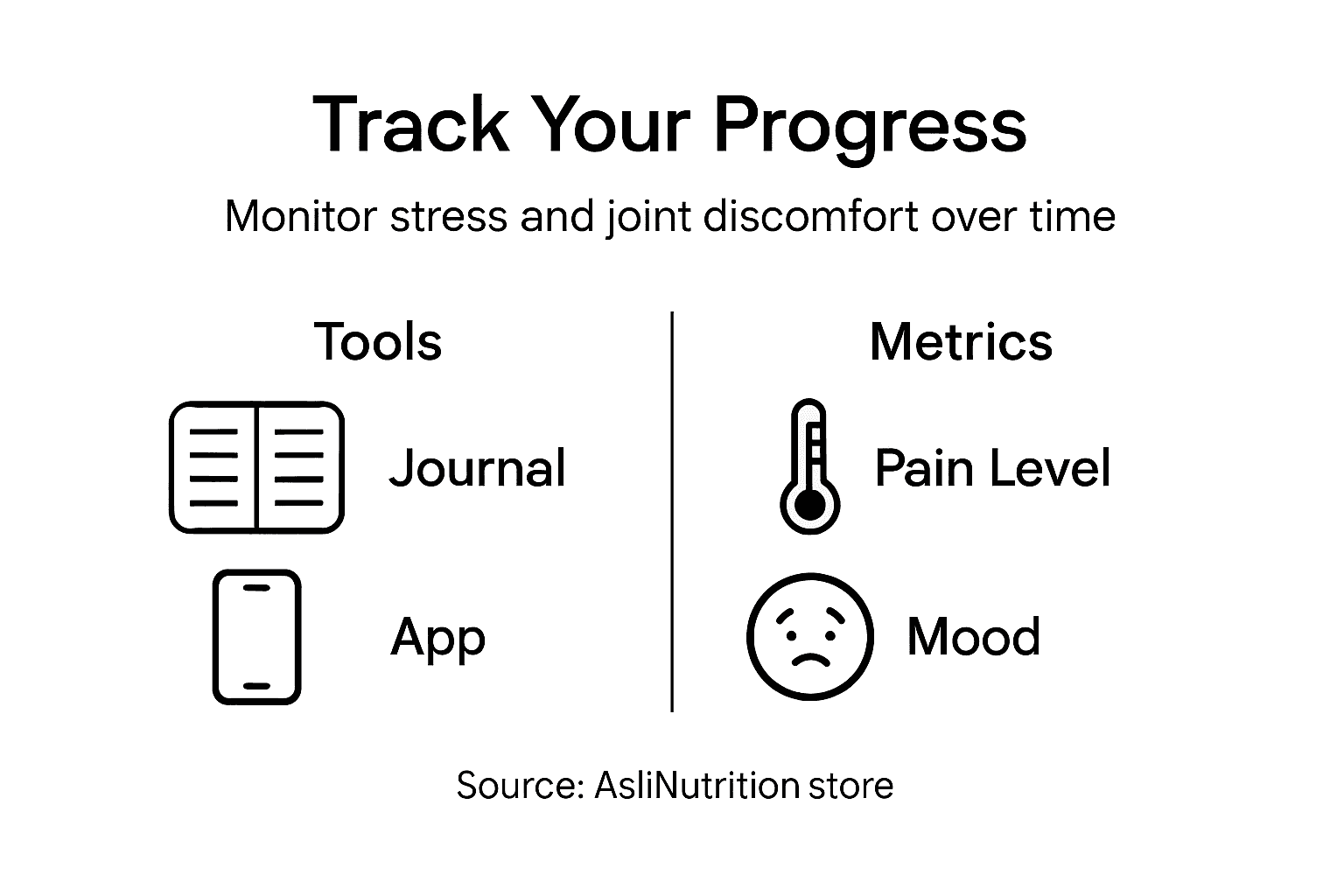
Return to the journal you started in Step 1. Each week, rate your overall stress level on a scale from one to ten and note your average joint pain intensity. Record which activities and supplements you used that week and how consistently you practiced them. After two to three weeks, patterns emerge. You might notice that weeks with daily breathing practice had noticeably lower stress scores, or that walking five times weekly reduced your knee pain more than sporadic movement.
This table outlines useful tracking methods for stress and joint pain management:
| Tracking Method | Recorded Information | Benefit |
|---|---|---|
| Journal | Emotions, pain level | Reveals personal patterns |
| Weekly Rating | Stress (1-10), pain (1-10) | Identifies progress over time |
| Progress Chart | Activities and results | Helps tailor action steps |
Monitoring stress levels and triggers helps you recognize what actually moves the needle for you. Tracking progress in pain self-management supports personalization of your routine and improves outcomes through gradual modifications based on what works. Do not assume that because one strategy helped someone else, it will help you in the same way. Your body is your best guide.
Be willing to adjust based on what your data shows. If a particular supplement is not helping after six weeks, swap it for something else. If you struggle with morning breathing exercises, move them to evening when you have more time. If yoga felt too intense, try gentler stretching instead. Small modifications keep your routine sustainable and prevent burnout.
Do not wait for perfection before celebrating progress. Maybe your pain decreased by only fifteen percent, or you manage stress better on three days weekly instead of daily. These wins matter. They prove your approach is working and motivate you to continue.
Pro tip: Review your progress journal every month during a quiet moment, comparing notes from three months ago to identify trends and celebrate how far you have come, which reinforces your commitment to the practices that genuinely help.
Support Your Journey to Manage Stress and Joint Pain Naturally
Living with joint pain while facing daily stress can feel overwhelming. The article highlights key challenges like identifying stress triggers, incorporating gentle movement, mindful breathing, and supportive supplements such as Omega-3 fish oil and curcumin. These strategies address inflammation and emotional resilience which are critical for women seeking natural relief.
At AsliNutrition.store, we understand how important it is to have trusted supplements that complement your lifestyle changes. Our carefully selected products focus on reducing inflammation and supporting your body’s stress response safely and effectively. Take charge today and experience the difference consistent, high-quality supplement support can make alongside your new routines.
Ready to enhance your natural stress management and joint care? Visit AsliNutrition.store now to explore supplements designed to empower your wellness journey. Start feeling stronger and more balanced with every step.
Frequently Asked Questions
How can I identify my stress triggers related to joint pain?
Understanding your stress triggers starts with self-reflection. Track your emotions, pain levels, and specific situations in a journal for at least ten days. This helps you pinpoint which stressors correlate with your joint pain, allowing you to address them directly.
What gentle movements can I do daily to reduce stress and joint pain?
Incorporate low-impact activities such as walking for 15 to 20 minutes each day. Starting gradually helps strengthen your muscles and relieve tension, enhancing both your mental and physical well-being over time.
How can mindful breathing techniques help manage my stress?
Practicing mindful breathing, such as box breathing, can calm your nervous system almost instantly. Try to do this exercise for ten minutes daily to reduce stress levels and alleviate tension in your joints.
Which supplements should I consider for stress relief and joint health?
Consider supplements like Omega-3 fish oil and curcumin, which can help reduce inflammation and support mood. Consult with a healthcare provider to tailor a supplement plan that meets your specific needs and track your progress over six weeks.
How can I track my progress in managing stress and joint pain?
Maintain a journal where you rate your stress and pain on a scale of one to ten each week. This tracking method allows you to identify patterns and adjust your strategies accordingly to improve your overall well-being over time.
Recommended
- Everyday Longevity Hacks for Women Over 35 (Inflammation, Cortisol & 2 – Asli Nutrition
- Why Women Over 35 Struggle With Cortisol (And The Simple Habit That He – Asli Nutrition
- Why Inflammation Makes Women Over 40 Feel Older (And What You Can Do T – Asli Nutrition
- Asli Nutrition | Natural Supplements for Sleep & Stress