
Role of Vitamins for Joint Pain Relief in Women

Stiff knees in the morning or aching hips after a long day can make everyday life feel more challenging than it should. For many American women in their 40s, joint pain is not just a nuisance but a barrier to staying active and enjoying family moments. Understanding how specific vitamins can support comfort and flexibility offers a practical path toward lasting wellness, highlighting options grounded in both science and real-life needs.
Table of Contents
- What Vitamins Do For Your Joints
- Key Vitamins Essential For Women 40+
- How Vitamins Affect Joint Pain And Mobility
- Choosing Evidence-Based Vitamin Supplements
- Common Supplement Risks And Interactions
Key Takeaways
| Point | Details |
|---|---|
| Importance of Vitamins for Joint Health | Certain vitamins, such as Vitamin D, Calcium, and Omega-3 Fatty Acids, play crucial roles in maintaining joint health and reducing inflammation. |
| Targeted Nutritional Support for Women Over 40 | Women in their 40s should focus on specific vitamins like B-Complex, Magnesium, and Vitamin E to address age-related changes and maintain overall wellness. |
| Personalized Supplement Strategies | Consulting a healthcare professional for tailored vitamin supplementation can enhance effectiveness and safety, especially regarding potential interactions with existing medications. |
| Risks of Dietary Supplements | Understanding the risks associated with supplements, including interactions and overdoses, is essential for safe use and maximizing health benefits. |
What Vitamins Do for Your Joints
Understanding how vitamins support joint health is crucial for women experiencing discomfort and seeking natural relief. Joint health involves maintaining cartilage strength, reducing inflammation, and supporting overall musculoskeletal function. Certain vitamins play a pivotal role in protecting and repairing joint tissues, making them essential for long-term wellness.
Vitamins contribute to joint health through multiple mechanisms. Specific nutrients support joint function by addressing key physiological processes:
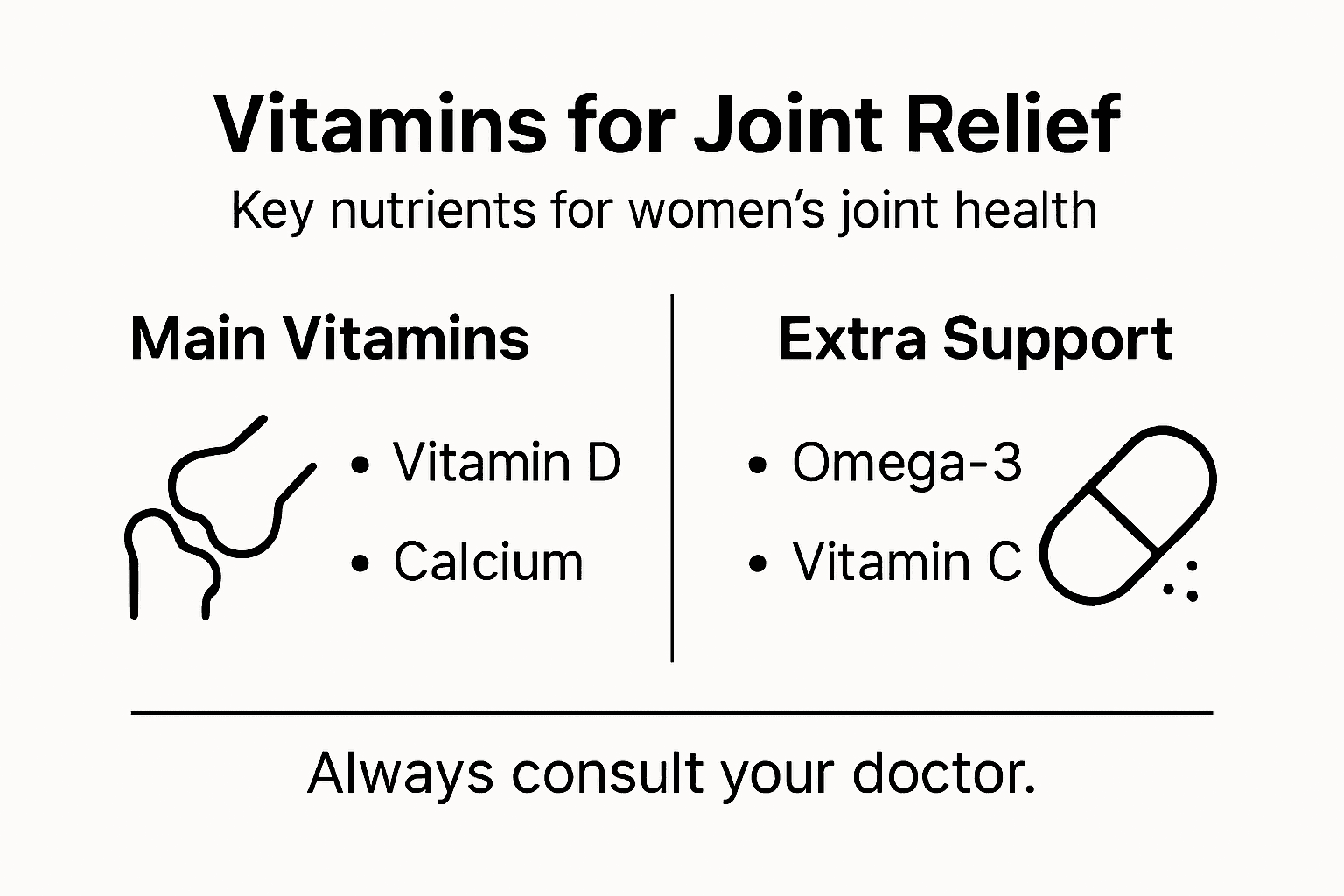
- Calcium: Maintains bone density and prevents osteoporosis
- Vitamin D: Enhances calcium absorption and supports bone strength
- Vitamin C: Produces collagen for cartilage repair
- Omega-3 Fatty Acids: Reduces inflammatory responses
- Chromium: Supports energy metabolism and nerve impulse transmission
The impact of these nutrients extends beyond basic joint maintenance. Vitamin C, for instance, is critical in collagen production, which forms the structural foundation of cartilage, tendons, and ligaments. By supporting collagen synthesis, this vitamin helps maintain joint flexibility and resilience.
Proper vitamin intake can significantly reduce joint pain and improve overall mobility for women experiencing age-related joint challenges.
Nutrients work synergistically to protect joint health. Dietary sources play a crucial role in delivering these essential compounds. Leafy greens, dairy products, fatty fish, and lean proteins provide a comprehensive nutritional approach to joint wellness.
Pro tip: Consult with a healthcare professional to develop a personalized vitamin supplementation strategy tailored to your specific joint health needs and medical history.
Key Vitamins Essential for Women 40+
As women enter their 40s, nutritional needs become increasingly complex due to significant hormonal and metabolic changes. Specific nutritional strategies support midlife wellness by addressing unique physiological challenges that emerge during this transformative decade.
The most critical vitamins for women over 40 focus on counteracting age-related health changes:
- Vitamin D: Supports bone density and immune function
- Calcium: Prevents osteoporosis and maintains skeletal strength
- B-Complex Vitamins: Boost energy metabolism and nerve health
- Magnesium: Regulates muscle and nerve function
- Omega-3 Fatty Acids: Reduce inflammation and support heart health
- Vitamin E: Provides antioxidant protection
- Zinc: Enhances immune system resilience
Hormonal transitions during perimenopause and menopause significantly impact nutritional requirements. These changes can affect everything from bone density to mood stability, making targeted supplementation crucial. Vitamin B12 and folate become especially important, helping maintain neurological function and supporting cellular energy production.
Proactive nutritional support can dramatically improve quality of life for women navigating midlife hormonal shifts.
While diet plays a fundamental role, supplement strategies become increasingly vital in maintaining overall health and mitigating age-related challenges. Consulting with healthcare professionals can help develop personalized nutrition plans that address individual health needs and potential deficiencies.

Here is a comparison of how key vitamins contribute to joint health and overall wellness for women over 40:
| Vitamin/Nutrient | Primary Joint Benefit | Additional Health Support |
|---|---|---|
| Vitamin D | Maintains bone strength | Supports immune system |
| Calcium | Builds skeletal density | Prevents osteoporosis |
| B-Complex Vitamins | Supports nerve signaling | Boosts energy metabolism |
| Magnesium | Eases muscle contractions | Supports nerve function |
| Vitamin C | Promotes collagen formation | Improves skin and tissue repair |
| Omega-3 Fatty Acids | Reduces joint inflammation | Enhances heart health |
| Vitamin E | Protects cartilage from damage | Functions as antioxidant |
| Zinc | Assists cartilage regeneration | Strengthens immune defenses |
Pro tip: Schedule an annual comprehensive blood test to accurately assess your specific vitamin and mineral levels, allowing for precise nutritional interventions.
How Vitamins Affect Joint Pain and Mobility
Understanding the intricate relationship between vitamins and joint health reveals a complex biochemical landscape that directly impacts pain and mobility. Certain vitamins play critical roles in managing inflammation, supporting tissue repair, and maintaining overall joint function.
Vitamins contribute to joint health through multiple essential mechanisms:
- Vitamin C: Supports collagen production for cartilage strength
- Vitamin D: Reduces inflammatory responses and supports bone density
- Vitamin E: Provides antioxidant protection against joint tissue damage
- Vitamin A: Helps regulate immune system and tissue repair processes
- B-Complex Vitamins: Support nerve function and reduce inflammation
The inflammatory process plays a crucial role in joint pain, and certain vitamins directly modulate this response. Vitamin D, for instance, helps regulate immune system reactions that can trigger chronic inflammation, while antioxidant vitamins like C and E combat oxidative stress that contributes to joint tissue degradation.
Targeted vitamin supplementation can potentially interrupt the inflammatory cascade that leads to chronic joint discomfort.
While supplement strategies show promising results, individual responses vary. Some women experience significant relief from strategic vitamin intake, while others might require more comprehensive approaches. The key is understanding how these nutrients interact with your body’s specific biochemical processes.
Pro tip: Consult with a healthcare professional to develop a personalized vitamin strategy that addresses your unique joint health needs and potential inflammatory markers.
Choosing Evidence-Based Vitamin Supplements
Selecting scientifically validated supplements requires a strategic approach that goes beyond marketing claims and focuses on proven effectiveness. Women experiencing joint pain need to navigate the complex landscape of nutritional support with careful consideration and expert guidance.
Key criteria for evaluating vitamin supplements include:
- Scientific Research: Look for supplements with multiple clinical studies
- Third-Party Testing: Verify independent quality assurance certification
- Ingredient Transparency: Understand exact composition and dosage
- Potential Interactions: Consider existing medications and health conditions
- Professional Consultation: Seek healthcare provider recommendations
Some supplements have demonstrated more robust scientific support for joint health. Glucosamine with chondroitin, omega-3 fish oils, curcumin, and collagen have shown promising results in managing inflammation and supporting joint function. However, individual responses can vary significantly, making personalized assessment crucial.
Not all supplements are created equal - rigorous research and professional guidance are essential for effective joint health management.
While supplement selection requires careful consideration, women can make informed decisions by prioritizing quality, consulting healthcare professionals, and understanding their unique physiological needs. Comprehensive blood testing and professional assessment can help identify specific nutritional gaps.
Pro tip: Request comprehensive nutritional testing from your healthcare provider to identify precise supplement needs and potential deficiencies affecting joint health.
Common Supplement Risks and Interactions
Dietary supplement risks demand careful consideration for women seeking joint pain relief. Understanding potential complications is crucial for safe and effective nutritional support, especially for those managing complex health conditions.
Key potential risks and interactions include:
- Medication Interference: Supplements can alter drug effectiveness
- Bleeding Risk: Some vitamins impact blood clotting
- Surgery Complications: Certain supplements may interfere with surgical procedures
- Hormonal Disruptions: Can impact existing hormone balances
- Nutrient Overload: Excessive supplementation may cause adverse effects
Women over 40 must be particularly vigilant about potential interactions. Supplements like glucosamine, omega-3 fatty acids, and high-dose vitamins can significantly impact existing medications, potentially altering their absorption or effectiveness. Blood thinners, diabetes medications, and hormone therapies are especially sensitive to supplement interactions.
Not all supplements are safe or beneficial - professional medical guidance is essential for responsible supplementation.
While supplement safety requires comprehensive understanding, women can minimize risks by maintaining open communication with healthcare providers. Comprehensive blood testing, medication reviews, and professional consultation can help create a safe, personalized supplementation strategy.
The table below highlights key supplement selection factors and common risks for women considering nutritional support for joint health:
| Supplement Factor | Why It Matters | Common Risks or Concerns |
|---|---|---|
| Scientific Evidence | Ensures proven benefits | Unsupported claims |
| Third-Party Testing | Verifies purity and dosage | Contamination or mislabeling |
| Potential Interactions | Prevents negative drug effects | Medication interference |
| Dosage Accuracy | Reduces overdose risk | Nutrient toxicity |
| Medical Supervision | Personalizes recommendations | Missed individual health needs |
Pro tip: Maintain a detailed log of all supplements and medications to share with your healthcare provider during routine check-ups.
Support Your Joint Health with Targeted Vitamin Solutions
Joint pain can make every day feel challenging, especially for women navigating age-related changes. If you are seeking relief from discomfort and want to improve mobility naturally, understanding the role of essential vitamins is your first step. This article highlights critical nutrients like Vitamin D, Calcium, and Omega-3 fatty acids that help reduce inflammation and support cartilage repair. At Asli Nutrition, we recognize these needs and offer carefully selected supplements designed to empower your joint health journey.
Start taking control of your joint comfort today with vitamins backed by science and tailored for women over 40. Don’t let joint pain limit your lifestyle. Explore high-quality options at Asli Nutrition and invest in your wellness with confidence. Ready to experience the benefits of proper nutritional support for your joints Visit Asli Nutrition now and take the first step toward lasting relief.
Frequently Asked Questions
What vitamins are essential for joint pain relief in women?
Key vitamins essential for joint pain relief in women include Vitamin D, Calcium, Vitamin C, Omega-3 Fatty Acids, and B-Complex Vitamins. These vitamins support joint health by reducing inflammation, promoting collagen production, and maintaining bone strength.
How do vitamins like Vitamin D and Calcium affect joint health?
Vitamin D enhances calcium absorption, which is essential for maintaining bone density and strength. Calcium helps prevent osteoporosis and provides structural support for joints, contributing to overall joint health and function.
Can taking supplements help relieve joint pain?
Yes, targeted vitamin supplementation can help relieve joint pain by addressing inflammation and supporting tissue repair. Vitamins such as Vitamin C and E offer antioxidant protection, while Omega-3 fatty acids help reduce joint inflammation.
Are there any risks associated with vitamin supplementation for joint pain?
Yes, potential risks include medication interactions, nutrient overload, and hormonal disruptions. It’s essential to consult with a healthcare professional before starting any new supplement regimen to ensure safety and effectiveness.