
Role of Supplements in Mood: Natural Solutions Explained

Feeling emotionally unpredictable as you move through your 40s and 50s is more common than you think, especially for American women facing hormonal changes. These shifts influence brain chemistry, leading to mood swings, anxiety, and lower motivation. Many women turn to natural supplements for relief, looking for ways to support their emotional well-being safely and effectively. This guide outlines how key nutrients like omega-3 fatty acids, B vitamins, magnesium, and select herbs can fill vital gaps—helping you discover personalized, science-backed solutions to regain your balance.
Table of Contents
- How Supplements Influence Women’s Mood
- Types of Mood-Supporting Nutrients and Herbs
- How Supplements Work in Mood Regulation
- Risks, Safety, and U.S. Supplement Regulations
- Common Mistakes When Choosing Mood Supplements
Key Takeaways
| Point | Details |
|---|---|
| Nutritional Supplements Impact Mood | Adequate nutrient levels are crucial for stabilizing mood, particularly during hormonal shifts in women over 40. Supplements can help fill dietary gaps. |
| Individual Needs Vary | Not all supplements are effective for everyone; personal dietary, stress, and nutrient status should guide supplementation choices. |
| Evidence for Effectiveness is Limited | While many women report benefits from supplements, scientific evidence is still developing, making personalized approaches crucial. |
| Quality and Safety are Essential | Choose high-quality, third-party tested supplements to mitigate risks related to contamination and dosage inaccuracies. |
How Supplements Influence Women’s Mood
Your mood doesn’t exist in isolation—it’s deeply connected to your body’s chemistry, hormones, and nutrient levels. As women enter their 40s and beyond, hormonal shifts create unique challenges for emotional stability.
Supplements work by addressing the biological foundations of mood. When your body lacks specific nutrients, your brain struggles to produce the neurotransmitters that regulate how you feel. Think of supplements as filling nutritional gaps your diet alone might miss.
The Chemistry Behind Mood and Nutrients
Your brain runs on specific building blocks. Without adequate nutrients, even the best diet and exercise routine won’t fully support your emotional well-being. The connection is direct and measurable.
Key nutrients influence mood through these mechanisms:
- Omega-3 fatty acids reduce inflammation in the brain and support neurotransmitter function
- B vitamins help convert food into the energy your nervous system needs
- Magnesium regulates stress response and calms nervous system activity
- Amino acids form the basis for serotonin and dopamine production
When these building blocks are present in sufficient amounts, your mood stabilizes naturally. Your anxiety decreases, your motivation improves, and you feel more like yourself.
Hormonal shifts affect body composition and mood, making strategic supplementation alongside diet and exercise particularly valuable during midlife.
Why Your 40s and Beyond Change Everything
During perimenopause and menopause, your estrogen levels fluctuate dramatically. This isn’t just about hot flashes—estrogen directly influences serotonin and dopamine receptors in your brain.

The result? Mood swings, irritability, low motivation, and feelings of anxiety that seem to appear from nowhere. Your body is biochemically different than it was at 30.
Supplements specifically designed for this phase address both the immediate symptoms and the underlying hormonal changes. They work with your body’s natural rhythms rather than against them.
How Specific Supplements Support Mood Stability
Creatine and omega-3 fatty acids support brain health while reducing inflammation linked to mood changes. This combination targets mood from multiple angles.
Consider what each category does:
- Anti-inflammatory supplements reduce the chronic inflammation that worsens mood disorders
- Neurotransmitter precursors provide raw materials your brain needs to create feel-good chemicals
- Stress-response modulators help your body manage cortisol levels throughout the day
- Nutrient replenishers correct deficiencies that develop over time
Not every supplement works for every woman. Your individual needs depend on your diet, stress levels, genetics, and current nutrient status.
The Reality of Supplementation
Scientific evidence for broad supplement benefits remains limited, especially for healthy women without specific deficiencies. However, this doesn’t mean supplements don’t work—it means evidence is still catching up to what many women experience.
If you’re experiencing mood fluctuations specifically, a personalized approach works better than generic multivitamins. Your healthcare provider can identify whether deficiencies exist and recommend targeted solutions.
Pro tip: Start by tracking your mood alongside one new supplement for 30 days before adding another—this helps you identify which supplements actually affect how you feel.
Types of Mood-Supporting Nutrients and Herbs
Not all nutrients affect your mood equally. Some work directly on your brain chemistry, while others support the systems that influence how you feel. Understanding which nutrients and herbs target your specific mood challenges helps you choose supplements strategically.
Your body doesn’t produce mood-regulating chemicals in a vacuum. It needs raw materials—specific vitamins, minerals, and plant compounds—to manufacture serotonin, dopamine, and other neurotransmitters that determine your emotional state.
Essential Nutrients for Mood Stability
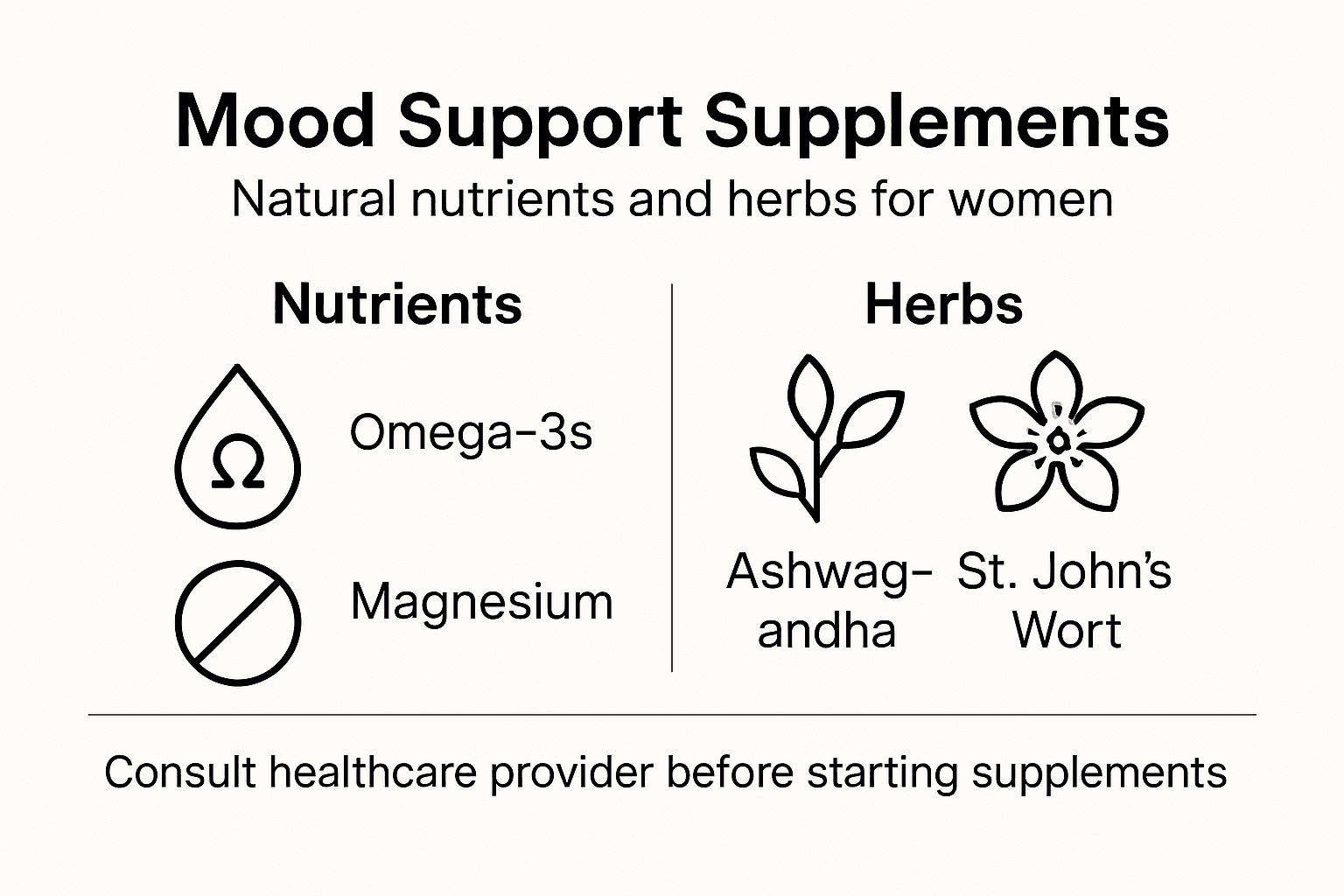
Mood-supporting nutrients include omega-3 fatty acids, B vitamins, zinc, magnesium, and vitamin D, all of which contribute to brain health and neurotransmitter production. Each plays a distinct role in your emotional well-being.
Here’s what each does:
- Omega-3 fatty acids build brain cell membranes and reduce inflammation that worsens mood disorders
- B vitamins convert food into neurotransmitter precursors your brain desperately needs
- Magnesium calms your nervous system and reduces anxiety responses
- Zinc supports immune function and neurotransmitter activity
- Vitamin D regulates serotonin production and mood regulation pathways
Women over 40 often develop deficiencies in these nutrients due to dietary changes, absorption issues, and hormonal shifts. Supplementing these specific nutrients addresses the root cause rather than just masking symptoms.
The table below compares essential nutrients and select herbs for mood support in women over 40:
| Supplement/Herb | Main Function | When Most Helpful |
|---|---|---|
| Magnesium | Calms nerves, reduces anxiety | Stressful periods, poor sleep |
| Omega-3s | Lowers brain inflammation | During menopausal shifts |
| Vitamin D | Supports serotonin pathways | Limited sun exposure |
| B Vitamins | Fuels brain chemical production | Fatigue or dietary gaps |
| Ashwagandha | Balances stress hormones | Chronic stress presence |
| Rhodiola | Boosts mood during fatigue | Mental exhaustion phases |
The Gut-Brain Connection
Your gut health directly impacts your mood. Probiotics and prebiotics support beneficial bacteria that produce neurotransmitters and reduce inflammation affecting your brain. This connection explains why mood often improves when you address digestive health.
Foods and nutrients impacting the gut-brain axis support mental wellness, while processed foods and excess sugar can harm mood stability.
Herbal Support for Mood
Several herbs have traditional use and research support for mood enhancement. These work alongside nutrients to provide multi-layered support for emotional stability.
Key mood-supporting herbs include:
- St. John’s wort may help mild depression, though evidence varies and interactions are possible
- Ashwagandha supports stress resilience and emotional balance
- Passionflower calms anxiety and promotes relaxation
- Rhodiola enhances mood during stressful periods
Herbs work more gently than pharmaceuticals but require consistency. Results typically appear within 4-8 weeks of regular use, not overnight.
Combining Nutrients and Herbs Wisely
Omega-3 fatty acids and B vitamins support neurotransmitter synthesis, forming the foundation of any mood-support plan. Adding targeted herbs amplifies these effects.
The strongest approach combines multiple nutrients rather than relying on a single supplement. Your mood depends on dozens of biochemical processes happening simultaneously, so addressing multiple pathways yields better results.
Consider working with a healthcare provider to identify which deficiencies you actually have. This prevents wasting money on supplements you don’t need while ensuring you get what your body truly requires.
Pro tip: Keep a simple mood journal alongside your supplement routine—note your energy, anxiety level, and sleep quality daily to identify which nutrients create the biggest shift in how you feel.
How Supplements Work in Mood Regulation
Supplements don’t magically change your mood. They work through specific biochemical pathways in your brain and body. Understanding these mechanisms helps you appreciate why consistency matters and why results take time.
Your mood emerges from complex interactions between hormones, neurotransmitters, and inflammatory signals. Supplements influence these systems by providing nutrients your brain needs to function optimally.
The Neurotransmitter Connection
Supplements influence mood by interacting with neurotransmitters like serotonin, dopamine, endorphins, and oxytocin. These chemicals regulate feelings of happiness and stress, determining how you feel moment to moment.
Your brain manufactures these mood chemicals from raw materials. Without adequate nutrients, production slows and your mood suffers. Supplements provide these building blocks:
- B vitamins enable serotonin synthesis in your brain
- Amino acids form the structural basis of dopamine and serotonin
- Magnesium activates enzymes needed for neurotransmitter creation
- Omega-3 fatty acids support neurotransmitter receptor function
When you supplement strategically, you’re essentially restocking your brain’s chemical production warehouse.
The Inflammation-Mood Link
Chronic inflammation damages brain cells and disrupts mood regulation. This is why anti-inflammatory supplements work so effectively for mood enhancement.
Supplements work in mood regulation by reducing inflammation and promoting neurochemical balance within the brain-gut axis. Women over 40 often experience increased systemic inflammation due to hormonal changes, making anti-inflammatory support particularly valuable.
Certain nutrients modulate brain chemistry by reducing inflammation and promoting emotional stability at the cellular level.
The Gut-Brain Axis
Your gut microbiome influences mood through multiple pathways. Beneficial bacteria produce neurotransmitters and metabolites that cross the blood-brain barrier. Probiotic supplements restore balance in your gut ecosystem.
When your gut bacteria are thriving, they produce compounds that improve mood, reduce anxiety, and enhance stress resilience. This is why digestive health directly impacts emotional well-being.
Timeline for Results
Supplements work gradually, not overnight. Brain chemistry changes take weeks to stabilize. Most women notice improvements within 4-8 weeks of consistent supplementation.
During this period, your body gradually corrects nutrient deficiencies and reduces inflammation. Neurotransmitter production increases slowly as your brain accesses adequate raw materials. Patience during this window determines whether you succeed.
Consistency matters more than dosage. Taking supplements sporadically won’t build the cumulative changes your mood requires.
Pro tip: Begin one new supplement at a time and wait at least three weeks before adding another—this allows you to isolate which supplements create noticeable mood shifts versus which are neutral for your body.
Risks, Safety, and U.S. Supplement Regulations
Supplements feel natural, but that doesn’t mean they’re automatically safe or necessary. The U.S. supplement market operates under different rules than pharmaceuticals, and this distinction matters for your health and safety.
Understanding the regulatory landscape helps you make informed choices about what you consume. Not all supplements are created equal, and some carry real risks.
How U.S. Supplement Regulations Work
Unlike medications, supplements don’t require FDA approval before reaching store shelves. Supplements in the U.S. are not tightly regulated and may contain excessive or inadequate nutrient levels, creating variability between brands and batches.
This regulatory gap means:
- Manufacturers don’t need to prove efficacy before selling products
- Quality control varies dramatically between companies
- Label claims often exceed actual scientific support
- Contaminants can slip through without detection
The FDA can only remove supplements from the market after they’re proven harmful. This reactive approach leaves you responsible for vetting products before use.
Real Risks of Supplement Use
Many supplements are unnecessary unless addressing specific deficiencies and can sometimes cause harm or interact adversely with medications. Taking random supplements hoping they’ll help is like throwing darts blindfolded.
Common safety concerns include:
- Drug interactions that reduce medication effectiveness
- Overdose toxicity from excessive nutrient intake
- Contamination with heavy metals or unlisted ingredients
- Allergic reactions to undisclosed components
- Organ damage from high-dose, long-term use
Women over 40 taking blood pressure medications or hormone-related drugs face particular risks. Some supplements directly interfere with these medications’ effectiveness.
Which Supplements Have Clear Evidence?
Not all supplements are equal. Some have robust research backing them. Others lack meaningful clinical support.
Supplements with stronger evidence for women over 40:
- Vitamin D (especially if deficient)
- Vitamin B12 (particularly for older women)
- Omega-3 fatty acids (for cardiovascular and brain health)
- Magnesium (if dietary intake is inadequate)
Supplements with uncertain benefits:
- Most multivitamins for healthy women
- Broad “energy” or “mood” formulations without specific targets
- High-dose single nutrients without documented deficiency
Multivitamin use offers uncertain benefits and potential risks from overdoses, making selective supplementation based on medical advice safer than blanket supplementation.
Getting Blood Work Before Supplementing
Accurate blood tests identify your actual nutrient status. This prevents wasting money on supplements you don’t need while ensuring you get what you actually lack.
Don’t assume you’re deficient. Ask your healthcare provider for comprehensive nutrient panels that test vitamin D, B12, iron, magnesium, and zinc. Your results guide smart supplementation choices.
Pro tip: Request your test results and keep them on file—bring them to supplement discussions with healthcare providers to ensure any new supplements won’t create dangerous nutrient overload from other sources.
Common Mistakes When Choosing Mood Supplements
Women over 40 often make predictable mistakes when selecting mood supplements. These errors waste money, delay real results, and sometimes create health risks. Learning to avoid them transforms your supplementation strategy from guesswork into precision.
Most mistakes stem from trusting social media trends over personal biology. Your mood challenges are unique to you, and generic approaches rarely work.
Mistake #1: Supplementing Without Knowing Your Actual Deficiencies
The biggest error is buying supplements based on assumptions rather than evidence. You don’t know if you’re magnesium-deficient, vitamin D-deficient, or perfectly adequate until blood work confirms it.
Taking supplements without verified deficiency or medical advice is a common mistake often influenced by misinformation or social media. This approach wastes hundreds of dollars yearly on supplements your body doesn’t need.
Get tested first. Blood work reveals your actual nutrient status and guides smart purchases.
Mistake #2: Assuming “Natural” Means Safe
Natural doesn’t equal safe. Hemlock is natural. So are many plant compounds that interact dangerously with medications or cause serious side effects.
Common natural supplement dangers:
- St. John’s wort interferes with antidepressants and birth control
- Ginkgo increases bleeding risk with blood thinners
- Valerian amplifies sedative effects of anxiety medications
- High-dose vitamin E increases bleeding and heart complications
Natural supplements require the same caution as pharmaceuticals, particularly if you’re taking existing medications.
Mistake #3: Treating Supplements as Cure-Alls
People frequently mistake multivitamins or popular supplements as cure-alls for mood without evidence. No single supplement fixes complex mood fluctuations caused by hormonal changes, stress, poor sleep, and sedentary lifestyle.
Supplements support your efforts—they don’t replace them. Diet quality, consistent exercise, sleep consistency, and stress management remain foundational.
Supplements enhance lifestyle improvements but cannot overcome poor habits or serve as substitutes for professional mental health support.
Mistake #4: Ignoring Quality and Testing Standards
Not all supplements are created equal. Some lack promised nutrients entirely. Others contain undisclosed contaminants or heavy metals.
Look for these quality indicators:
- Third-party testing (NSF, USP, ConsumerLab certification)
- Ingredient transparency with precise dosages listed
- Manufacturing standards mentioning GMP compliance
- Recent testing dates on the label or website
Cheap supplements often hide serious quality problems. Invest in brands that verify their products.
Mistake #5: Over-Supplementing Single Nutrients
More isn’t better. Excessive single nutrients create toxicity. High-dose vitamin A damages your liver. Excess iron causes organ damage. Too much zinc depletes copper.
Balance matters. Therapeutic doses exist for a reason—exceed them and you create problems instead of solving them.
Pro tip: Before buying any mood supplement, ask your healthcare provider three questions: Do I have a documented deficiency? Will this interact with my current medications? What evidence supports this for my specific situation?
Here’s a summary of common mistakes and their potential consequences:
| Mistake Type | Consequence | How to Avoid |
|---|---|---|
| Guessing Deficiencies | Wasted money, no real benefit | Get blood work before buying |
| Trusting Natural Means Safe | Dangerous interactions | Review medication conflicts |
| Believing in Cure-Alls | Delayed mood improvement | Address lifestyle foundations |
| Ignoring Quality Standards | Risk of contaminants | Choose third-party tested brands |
| Over-Supplementing Nutrients | Potential toxicity, organ damage | Follow recommended dosages |
Discover Mood-Boosting Supplements Tailored for Women Over 40
Experiencing mood swings, anxiety, or low motivation during hormonal changes can feel overwhelming. You deserve supplements that work with your unique body chemistry and nutritional needs to support emotional balance. By focusing on key nutrients like omega-3 fatty acids, magnesium, and B vitamins, you can address the root causes of mood instability rather than masking symptoms.
Explore our carefully crafted formulas at Our SIGNATURES – Asli Nutrition where quality and science meet. Start your personalized mood support journey today because waiting only prolongs discomfort. Visit https://aslinutrition.store now to find the best supplements suited for your needs and check out our Best Sellers – Asli Nutrition to boost your mood with confidence.
Frequently Asked Questions
What role do supplements play in mood regulation for women over 40?
Supplements can help regulate mood by providing essential nutrients that boost neurotransmitter production, reduce inflammation, and address hormonal changes that accompany aging, particularly during perimenopause and menopause.
Which nutrients are most beneficial for improving mood?
Key nutrients that support mood include omega-3 fatty acids, B vitamins, magnesium, vitamin D, and zinc. These nutrients play vital roles in brain health and the production of neurotransmitters like serotonin and dopamine.
How long does it take to notice the effects of mood supplements?
Most women typically notice improvements in mood within 4-8 weeks of consistent supplementation, as it takes time for the body to correct deficiencies and stabilize neurotransmitter production.
Can supplements replace other mood-improvement strategies?
While supplements can enhance mood and emotional stability, they should not replace healthy lifestyle choices such as a balanced diet, regular exercise, consistent sleep, and stress management. Supplements work best as a supportive addition to these foundational practices.