
What Is Sleep Support and Why It Matters

Sleepless nights can leave you feeling drained when all you want is to wake up refreshed and focused. For many women in midlife, changing hormones, stress, and lifestyle habits make restful sleep harder to achieve. Understanding natural sleep support solutions gives you the power to address these challenges with options designed for your unique needs, restoring balance and helping you feel your best each day.
Table of Contents
- Defining Sleep Support For Women
- Types Of Sleep Support Solutions
- How Natural Sleep Aids Work
- Key Benefits And Considerations
- Common Mistakes And Safety Tips
Key Takeaways
| Point | Details |
|---|---|
| Understanding Sleep Support | Women’s sleep support addresses unique challenges through hormonal management, stress reduction, and environmental optimization. |
| Personalization is Key | Tailored strategies based on individual physiological and lifestyle factors are crucial for effective sleep improvement. |
| Natural Options Available | Natural sleep aids can influence sleep mechanisms gently, offering alternatives to pharmaceutical solutions. |
| Common Mistakes to Avoid | Inconsistent sleep schedules and reliance on unregulated remedies can hinder sleep quality; consult professionals for guidance. |
Defining Sleep Support for Women
Sleep support represents a comprehensive approach to addressing the unique sleep challenges women experience throughout different life stages. Women’s sleep health involves understanding and managing complex physiological factors that significantly impact rest and overall well-being.
For women aged 40 to 60, sleep support encompasses multiple critical dimensions:
- Hormonal fluctuation management
- Stress reduction strategies
- Sleep environment optimization
- Targeted nutrition and supplement approaches
- Mental and physical health synchronization
Understanding sleep support requires recognizing that women’s sleep patterns are dramatically influenced by biological changes. Hormonal transitions during menstruation, pregnancy, and menopause can create substantial disruptions to normal sleep cycles. These shifts often produce symptoms like:
- Difficulty falling asleep
- Frequent nighttime awakenings
- Reduced sleep quality
- Increased daytime fatigue
- Mood and cognitive function variations
Hormonal fluctuations during different life stages play a significant role in determining sleep patterns and overall rest quality. Women experience more complex sleep challenges compared to men, necessitating a more nuanced approach to sleep support.
Sleep support isn’t just about quantity of sleep, but also its quality. It involves creating personalized strategies that address individual physiological needs, lifestyle factors, and potential underlying health conditions. A holistic approach considers physical, mental, and environmental elements that contribute to restful sleep.
Pro tip: Create a consistent sleep routine that includes relaxation techniques, minimal screen time before bed, and a cool, dark sleeping environment to enhance your natural sleep cycles.
Types of Sleep Support Solutions
Sleep support solutions provide targeted approaches to addressing sleep challenges for women, ranging from lifestyle modifications to medical interventions. Sleep disorder treatments encompass a comprehensive array of strategies designed to improve rest and overall health.
For women experiencing sleep disruptions, multiple support solutions are available:
- Behavioral therapies
- Medical interventions
- Holistic lifestyle approaches
- Technological sleep tracking
- Nutritional and supplement strategies
Behavioral and psychological interventions form a critical component of sleep support. Cognitive behavioral therapy specifically addresses underlying mental patterns that interfere with healthy sleep cycles. These therapeutic approaches help women:
- Identify sleep-disrupting thought patterns
- Develop relaxation techniques
- Create consistent sleep schedules
- Manage stress and anxiety
- Reframe negative sleep-related beliefs
Professional sleep health resources offer comprehensive guidance for implementing effective sleep support strategies. Medical solutions range from prescription medications to specialized devices like CPAP machines for addressing specific sleep disorders.
Holistic sleep support recognizes that optimal rest requires a multifaceted approach. This means considering physical health, mental well-being, environmental factors, and individual physiological changes that impact sleep quality for women in midlife.

Here’s a comparison of common sleep support solutions for women and their typical impact:
| Solution Type | Typical Use Case | Expected Benefits |
|---|---|---|
| Behavioral Therapy | Persistent stress-related insomnia | Long-term sleep pattern improvement |
| Medical Interventions | Diagnosed sleep disorders (e.g., apnea) | Symptom management, improved sleep |
| Holistic Lifestyle Changes | Sleep affected by daily habits | Enhanced overall sleep quality |
| Technological Sleep Tracking | Identifying disruptive lifestyle factors | Personalized recommendations |
| Nutrition & Supplements | Hormone-related sleep disruptions | Balanced rest, reduced fatigue |
Pro tip: Consult with a healthcare professional to develop a personalized sleep support strategy that addresses your unique physiological and lifestyle needs.
How Natural Sleep Aids Work
Natural sleep aids offer a gentle, holistic approach to addressing sleep challenges for women experiencing disrupted rest patterns. Botanical medicines for sleep interact with the body’s nervous system through complex mechanisms that promote relaxation and support healthy sleep cycles.
These natural interventions work through multiple physiological pathways:
- Neurotransmitter regulation
- Stress hormone reduction
- Nervous system modulation
- Circadian rhythm support
- Anxiety and tension relief
Herbal compounds specifically target the body’s sleep mechanisms by influencing key neurological systems. Unlike synthetic medications, these natural alternatives work more subtly to address underlying sleep disruption causes. The primary mechanisms include:
- Calming overactive neural pathways
- Reducing cortisol and stress responses
- Supporting melatonin production
- Promoting muscle and mental relaxation
- Balancing hormonal fluctuations
Complementary health approaches recognize that sleep support extends beyond simple pharmaceutical interventions. Melatonin supplements, for instance, directly influence circadian rhythms, helping women reset their internal sleep-wake cycles and address specific sleep challenges associated with midlife hormonal changes.
The effectiveness of natural sleep aids depends on individual physiology, with some women experiencing more significant benefits than others. This personalized response underscores the importance of a holistic approach that considers overall wellness, stress levels, and specific physiological needs.
The following table highlights key differences between natural and pharmaceutical sleep aids:
| Attribute | Natural Sleep Aids | Pharmaceutical Sleep Aids |
|---|---|---|
| Mechanism of Action | Modulates hormones gently | Directly alters brain chemistry |
| Side Effect Profile | Fewer, usually mild | Potential for stronger side effects |
| Onset of Effects | Gradual | Often rapid |
| Considerations | Varies by individual | Requires prescription, monitoring |
Pro tip: Consult with a healthcare professional to develop a personalized natural sleep support strategy tailored to your specific hormonal and health profile.
Key Benefits and Considerations
Sleep quality fundamentally impacts overall health, with profound implications for women navigating midlife transitions. Comprehensive sleep benefits extend far beyond simple rest, encompassing critical physical and mental wellness dimensions that directly influence long-term health outcomes.
Key benefits of optimal sleep support include:
- Enhanced immune system function
- Improved cognitive performance
- Emotional stability and mood regulation
- Reduced chronic disease risks
- Hormonal balance management
- Weight management support
Physiological health represents a critical consideration in understanding sleep’s comprehensive impact. Women experiencing consistent, quality sleep demonstrate significant advantages in managing age-related health challenges. These benefits manifest through:
- Lower inflammation markers
- More stable metabolic processes
- Enhanced stress resilience
- Better cardiovascular health
- Improved neurological protection
Brain performance and health research underscores the intricate connection between sleep and overall wellness. Consistent sleep patterns facilitate critical bodily repair mechanisms, support brain detoxification, and help mitigate risks associated with neurological decline.
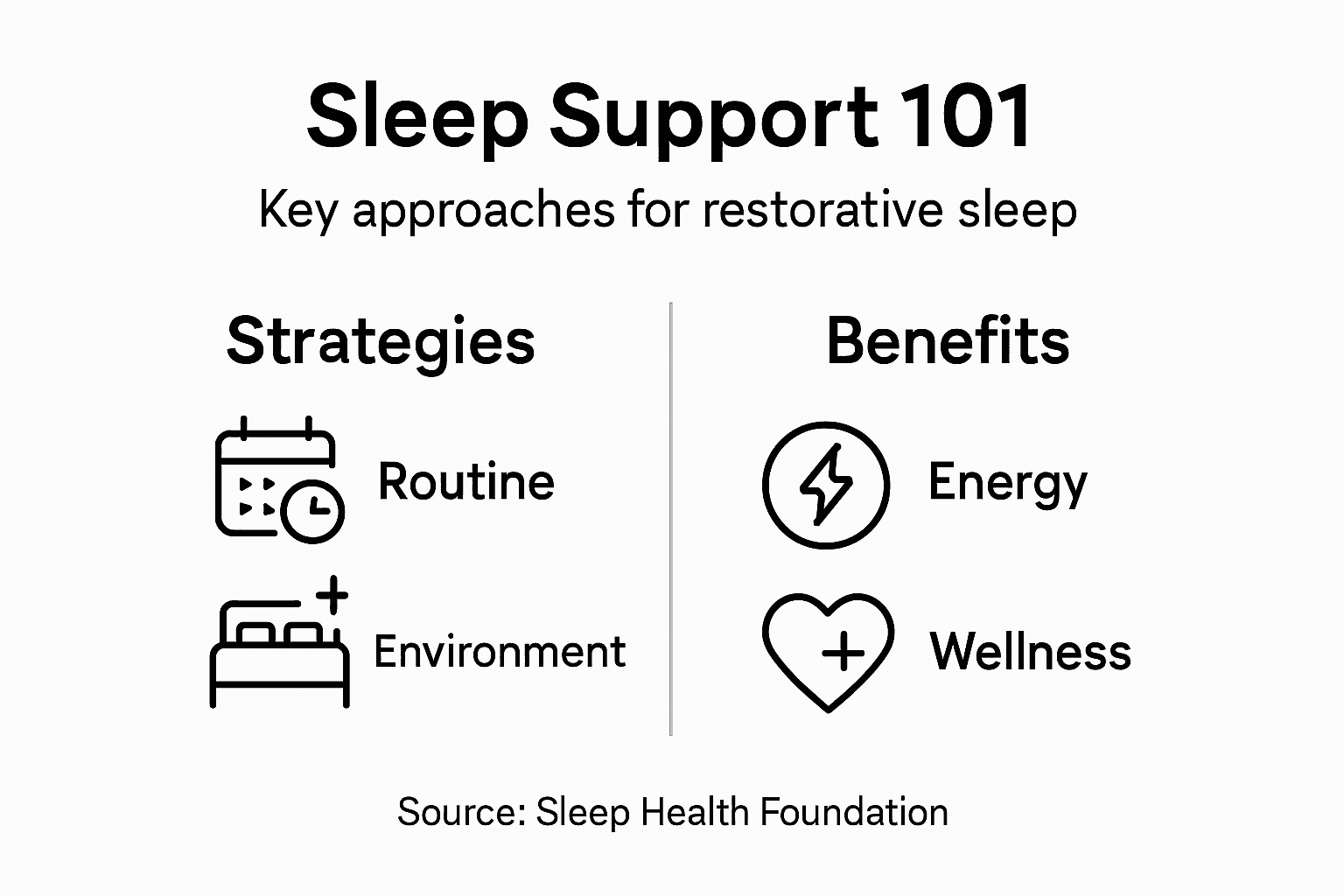
Individual sleep needs vary dramatically, requiring personalized approaches that consider unique physiological, hormonal, and lifestyle factors. What works for one woman might not be equally effective for another, emphasizing the importance of tailored sleep support strategies.
Pro tip: Track your sleep patterns and symptoms for at least two weeks to identify specific challenges and discuss personalized interventions with your healthcare provider.
Common Mistakes and Safety Tips
Sleep support strategies require careful consideration to avoid potential pitfalls that can compromise overall rest quality. Sleep health recommendations highlight critical mistakes women often make when addressing sleep challenges during midlife transitions.
Common mistakes in sleep management include:
- Inconsistent sleep schedules
- Ignoring underlying health conditions
- Relying on unregulated sleep remedies
- Excessive screen time before bed
- Consuming stimulants late in the day
- Neglecting stress management techniques
Safety considerations are paramount when developing a comprehensive sleep support approach. Women should be particularly mindful of potential risks associated with sleep interventions. Key safety strategies involve:
- Consulting healthcare professionals
- Using evidence-based interventions
- Monitoring potential medication interactions
- Creating a consistent sleep environment
- Addressing underlying health conditions
- Practicing stress reduction techniques
Workplace sleep performance strategies emphasize the importance of creating structured approaches to sleep management. This involves establishing consistent sleep and wake times, limiting light exposure before bedtime, and creating an optimal sleep environment that supports natural rest cycles.
Individual variability means that what works for one woman may not be effective for another. Personalized approaches that consider unique physiological, hormonal, and lifestyle factors are essential for developing sustainable sleep support strategies.
Pro tip: Keep a detailed sleep journal for two weeks to identify patterns, triggers, and potential areas for improvement in your sleep routine.
Unlock Restful Nights with Targeted Sleep Support Solutions
Many women struggle with sleep disruptions caused by hormonal changes, stress, and lifestyle challenges especially during midlife transitions. This article highlights how personalized sleep support is essential for restoring balance and improving overall well-being. If you face symptoms like difficulty falling asleep or frequent night awakenings it is critical to explore natural and effective remedies crafted specifically for women’s unique needs.
Discover our specially formulated supplements designed to aid hormonal balance, enhance relaxation, and promote restorative sleep. Explore Our SIGNATURES – Asli Nutrition for purpose-driven products backed by holistic health principles that align perfectly with the concept of natural sleep aids mentioned in the article.

Take charge of your sleep health today by visiting Best Sellers – Asli Nutrition to find customer favorites that support consistent restful nights. With scientifically inspired ingredients and a commitment to quality, these solutions help you overcome common sleep pitfalls and wake up refreshed. Start your journey toward better sleep and wellness now at Asli Nutrition.
Frequently Asked Questions
What is sleep support for women?
Sleep support for women refers to a comprehensive approach tailored to address the unique sleep challenges women face during different life stages, encompassing hormonal management, stress reduction, and optimizing sleep environments.
Why is sleep quality important for women?
Quality sleep is essential for women as it impacts overall health, including immune function, cognitive performance, and emotional stability, particularly during midlife transitions.
How do natural sleep aids work?
Natural sleep aids work by interacting with the body’s nervous system to promote relaxation and support healthy sleep cycles, often influencing neurotransmitter regulation and balancing hormonal fluctuations.
What are common mistakes to avoid when managing sleep support?
Common mistakes include maintaining inconsistent sleep schedules, ignoring underlying health conditions, relying on unregulated remedies, and neglecting stress management techniques.