
Why Consider Ashwagandha for Stress Relief and Joint Health

Finding natural ways to ease joint pain and daily stress can feel challenging, especially as life grows busier and wellness becomes a bigger priority. Many American women are turning to proven herbal solutions for gentle support that fits their active routines. Ashwagandha stands out as a powerful adaptogen with deep traditional roots and anti-inflammatory and stress-relieving properties, offering a holistic path for those seeking balance, resilience, and comfort in their wellness journey.
Table of Contents
- What Is Ashwagandha and How It Works
- Key Ashwagandha Types and Formulations
- Ashwagandha Benefits for Stress and Pain
- Risks, Side Effects, and Safety Guidelines
- Comparing Ashwagandha to Other Remedies
Key Takeaways
| Point | Details |
|---|---|
| Ashwagandha’s Benefits | This adaptogenic herb may reduce stress and anxiety, improve sleep quality, and enhance mental clarity. |
| Types and Formulations | Ashwagandha is available in various formulations, including root extracts, leaf extracts, and combination extracts, each with distinct benefits. |
| Potential Risks | Possible side effects include digestive issues and interactions with certain medications; consulting a healthcare professional is advised. |
| Comparative Advantage | Ashwagandha offers a holistic approach to stress management with potential fewer side effects compared to other herbal remedies. |
What Is Ashwagandha and How It Works
Ashwagandha is an ancient herbal remedy with deep roots in traditional Ayurvedic medicine, scientifically known as Withania somnifera. This powerful adaptogenic herb has gained significant attention for its potential to support stress management, mental clarity, and overall wellness. Traditional herbal medicine practitioners have utilized this evergreen shrub for centuries to promote balance and resilience.
At its core, ashwagandha contains unique bioactive compounds called withanolides, which are responsible for many of its therapeutic properties. These compounds work by interacting with the body’s stress response system, helping to modulate cortisol levels and potentially reduce anxiety. According to National Center for Complementary and Integrative Health research, the herb has demonstrated several key benefits:
- Potential reduction in stress and anxiety symptoms
- Support for improved sleep quality
- Possible enhancement of mental clarity
- Anti-inflammatory and antioxidant effects
- Potential improvements in physical performance
The mechanism of action for ashwagandha is complex but fascinating. By helping to regulate the hypothalamic-pituitary-adrenal (HPA) axis, this adaptogen can potentially help your body respond more effectively to physical and emotional stressors. Unlike synthetic medications, ashwagandha offers a holistic approach to managing stress and promoting overall well-being.
Pro tip: Consider consulting with a healthcare professional before starting any new supplement regimen to ensure it’s appropriate for your individual health needs.
Key Ashwagandha Types and Formulations
Understanding the various types and formulations of ashwagandha is crucial for selecting the most appropriate supplement for your wellness goals. Different plant parts contain unique phytochemical profiles that contribute to the herb’s therapeutic potential, with roots and leaves offering distinct benefits.
Traditionally, ashwagandha supplements are derived from three primary sources:
- Root Extracts: Considered the most potent formulation
- Leaf Extracts: Often used for specific therapeutic applications
- Combination Extracts: Blending root and leaf for comprehensive benefits
The manufacturing process significantly impacts the supplement’s effectiveness. Extraction techniques can dramatically influence the concentration of key bioactive compounds like withanolides, which are responsible for many of ashwagandha’s health-promoting properties. Research indicates considerable variation in chemical composition depending on the extraction method and plant parts used.
Here’s a summary comparing key types and formulations of ashwagandha supplements:
| Formulation Type | Plant Parts Used | Strengths | Typical Use Cases |
|---|---|---|---|
| Root Extract | Roots | Highest withanolide concentration | Stress, energy, sleep support |
| Leaf Extract | Leaves | Targeted phytochemicals | Mood balance, specific therapies |
| Root & Leaf Combination | Roots and leaves | Broad spectrum of compounds | General wellness, daily tonic |
Modern ashwagandha supplements come in several convenient formats to suit different preferences:
- Powdered root supplements
- Liquid tinctures
- Standardized capsules
- Concentrated extract tablets
- Drink mixes and herbal blends
Pro tip: When selecting an ashwagandha supplement, look for products that specify the withanolide percentage and extraction method to ensure maximum potential benefits.
Ashwagandha Benefits for Stress and Pain
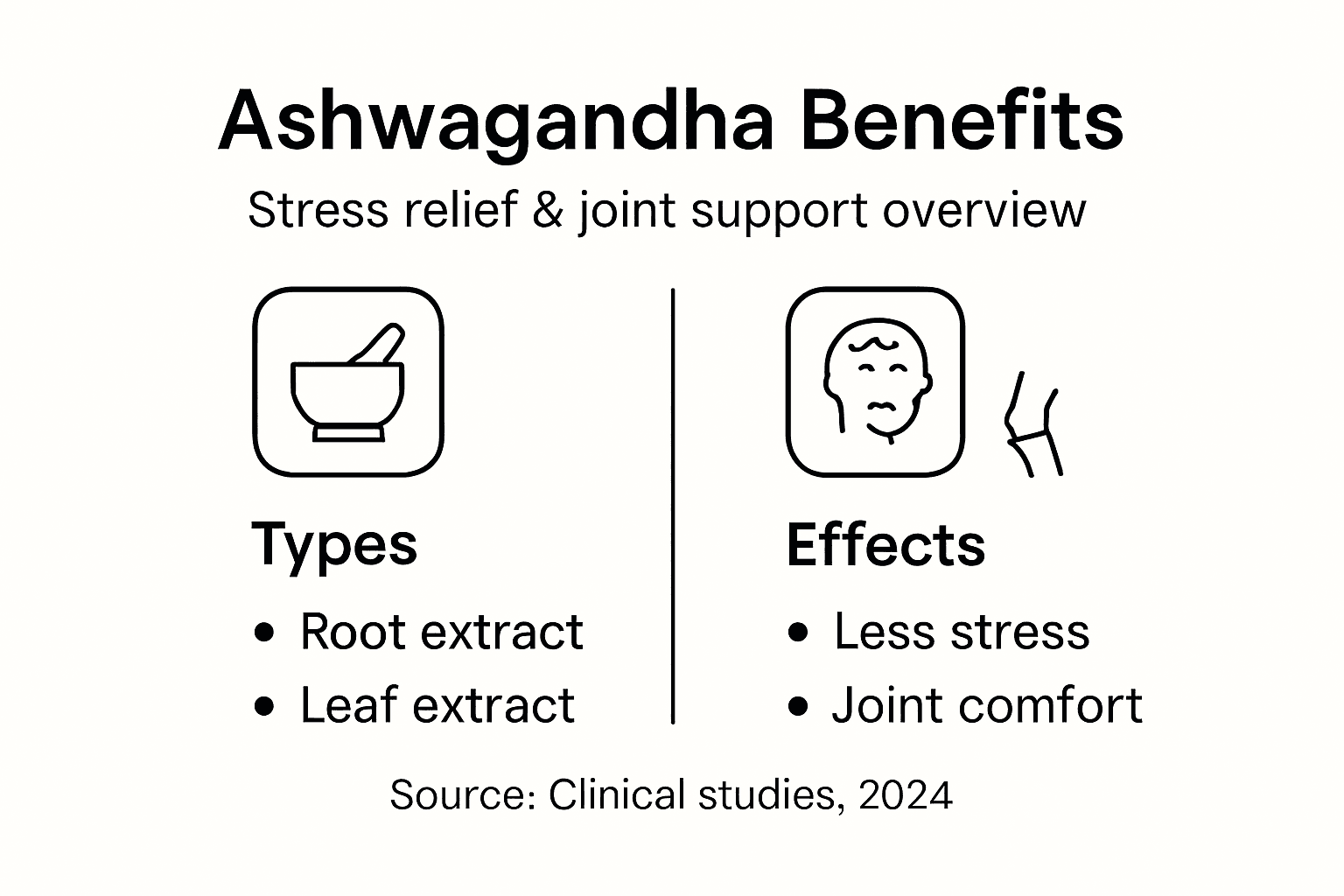
For women experiencing chronic stress and joint discomfort, ashwagandha offers a promising natural approach to wellness. Systematic research demonstrates significant stress reduction through its unique adaptogenic properties, making it an attractive alternative to traditional pharmaceutical interventions.
Key benefits of ashwagandha for stress management include:
- Reducing cortisol levels by up to 30%
- Lowering perceived stress and anxiety
- Improving overall emotional resilience
- Enhancing sleep quality
- Supporting mental clarity and focus
Clinical studies indicate potential anti-inflammatory effects that may contribute to joint health management. The herb’s natural compounds work to modulate the body’s stress response, potentially alleviating both psychological and physiological tension. Withanolides, the primary active compounds, play a crucial role in reducing inflammation and supporting cellular repair mechanisms.

For women over 40 experiencing stress-related joint pain, ashwagandha offers a holistic approach to wellness by addressing multiple health dimensions simultaneously. Its adaptogenic nature helps the body resist stressors, potentially reducing the inflammatory response that often accompanies chronic stress and joint discomfort.
Pro tip: Consider consulting with a healthcare professional to determine the optimal ashwagandha dosage tailored to your specific stress and joint health needs.
Risks, Side Effects, and Safety Guidelines
Comprehensive safety research reveals important considerations for women contemplating ashwagandha supplementation. While this herbal remedy offers promising health benefits, understanding potential risks is crucial for making informed wellness decisions.
Potential side effects and risks include:
- Digestive issues like nausea and stomach upset
- Possible drowsiness or sedation
- Potential interactions with medications
- Rare instances of liver function changes
- Hormonal fluctuations
Specific medication interactions require careful attention. Healthcare professionals warn about potential complications for individuals taking the following types of medications:
- Diabetes medications
- Blood pressure drugs
- Immunosuppressants
- Thyroid hormone treatments
- Sedatives and anticonvulsants
Women with pre-existing health conditions should exercise additional caution. Contraindications exist for those with autoimmune disorders, thyroid complications, or scheduled surgical procedures. Pregnant and breastfeeding women should absolutely avoid ashwagandha supplementation due to insufficient safety data.
Pro tip: Always consult your healthcare provider and undergo a comprehensive medical review before starting any new supplement regimen.
Comparing Ashwagandha to Other Remedies
Comparative research highlights ashwagandha’s unique adaptogenic profile among natural stress management solutions. While multiple herbal remedies exist for addressing stress and wellness, ashwagandha stands out for its comprehensive approach to supporting mental and physical balance.
Key comparative characteristics include:
- More holistic stress response modulation
- Broader range of potential health benefits
- Less invasive than pharmaceutical interventions
- Potentially fewer side effects
- More natural physiological interaction
Traditional alternatives to ashwagandha typically include:
- Rhodiola rosea
- Siberian ginseng
- Holy basil
- Valerian root
- Chamomile
Emerging scientific evidence suggests that ashwagandha may offer more comprehensive support compared to many other herbal remedies. Adaptogenic properties distinguish this herb, enabling it to help the body resist stressors more effectively than single-purpose supplements. Unlike targeted pharmaceutical approaches, ashwagandha works to balance multiple physiological systems simultaneously.
See how ashwagandha compares to other popular adaptogens for stress relief:
| Adaptogen | Main Benefit | Common Side Effects | Notable Distinction |
|---|---|---|---|
| Ashwagandha | Stress resilience | Mild digestive issues | Modulates cortisol and inflammation |
| Rhodiola rosea | Energy & stamina | Occasional dizziness | Enhances physical performance |
| Holy basil | Mood and immunity | Rare nausea | Supports immune system and mood |
| Valerian root | Sleep aid | Drowsiness, vivid dreams | Most effective for sleep issues |
Pro tip: Consider discussing various adaptogenic options with a healthcare professional to determine the most suitable supplement for your specific wellness goals and health profile.
Support Your Stress Relief and Joint Health Naturally with Trusted Ashwagandha Supplements
If you are facing chronic stress and joint discomfort, you are not alone. The article highlights the powerful role of ashwagandha in reducing cortisol levels and supporting inflammation management. Many women over 40 find that adaptogenic herbs like ashwagandha help balance mental clarity and physical ease. By choosing supplements formulated with carefully extracted root and leaf compounds rich in withanolides, you can take meaningful steps toward emotional resilience and improved joint wellness.
Explore our carefully curated selection in the Best Sellers – Asli Nutrition collection to find premium ashwagandha products tailored to your needs.

Experience the holistic benefits of Ashwagandha with Our SIGNATURES – Asli Nutrition formulas designed to promote stress relief and joint health. Act now to embrace a natural path to wellness. Visit AsliNutrition.store today and start your journey to balanced wellbeing.
Frequently Asked Questions
What is ashwagandha and how does it help with stress relief?
Ashwagandha is an adaptogenic herb known for its ability to modulate the body’s stress response. It contains withanolides that may help reduce cortisol levels, leading to decreased anxiety and improved emotional resilience.
How does ashwagandha support joint health?
Ashwagandha possesses anti-inflammatory properties that can help alleviate joint discomfort. Its bioactive compounds may reduce inflammation and support cellular repair, making it beneficial for those experiencing stress-related joint pain.
What are the different types of ashwagandha supplements?
There are three primary types of ashwagandha supplements: root extracts (most potent), leaf extracts (targeted benefits), and combination extracts (blended for comprehensive health). Each type offers unique advantages depending on wellness goals.
Are there any side effects or risks associated with ashwagandha supplementation?
While generally safe, ashwagandha may cause digestive issues, drowsiness, or hormonal fluctuations in some individuals. It’s important to consult with a healthcare provider, especially if taking medications or if you have pre-existing health conditions.
Recommended
- Discover the Science Behind Ashwagandha: Calm, Focus & Balance – Asli Nutrition
- Ashwagandha with Black Pepper Benefits | Asli Nutrition
- How to Manage Stress Naturally for Women with Joint Pain – Asli Nutrition
- 7 Types of Stress Relief Supplements for Women Over 40 – Asli Nutrition
- Benefits and Synergies of Reishi Mushroom & Ashwagandha – LongevityBotanicals
- Best Ayurvedic Medicine for Stress and Anxiety 2 Proven Calm Relief
- 7 Essential Joint Health Nutrition Tips for Active Adults