
Herbal Supplements: Natural Relief for Joint Pain

Joint pain often makes everyday activities feel like a challenge. For many American women in midlife, finding relief through natural options is more appealing than relying solely on medications. Exploring herbal supplements and their anti-inflammatory properties can offer new ways to manage discomfort and support better mobility, helping you stay active and independent.
Table of Contents
- Herbal Supplements For Joint Pain Explained
- Popular Herbal Supplement Types And Variations
- How Herbal Supplements Reduce Joint Discomfort
- FDA Regulation And Safety Essentials In The USA
- Risks, Side Effects, And What To Avoid
- Comparing Herbal Supplements To Other Treatments
Key Takeaways
| Point | Details |
|---|---|
| Herbal supplements can aid joint pain relief | Compounds like Curcumin and Boswellia serrata effectively reduce inflammation and support joint function. |
| Consult healthcare providers before starting supplements | Personalized medical advice is crucial to avoid interactions and ensure safety with current medications. |
| Quality of supplements varies significantly | Verify sources and consider third-party quality certifications to avoid ineffective products. |
| Herbal supplements are most effective when combined with lifestyle changes | Incorporating diet and exercise with herbal treatments enhances overall joint health management. |
Herbal supplements for joint pain explained
Joint pain doesn’t have to slow you down. Herbal supplements offer a natural pathway to relief, providing women aged 45-60 with alternative strategies for managing discomfort and improving mobility. Understanding how these botanical solutions work can help you make informed decisions about your joint health.
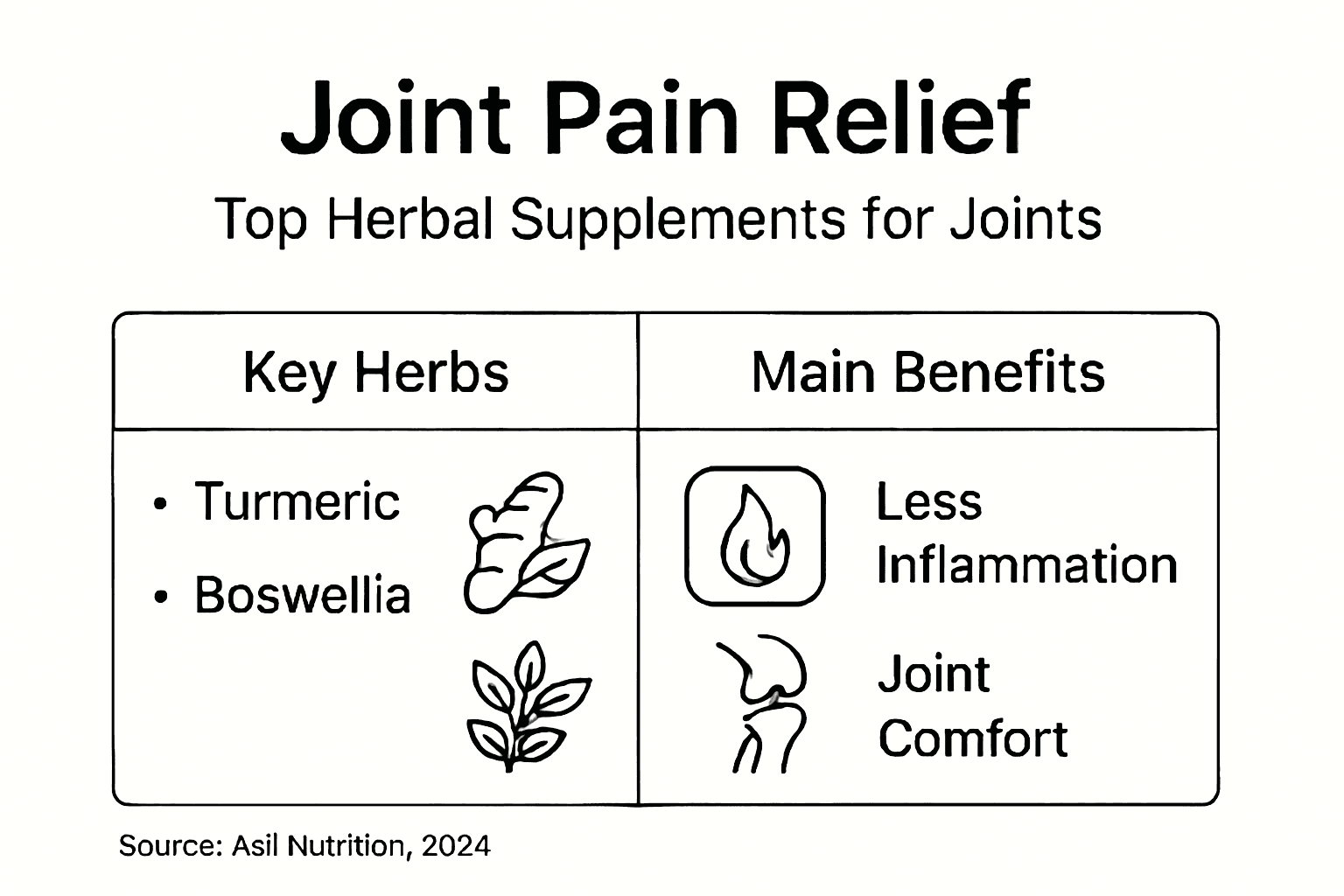
Research shows that certain herbal compounds can effectively combat joint inflammation and pain. Stanford experts recommend specific herbal supplements that demonstrate promising results in supporting joint function:
- Curcumin from turmeric: Natural anti-inflammatory agent
- Boswellia serrata: Reduces joint swelling
- Omega-3 fish oil: Supports overall joint health
- Glucosamine and chondroitin: Helps cartilage repair
However, supplements are not a standalone solution. Healthcare professionals emphasize the importance of combining herbal treatments with lifestyle modifications like diet assessment and muscle strengthening exercises.
Not all herbal supplements are created equal. Quality and potency can vary significantly between brands.
Before starting any supplement regimen, consult your healthcare provider to ensure safety and compatibility with existing medications. Each person’s body responds differently, and personalized medical advice is crucial.
Pro tip: Start with low dosages of herbal supplements and track your body’s response, gradually increasing as recommended by your healthcare professional.
Popular herbal supplement types and variations
Joint pain management has evolved with the rise of natural herbal supplements, offering women aged 45-60 diverse options for relief and mobility. Arthritis research experts have identified several powerful herbal compounds that can help combat inflammation and support joint health.
Key herbal supplements for joint pain relief include:
- Turmeric (Curcumin): Potent anti-inflammatory properties
- Ginger: Natural pain-relieving compound
- Boswellia serrata: Reduces joint inflammation
- Willow bark: Natural pain management
- Devil’s claw: Traditional herbal pain treatment
Rheumatology professionals recommend understanding the various forms and dosages of these supplements. They are available in multiple formats:
- Capsules
- Liquid extracts
- Topical creams
- Powdered supplements
- Tea preparations
Not all herbal supplements are created equal. Potency and quality can significantly vary between brands and sources.
While these natural alternatives show promise, it’s crucial to approach herbal supplements as complementary to, not replacements for, professional medical advice. Individual responses can differ, and consultation with healthcare providers ensures safe and effective use.
Here is a comparison of popular herbal supplements for joint pain relief:
| Supplement | Primary Benefit | Origin Plant/Source | Typical Form |
|---|---|---|---|
| Curcumin (Turmeric) | Reduces inflammation | Turmeric root | Capsules, tea |
| Boswellia serrata | Eases joint swelling | Boswellia tree resin | Capsules |
| Ginger | Natural pain relief | Ginger root | Extract, tea |
| Willow bark | Supports pain management | White willow tree bark | Tablets, tea |
| Devil’s claw | Traditional pain remedy | African devil’s claw | Powder, pills |
Pro tip: Always verify the source and quality of herbal supplements, and start with recommended dosages under professional guidance.
How herbal supplements reduce joint discomfort
Joint pain can be debilitating, but natural herbal solutions offer promising relief for women seeking alternative approaches to managing discomfort. Medical research reveals specific mechanisms by which herbal supplements combat inflammation and support joint health.
Key mechanisms of herbal supplement action include:
- Blocking inflammatory enzymes: Preventing pain signals
- Lowering inflammation markers: Reducing systemic inflammatory response
- Supporting cartilage repair: Promoting joint tissue regeneration
- Inhibiting inflammatory cytokines: Minimizing cellular inflammation
- Improving joint mobility: Enhancing overall joint function
Pain management experts note that sustained use of specific herbal compounds can significantly impact joint comfort. Powerful herbs like Boswellia serrata and turmeric work through complex biochemical pathways to provide natural relief.
Individual response to herbal supplements varies. Consistent use and professional guidance are crucial for optimal results.
The anti-inflammatory properties of herbs like curcumin and omega-3 fatty acids target the root causes of joint discomfort, offering a holistic approach to managing pain. Understanding these mechanisms empowers women to make informed decisions about their joint health.
Pro tip: Consult with healthcare professionals and maintain a consistent supplement routine to maximize potential joint pain relief benefits.
FDA regulation and safety essentials in the USA
Navigating the world of herbal supplements requires understanding the unique regulatory landscape in the United States. Rheumatology experts highlight that dietary supplements occupy a complex legal and safety framework that differs significantly from pharmaceutical medications.
Key aspects of FDA regulation for herbal supplements include:
- Dietary Supplement Health and Education Act (DSHEA): Governs supplement oversight
- Pre-market approval not required: Unlike prescription drugs
- Manufacturer responsibility: Ensuring product safety and labeling accuracy
- Post-market surveillance: FDA monitors adverse event reports
- Limited regulatory intervention: Supplements not extensively tested before sale
Arthritis foundation guidelines recommend several critical safety strategies for consumers:
- Choose supplements with third-party quality certifications
- Consult healthcare providers before starting new supplements
- Research manufacturer reputation
- Monitor personal reactions and side effects
- Maintain updated medical records
The FDA classifies herbal supplements as food products, not medications, which significantly impacts their regulatory oversight.
While the FDA provides a baseline of consumer protection, the responsibility ultimately falls on individual consumers to make informed choices about herbal supplement use.
Pro tip: Always verify supplement quality through independent testing organizations and maintain open communication with your healthcare provider about all supplement use.
Risks, side effects, and what to avoid
Herbal supplements can provide relief, but understanding potential risks is crucial for women seeking joint pain management. Medical experts caution that these natural treatments are not without potential complications.
Common side effects and risks include:
- Gastrointestinal upset: Stomach irritation and discomfort
- Allergic reactions: Unexpected immune system responses
- Medication interactions: Potential interference with prescription drugs
- Blood thinning complications: Risk of excessive bleeding
- Hormonal disruptions: Potential unexpected metabolic changes
Arthritis foundation guidelines highlight several critical warning signs to monitor:
- Unexpected bruising or bleeding
- Sudden changes in medication effectiveness
- Unusual digestive problems
- Persistent headaches
- Unexplained skin reactions
Not all herbal supplements are safe for everyone. Individual health conditions and existing medications can significantly impact supplement interactions.
Women should be particularly cautious about supplements that lack third-party quality certifications or have inconsistent manufacturing standards. Understanding individual health history and potential vulnerabilities is key to safe supplement use.
Pro tip: Maintain a detailed journal of supplement intake, tracking any side effects or changes in your health to discuss with your healthcare provider.
Comparing herbal supplements to other treatments
Joint pain management involves a complex landscape of treatment options, with herbal supplements emerging as a promising complementary approach. Lifestyle medicine researchers suggest these natural remedies can play a significant role in pain management strategies for women seeking alternatives to traditional medications.
Key differences between treatment approaches include:
- Prescription NSAIDs: Fast-acting but potential long-term side effects
- Herbal supplements: Slower onset, fewer systemic complications
- Physical therapy: Addresses root cause, requires consistent effort
- Surgical interventions: Invasive, high-risk approach
- Herbal supplements: Natural, potentially fewer chemical interactions
Comparative studies indicate that herbal treatments offer unique advantages:
- Lower risk of chronic medication side effects
- Natural anti-inflammatory properties
- Potential for long-term symptom management
- Fewer systemic pharmaceutical impacts
- Holistic approach to joint health
Herbal supplements are most effective when integrated into a comprehensive treatment plan, not used in isolation.
While herbal supplements show promise, they should be viewed as complementary to, not replacement for, professional medical guidance. Individual health conditions, severity of joint pain, and personal medical history play crucial roles in determining the most appropriate treatment strategy.
Compare key features of herbal supplements versus prescription NSAIDs for joint pain:
| Feature | Herbal Supplements | Prescription NSAIDs |
|---|---|---|
| Onset of Relief | Gradual, over weeks | Fast, usually within hours |
| Risk of Side Effects | Fewer systemic complications | Higher GI and heart risks |
| Mode of Action | Natural anti-inflammatory herbs | Block pain/inflammation |
| Long-term Suitability | Often safe with monitoring | Monitored for chronic use |
Pro tip: Develop a personalized treatment approach by discussing herbal supplement integration with your healthcare provider, considering your unique health profile.
Discover Natural Solutions to Support Your Joint Health
If you are seeking relief from joint pain and want to embrace the power of natural herbal supplements like Curcumin and Boswellia serrata you have found the right place. At Asli Nutrition we understand the challenge of managing inflammation and discomfort that can limit your daily activities and mobility. Our carefully curated Our SIGNATURES – Asli Nutrition collection features potent and pure herbal supplements designed to help you reduce joint swelling and support cartilage repair safely.

Take control of your joint health today by exploring our Best Sellers – Asli Nutrition for trusted remedies that meet high quality standards recommended by healthcare professionals. Begin your journey to natural relief with confidence at Asli Nutrition. Act now to experience the benefits of consistent herbal support and improve your comfort and mobility.
Frequently Asked Questions
What are the most effective herbal supplements for joint pain relief?
Several herbal supplements have shown promise in providing relief from joint pain, including Curcumin from turmeric, Boswellia serrata, Ginger, Willow bark, and Devil’s claw. Each of these herbs has unique properties that can help reduce inflammation and alleviate pain.
How do herbal supplements work to reduce joint discomfort?
Herbal supplements reduce joint discomfort by blocking inflammatory enzymes, lowering inflammation markers, supporting cartilage repair, inhibiting inflammatory cytokines, and improving overall joint mobility. They target the root causes of joint pain through natural anti-inflammatory properties.
Are there any risks or side effects associated with herbal supplements?
Yes, there are potential risks and side effects associated with herbal supplements, such as gastrointestinal upset, allergic reactions, medication interactions, and hormonal disruptions. It’s essential to monitor for any unusual reactions and consult a healthcare provider before starting new supplements.
How do herbal supplements compare to traditional pain relief medications?
Herbal supplements often have a slower onset of relief compared to prescription NSAIDs but typically present fewer systemic complications. They can be a natural, holistic addition to pain management strategies, supporting long-term joint health without the heightened risk of chronic medication side effects.