
Role of Supplementation in 2026: Enhancing Women’s Mobility

Waking up with aching joints is a common frustration for many American women in their forties and fifties. Navigating joint discomfort during midlife is more than a minor inconvenience—it can limit daily routines and impact overall well-being. Understanding dietary supplementation demystifies popular myths and equips you with smarter strategies for managing joint pain. Discover how targeted supplements, professional guidance, and holistic approaches can help restore flexibility and comfort for a more active, fulfilling lifestyle.
Table of Contents
- Defining Supplementation and Common Misconceptions
- Core Causes of Joint Pain in Women 40-60
- Key Supplement Types for Mobility and Comfort
- How Joint Supplements Work in the Body
- Safety, Interactions, and Regulatory Updates (2026)
- Mistakes to Avoid and Comparing Alternatives
Key Takeaways
| Point | Details |
|---|---|
| Understanding Supplements | Supplements are not replacements for a balanced diet but tools to fill nutritional gaps, and should be used under a healthcare provider’s guidance. |
| Joint Pain Factors | Hormonal changes and anatomical differences contribute to increased joint pain in women aged 40-60, requiring a tailored approach to manage symptoms. |
| Valid Supplement Choices | Key supplements like Glucosamine, Omega-3 Fish Oil, and Collagen Peptides can support joint health, but their effectiveness varies based on individual needs. |
| Holistic Health Approach | Integrating supplements with lifestyle changes, such as exercise and diet modification, enhances joint health and overall wellbeing. |
Defining Supplementation and Common Misconceptions
For women navigating joint health challenges, understanding dietary supplementation is crucial. Contrary to popular belief, supplements are not magical cure-alls but strategic nutritional tools designed to complement a balanced diet. Foundational supplement research reveals they’re intended to address specific nutritional gaps, not replace whole food nutrition.
Most women between 40-60 harbor misconceptions about supplements that can potentially compromise their health journey. Common myths include:
- Believing all supplements are universally beneficial
- Assuming supplements are rigorously tested like medications
- Thinking multivitamins automatically improve overall health
- Considering supplements a substitute for a healthy diet
Scientific perspectives emphasize that supplement effectiveness depends on individual nutritional needs and specific health conditions. Dietary supplement research indicates most people actually obtain adequate nutrients through balanced nutrition, making many supplements unnecessary.
Understanding supplement regulation is equally important. Unlike pharmaceuticals, dietary supplements face less stringent market approval processes. This means consumers must exercise diligence, consulting healthcare professionals and researching product quality before incorporation into their wellness routine.
Pro tip: Always consult your healthcare provider before starting any new supplement regimen, especially when addressing specific health concerns like joint mobility.
Core Causes of Joint Pain in Women 40-60
Joint pain for women between 40-60 is far more complex than a simple aging process. Musculoskeletal syndrome of menopause represents a critical factor in understanding these physiological changes, fundamentally reshaping how we perceive midlife mobility challenges.
The primary contributors to joint pain during this life stage include:
- Hormonal fluctuations, especially estrogen decline
- Increased inflammatory responses
- Metabolic changes affecting tissue repair
- Weight gain and reduced muscle mass
- Reduced collagen production
- Cumulative wear and tear on joint structures
Hormonal transitions play a pivotal role in joint health. Arthritis development in women is significantly influenced by estrogen’s complex interactions with connective tissues. During perimenopause and menopause, estrogen reduction can dramatically alter joint tissue resilience, leading to increased pain, stiffness, and reduced mobility.

Beyond hormonal changes, anatomical differences contribute to women’s joint vulnerability. Women typically have wider hips and different muscle-to-body-mass ratios, which can create unique biomechanical stress patterns on joints. These structural variations, combined with hormonal shifts, explain why women experience higher rates of joint-related discomfort compared to men in the same age range.
Pro tip: Track your joint pain patterns and inflammation triggers to develop a more personalized approach to managing midlife mobility challenges.
Key Supplement Types for Mobility and Comfort
For women experiencing midlife joint challenges, strategic supplementation can provide meaningful support for mobility and comfort. Researched joint health supplements offer targeted approaches to addressing inflammation, cartilage support, and overall joint function.
The most promising supplement categories for women aged 40-60 include:
- Glucosamine and Chondroitin: Natural compounds supporting cartilage health
- Omega-3 Fish Oil: Reduces inflammatory responses
- Collagen Peptides: Supports connective tissue regeneration
- Curcumin: Powerful anti-inflammatory compound
- Boswellia Serrata: Natural extract supporting joint comfort
Collagen supplementation emerges as a particularly critical intervention. Collagen’s role in joint health becomes increasingly important as natural production declines with age. These protein-based supplements can help maintain the structural integrity of connective tissues, potentially improving joint flexibility and reducing discomfort.
Understanding individual supplement mechanisms is crucial. Each supplement works differently - some target inflammation, others support tissue repair, and some help maintain joint lubrication. The complexity of joint health requires a nuanced approach, considering personal health history, current mobility challenges, and potential interactions with existing medications.
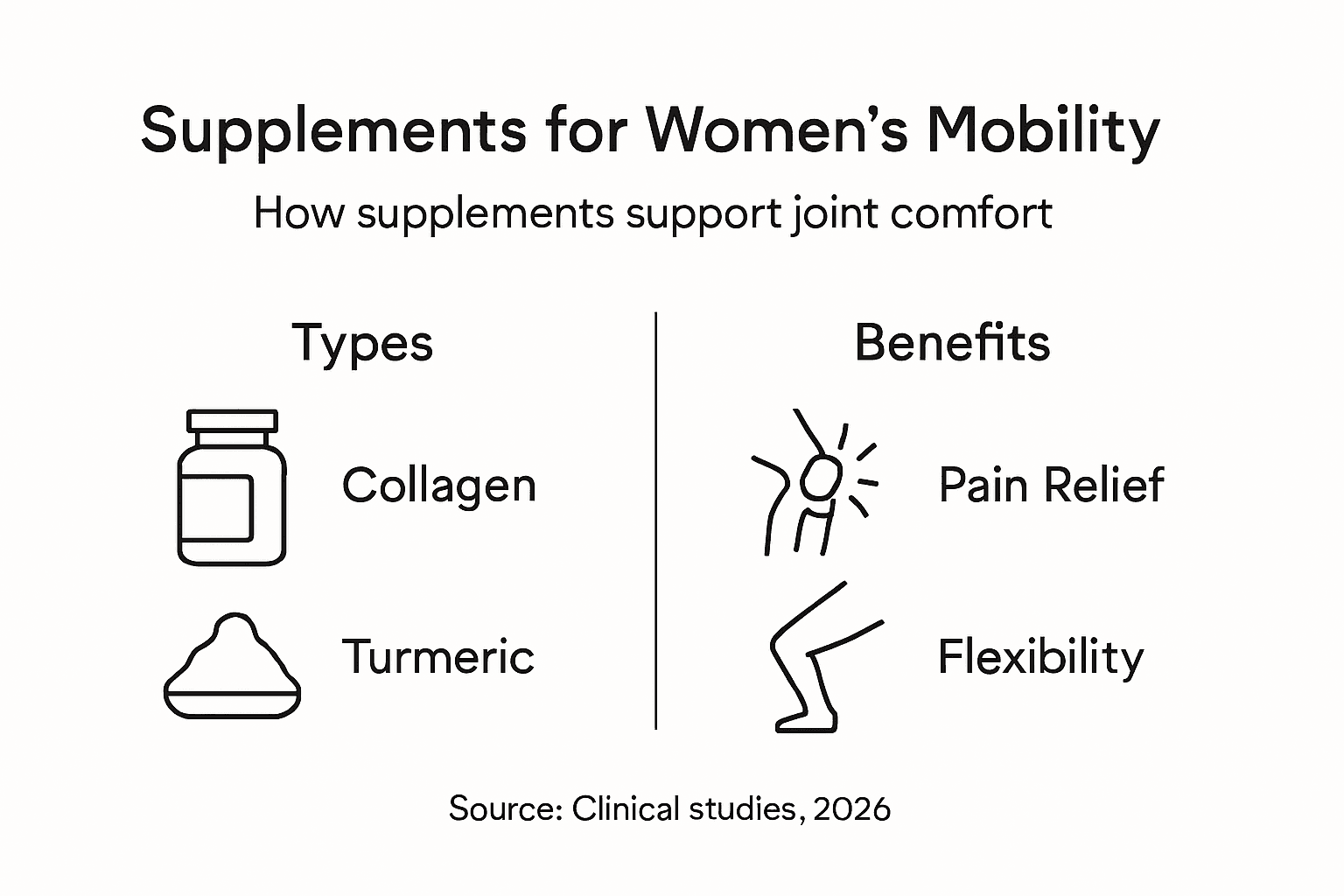
Here’s a quick comparison of popular joint supplements and their primary benefits for women aged 40-60:
| Supplement Type | Main Function | Best For |
|---|---|---|
| Glucosamine | Cartilage maintenance | Everyday joint protection |
| Omega-3 Fish Oil | Inflammation reduction | Alleviating swelling & pain |
| Collagen Peptides | Tissue regeneration | Enhancing flexibility |
| Curcumin | Blocks inflammation | Managing chronic joint discomfort |
| Boswellia Serrata | Promotes joint comfort | Easing stiffness |
Pro tip: Consult a healthcare professional to develop a personalized supplement strategy tailored to your specific joint health needs and existing medical conditions.
How Joint Supplements Work in the Body
The intricate mechanisms of joint supplements reveal a sophisticated approach to supporting mobility and reducing discomfort. Supplement interactions with joint tissues demonstrate how targeted nutritional compounds can positively influence cellular processes and inflammatory responses.
The primary biological mechanisms of joint supplements include:
- Reducing inflammatory cytokine production
- Providing structural building blocks for cartilage repair
- Supporting connective tissue protein synthesis
- Modulating enzymatic breakdown of joint structures
- Enhancing cellular repair and regeneration processes
Biochemical interactions play a crucial role in supplement effectiveness. Glucosamine and chondroitin research reveals how these compounds interact directly with joint tissues, potentially slowing cartilage degradation and supporting structural integrity. These supplements function as precursor molecules, providing raw materials for joint repair and maintenance.
Most supplements work through complex molecular pathways that interrupt inflammation, support tissue regeneration, and provide essential nutrients for joint health. Omega-3 fatty acids reduce inflammatory markers, curcumin blocks inflammatory enzymes, and collagen peptides provide amino acid building blocks for connective tissue reconstruction. The body’s response is nuanced, with different supplements targeting various aspects of joint function simultaneously.
Pro tip: Combine multiple supplement strategies and track your body’s response to develop a personalized joint health approach.
Safety, Interactions, and Regulatory Updates (2026)
Navigating the complex landscape of dietary supplement safety requires understanding evolving regulatory frameworks and potential interactions. Dietary supplement oversight continues to prioritize consumer protection through post-market monitoring and manufacturer accountability.
Key safety considerations for women aged 40-60 include:
- Understanding individual medication interactions
- Checking supplement compatibility with existing health conditions
- Verifying manufacturer quality control practices
- Monitoring potential side effects
- Consulting healthcare professionals before starting new regimens
Regulatory developments in 2026 reflect a more nuanced approach to supplementation safety. Menopausal health product regulations demonstrate increasing sophistication in balancing consumer information with scientific evidence. These updates signal a shift towards more personalized, transparent health guidance that acknowledges the complex interactions between supplements, individual physiology, and existing medical treatments.
While supplements are not subjected to pre-market approval like pharmaceuticals, manufacturers bear significant responsibility for product safety. Women must remain proactive, carefully researching supplement ingredients, understanding potential interactions, and maintaining open communication with healthcare providers about their comprehensive health strategy.
Pro tip: Create a comprehensive supplement and medication log to track interactions and discuss with your healthcare provider during regular check-ups.
Mistakes to Avoid and Comparing Alternatives
Supplementing for joint health requires strategic, informed decision-making to avoid common pitfalls that can compromise effectiveness and safety. Supplement use protocols emphasize that supplements are not standalone solutions but components of comprehensive health management.
Common mistakes women aged 40-60 should avoid include:
- Relying exclusively on supplements without lifestyle modifications
- Self-prescribing without professional medical guidance
- Ignoring potential medication interactions
- Purchasing low-quality or unverified supplement brands
- Expecting immediate or miraculous results
- Discontinuing prescribed medications without consulting healthcare providers
Alternative approaches to joint health supplement traditional interventions. Supplement selection strategies highlight the importance of evidence-based choices. Alternatives like physical therapy, targeted exercise regimens, anti-inflammatory diets, and stress management techniques can complement or sometimes replace supplement strategies.
Effective joint health management requires a holistic perspective. While supplements offer potential benefits, they work best when integrated into a comprehensive wellness plan that includes nutrition, exercise, stress reduction, and regular medical consultation. Understanding individual physiological needs and potential limitations is crucial for developing a personalized approach to joint comfort and mobility.
To clarify, here’s how joint supplements differ from alternative non-supplement approaches:
| Approach | Core Benefit | Considerations |
|---|---|---|
| Supplementation | Nutritional support | Potential interactions, quality |
| Physical Therapy | Strengthens joint function | Requires regular appointments |
| Anti-Inflammatory Diet | Naturally reduces pain | Demands dietary changes |
| Stress Management | Lowers inflammation risk | May require lifestyle overhaul |
Pro tip: Create a comprehensive health journal tracking supplement intake, lifestyle changes, and physical responses to develop a more nuanced understanding of your body’s unique needs.
Take Control of Your Joint Health with Trusted Supplement Solutions
Women aged 40 to 60 face unique joint health challenges due to hormonal changes, inflammation, and decreased collagen production. These issues can cause discomfort, stiffness, and reduced mobility that impact everyday life. The good news is you do not have to accept these limitations. By understanding how targeted supplements like collagen peptides, glucosamine, and omega-3 fish oil work, you can support your joints effectively.
Discover premium formulations designed specifically for midlife joint support in Our SIGNATURES – Asli Nutrition collection. Each product is crafted to nourish your connective tissues and combat inflammation so you can move comfortably again.

Start your personalized joint health journey today. Visit Asli Nutrition to explore scientifically backed supplements that align with the evolving landscape of women’s mobility health in 2026. Take action now to regain flexibility and enjoy life with less joint pain.
Frequently Asked Questions
What are dietary supplements, and how do they support joint health?
Dietary supplements are nutritional tools designed to complement a balanced diet and address specific nutritional gaps. They help support joint health by providing essential nutrients that may enhance mobility and reduce discomfort.
How can I safely incorporate dietary supplements into my joint health routine?
To use dietary supplements safely, always consult a healthcare provider prior to starting any new regimen. Monitor for potential interactions with existing medications, verify product quality, and remain informed about your unique health needs.
What common misconceptions about joint supplements should I be aware of?
Many people mistakenly believe that supplements are cure-alls, that they are rigorously tested like medications, or that they can replace a healthy diet. It’s crucial to understand that supplements should complement a balanced nutrition plan, not replace it.
What types of supplements are most beneficial for women experiencing joint pain?
Key supplements for joint health include glucosamine, chondroitin, omega-3 fish oil, collagen peptides, curcumin, and boswellia serrata. Each of these has specific benefits related to inflammation reduction, cartilage support, and overall joint function.