
Dietary Supplements: Easing Joint Pain for Women

Finding the right way to ease aching joints can feel overwhelming, especially when new supplements appear on every store shelf. For many American women ages 40 to 60, discomfort in the knees or shoulders interrupts the activities and connections that matter most. Understanding what a dietary supplement really is—and how it differs from medication—empowers you to make choices that support both mobility and long-term well-being.
Table of Contents
- Defining Dietary Supplements for Joint Health
- Types of Supplements for Joint Pain Relief
- How Supplements Improve Mobility and Comfort
- Safety, Regulation, and Common Pitfalls
- Comparing Supplements to Alternative Treatments
Key Takeaways
| Point | Details |
|---|---|
| Dietary Supplements Support Overall Health | Supplements are designed to enhance your diet and support joint health rather than replace it. Consistency is key in usage for best results. |
| Joint-Specific Ingredients Matter | Focus on supplements that target cartilage, inflammation, and connective tissue, such as Glucosamine, Chondroitin, and Curcumin. They work by supporting joint structures and reducing discomfort. |
| Assess Before Starting | Evaluate your diet and activity levels with a health professional to identify necessary supplements. A journal can help track pain levels and dietary intake for more accurate recommendations. |
| Complementary Approaches Are Best | Combining supplements with exercise, physical therapy, and dietary changes produces the best results for joint health and mobility. Integrating multiple methods ensures long-term improvements. |
Defining Dietary Supplements for Joint Health
If you’ve been dealing with stiff knees or achy shoulders, you’ve probably heard the word “supplements” thrown around. But what exactly are they? A dietary supplement is a product designed to supplement your regular diet with vitamins, minerals, botanicals, amino acids, or other compounds your body needs.
Unlike prescription medications, dietary supplements consist of vitamins, minerals, botanicals, amino acids, and extracts intended to complement—not replace—a healthy lifestyle. They come in familiar formats that make them easy to take.
Common Forms of Dietary Supplements
Supplements come in several convenient forms:
- Pills and capsules (the most popular choice)
- Tablets that dissolve on your tongue
- Liquids and powders you can mix into drinks
- Gummies with added flavoring
- Soft gels containing oils or extracts
For women managing joint pain, the specific form matters less than consistency. Many prefer capsules for convenience, while others like powders to control dosage.
What Makes a Supplement “Joint-Specific”
When it comes to joint health, certain supplements target cartilage, connective tissue, and inflammation specifically. Common ingredients include glucosamine, chondroitin, curcumin from turmeric, omega-3 fish oil, collagen peptides, and Boswellia extracts. These work by supporting your body’s natural joint structures rather than masking pain.
The difference is important: supplements support your joints from within, while pain relievers simply reduce the sensation of discomfort.
Dietary supplements are meant to enhance your diet and support overall health—they work best alongside regular movement and proper nutrition.
Supplements Versus Medications: Key Differences
You might wonder how supplements differ from the medications your doctor prescribes. Here’s what sets them apart:
- Supplements support your body’s natural processes; medications target specific disease states
- Supplements take weeks or months to show results; medications often work quickly
- Supplements have fewer side effects but also less dramatic effects
- Supplements don’t require prescriptions and are available over the counter
This doesn’t mean one is better than the other. Many women use both, with supplements providing long-term support and medications handling acute flare-ups.
Why Start With Assessment First
Before jumping into supplements, experts recommend assessing your current diet, muscle strength, and movement patterns. You might already be getting some joint-supporting nutrients from food. Starting there helps you know exactly what your body needs.
Working with a health professional—whether a doctor, nutritionist, or physical therapist—ensures you choose supplements that actually address your situation rather than guessing based on marketing claims.
Pro tip: Keep a simple journal for two weeks noting when your joint pain is worst, what you ate that day, and your activity level—this information helps healthcare providers recommend the most effective supplements for your specific needs.
Types of Supplements for Joint Pain Relief
Not all supplements are created equal, especially when it comes to joint health. Some ingredients have decades of research backing them, while others are still being studied. Understanding what each type does helps you make informed choices about what might work for your body.
The most popular options fall into a few categories: cartilage supporters, anti-inflammatory agents, and structural builders. Each works differently, and many women find combining them more effective than using one alone.
Glucosamine and Chondroitin: The Cartilage Support Team
Glucosamine and chondroitin are the most recognized joint supplements. Glucosamine may help your body rebuild cartilage, while chondroitin may reduce its breakdown. Popular supplements for joint pain relief include glucosamine and chondroitin because they target the actual structure of your joints rather than just masking discomfort.
These work best for moderate to severe joint pain. Results typically appear after 6 to 8 weeks of consistent use, so patience is essential.
Curcumin: The Anti-Inflammatory Powerhouse
Curcumin, the active compound in turmeric, reduces inflammation at the cellular level. Many women report noticeable relief within weeks because inflammation drives much of joint pain.
Curcumin works differently than glucosamine. Instead of rebuilding structure, it quiets the inflammatory response that makes your joints feel stiff and achy.
Omega-3 Fish Oil: Reducing Pain and Stiffness
Omega-3 fish oil shows particular promise for rheumatoid arthritis and generalized joint discomfort. It reduces pain and improves function when used alongside traditional treatments.

Fish oil works systemically, meaning it affects inflammation throughout your entire body, not just your joints. This makes it useful for overall wellness too.
Collagen and Boswellia: Additional Support
Other powerful options include:
- Collagen peptides: Support joint structure and skin elasticity directly
- Boswellia serrata: Reduces inflammation and may improve mobility
- SAM-e: May improve function and reduce pain
These work well in combination with the main three. Your body benefits from multiple approaches targeting inflammation and structure simultaneously.
Here’s how popular joint supplements compare by function and expected results:
| Supplement | Main Function | Time to Notice Benefits | Key Benefit |
|---|---|---|---|
| Glucosamine | Cartilage rebuilding | 6-8 weeks | Structural joint support |
| Chondroitin | Cartilage protection | 6-8 weeks | Reduces cartilage breakdown |
| Curcumin | Anti-inflammation | 2-4 weeks | Decreases swelling and stiffness |
| Omega-3 Fish Oil | Systemic inflammation | 4-8 weeks | Eases pain and improves mobility |
| Collagen Peptides | Structural support | 8-12 weeks | Boosts joint structure, skin health |
| Boswellia | Mobility enhancement | 2-6 weeks | Improves movement, reduces pain |
| SAM-e | Functional improvement | 4-8 weeks | Enhances function, reduces pain |
Research shows supplements may improve function and reduce pain when used alongside traditional treatments, but safety varies—always consult your healthcare provider first.
Starting Your Supplement Journey
Begin with one supplement and give it 6 to 8 weeks before assessing results. This helps you identify what actually works for your body rather than guessing.
Track your pain levels, mobility, and any side effects in a simple notebook. Document which supplement you’re taking and when you take it.
Pro tip: Start with glucosamine and chondroitin if you have significant cartilage damage, or begin with curcumin if inflammation is your main issue—matching the supplement to your primary symptom gives faster results.
How Supplements Improve Mobility and Comfort
Joint pain doesn’t just hurt—it stops you from doing things you love. Climbing stairs, gardening, or even holding your grandchild becomes exhausting. Supplements work by addressing the underlying causes of stiffness and discomfort, not just masking symptoms.
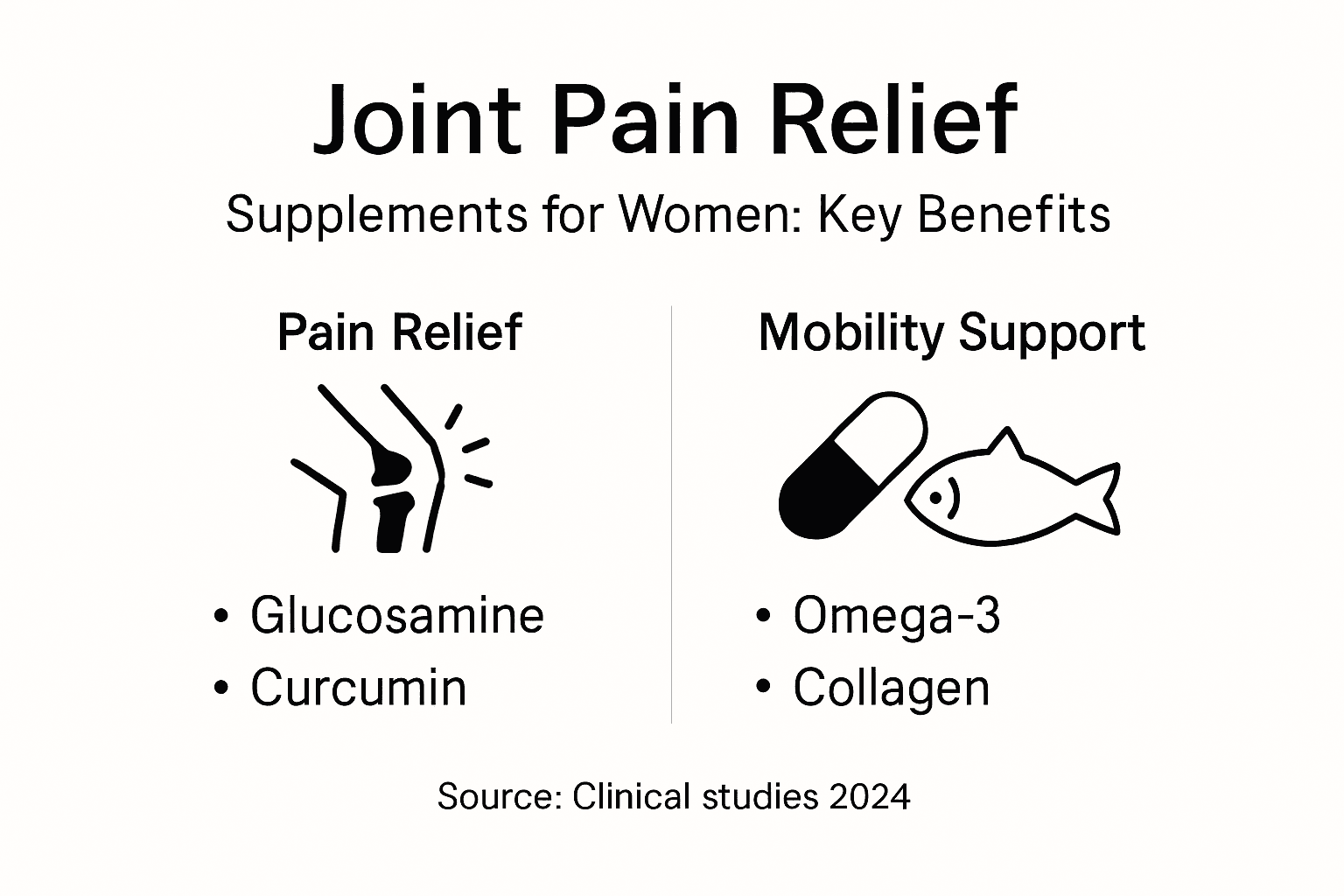
The mechanism is straightforward: reduce inflammation, rebuild cartilage, and strengthen supporting muscles. When all three happen together, your joints feel dramatically better.
Reducing Inflammation at the Source
Inflammation is the hidden culprit behind most joint pain. When your immune system overreacts to wear and tear, it floods your joints with inflammatory compounds that trigger pain and stiffness.
Anti-inflammatory supplements like omega-3 fatty acids and curcumin calm this response directly. Within weeks, many women notice they can move with less discomfort because the underlying inflammation has decreased.
Other anti-inflammatory options include willow bark, ginger, and devil’s claw—each working through different pathways in your body.
Rebuilding Cartilage Structure
Cartilage doesn’t regenerate on its own. Once it wears down, your bones rub together, creating pain and limited range of motion.
Glucosamine and chondroitin work differently than anti-inflammatory supplements. They supply raw materials your body uses to repair cartilage and maintain joint fluid. This takes time—usually 6 to 8 weeks—but the results are lasting.
Collagen peptides accelerate this process by providing structural protein your joints desperately need.
Strengthening the Muscles Around Your Joints
Strong muscles protect your joints from excessive stress. When muscles are weak, your joints bear more load, worsening pain and stiffness.
Amino acids, protein, and creatine help enhance physical training and recovery, which means your muscles get stronger and more resilient. Stronger muscles directly reduce joint stress and improve stability.
This is why women who combine supplements with gentle exercise see the biggest improvements.
How It All Works Together
The magic happens when these three mechanisms work simultaneously:
- Anti-inflammatory agents reduce pain and swelling immediately
- Cartilage-building supplements support long-term structural repair
- Muscle-supporting nutrients enable better movement and stability
Within 3 months, many women report they can walk longer, climb stairs easier, and feel less stiffness when they wake up.
Supplements provide modest but meaningful benefits when integrated into a comprehensive treatment plan that includes movement, proper nutrition, and adequate rest.
Real-World Mobility Improvements
Think about what limited mobility costs you. Missing time with family. Avoiding activities you enjoy. Pain affecting your sleep and mood.
When supplements work, women report being able to resume hobbies, play more actively with grandchildren, and sleep through the night without aching joints.
Pro tip: Pair your supplements with 20 to 30 minutes of gentle walking or water aerobics three times weekly—this magnifies supplement effectiveness because moving muscles pump nutrients directly into your joints.
Safety, Regulation, and Common Pitfalls
Not all supplements on store shelves are created equal. Some contain exactly what the label promises, while others fall short or include hidden ingredients. Understanding how supplements are regulated—and where gaps exist—protects your health and your wallet.
The regulatory landscape differs significantly from prescription medications. Knowing these differences helps you make safer choices.
How the FDA Regulates Supplements
Here’s the reality: The FDA regulates dietary supplements under different rules than foods and drugs, which means the approval process is less rigorous. Manufacturers are responsible for ensuring their products are safe and correctly labeled before selling them.
The FDA doesn’t approve supplements before they hit shelves. Instead, it monitors them after they’re on the market for problems like contamination or false claims. If the FDA discovers an issue, it can take enforcement action.
This reactive approach means some unsafe products circulate before being caught.
The Quality and Efficacy Problem
Dietary supplements are not as strictly regulated as drugs, which creates a quality gap. Two brands claiming identical ingredients can have vastly different potency, purity, and effectiveness.
Some manufacturers cut corners by using fillers, reducing active ingredient amounts, or including unlisted compounds. Others produce high-quality products backed by testing.
You can’t tell the difference just by looking at a bottle.
Common Pitfalls to Avoid
Women often make these mistakes with supplements:
- Assuming all brands are equivalent (they aren’t)
- Mixing supplements without professional guidance (dangerous interactions)
- Expecting overnight results (most take 6 to 8 weeks)
- Stopping too soon when results feel slow
- Buying based solely on price
- Ignoring interactions with current medications
The cheapest option usually isn’t the safest or most effective.
What DSHEA Actually Requires
The Dietary Supplement Health and Education Act (DSHEA) sets baseline standards. Supplements must be labeled clearly and meet certain quality standards. But quality, safety, and efficacy vary widely among manufacturers.
DSHEA doesn’t require manufacturers to prove their products work before selling them. That’s the critical gap.
Red Flags to Watch
Be suspicious of supplements that:
- Make disease cure claims (“cures arthritis” instead of “supports joint health”)
- Promise overnight results
- Cost significantly less than competitors
- Lack third-party testing verification
- Come from unknown manufacturers
- Include vague ingredient lists
Look for supplements tested by third-party organizations—NSF International, USP, or ConsumerLab verify quality and match label claims to actual content.
Medication Interactions Matter
Some supplements interact dangerously with blood thinners, diabetes medications, or blood pressure drugs. Fish oil thins blood. Curcumin can interact with certain medications.
Always tell your doctor or pharmacist which supplements you’re considering. They’ll catch potential interactions before problems develop.
Pro tip: Choose supplements from manufacturers that display third-party testing certifications on their labels—this single step eliminates most quality and safety concerns.
Comparing Supplements to Alternative Treatments
Supplements aren’t your only option for managing joint pain. Physical therapy, exercise, massage, acupuncture, and dietary changes all address joint discomfort through different mechanisms. Understanding how supplements compare helps you build the most effective strategy.
The best approach usually combines multiple methods. Supplements work faster for pain relief, while alternatives excel at rebuilding function and preventing future problems.
Supplements: Speed Versus Structure
Supplements excel at reducing inflammation and pain relatively quickly. Many women notice improvements within 4 to 8 weeks. They’re convenient—just take a pill with breakfast—and don’t require appointments or scheduling.
However, supplements alone don’t rebuild lost strength or improve movement patterns. They support your joints chemically but don’t teach your body how to move better.
Physical Therapy and Exercise: Building Real Function
Alternative treatments like physical therapy and exercise are recommended as initial steps because they improve joint function and mobility safely while addressing root causes. Physical therapy teaches you proper movement patterns that protect your joints long-term.
Strengthening exercises reduce stress on joints by distributing load more evenly. Unlike supplements, exercise creates lasting changes in your body’s structure and capability.
Hands-On Therapies: Targeted Relief
Alternative treatments including massage therapy, acupuncture, and mindfulness-based approaches may provide pain relief and improve joint function. These methods often have fewer side effects than medications and supplements.
Massage increases blood flow to painful areas. Acupuncture may stimulate pain-relief pathways in your nervous system. Mindfulness reduces pain perception at the brain level.
Diet Modification: The Foundation
Some foods increase inflammation while others reduce it. Anti-inflammatory eating—more omega-3 sources, less processed food—addresses a root cause rather than treating symptoms.
Diet changes take time but create systemic benefits affecting your entire body, not just joints.
The Winning Combination
Most women see the best results using all approaches together:
- Supplements: Provide quick anti-inflammatory effect and cartilage support
- Exercise: Builds strength and improves movement patterns
- Physical therapy: Corrects problems and prevents future damage
- Diet: Reduces systemic inflammation
- Massage or acupuncture: Provides additional pain relief
Starting with diet and exercise first, then adding supplements, typically costs less and produces better long-term outcomes than supplements alone.
The table below highlights key differences between supplements and alternative treatments for joint pain:
| Approach | Speed of Relief | Lasting Improvement | Typical Side Effects |
|---|---|---|---|
| Supplements | 2-8 weeks | Moderate | Few, sometimes stomach upset |
| Exercise/Physical Therapy | 4-16 weeks | High | Muscle soreness, minimal risk |
| Massage/Acupuncture | Immediate to weeks | Variable | Rare, mild bruising |
| Diet Modification | 4-12 weeks | High | Few, may require lifestyle change |
Supplements work best as part of a comprehensive plan that includes movement, proper nutrition, and alternative therapies—not as standalone solutions.
What Works Fastest Versus What Lasts Longest
Supplements reduce pain quickly. Exercise and physical therapy take longer but create lasting improvements. The ideal strategy uses both.
Women who commit to 30 minutes of walking three times weekly, combine it with appropriate supplements, and modify their diet report the most dramatic improvements in pain, mobility, and quality of life.
Pro tip: Begin with how to use supplements safely while simultaneously starting a walking program or physical therapy—this dual approach produces faster and more lasting results than either approach alone.
Support Your Joint Health With Trusted Supplements From Asli Nutrition
If you are facing joint pain and stiffness and want to support your body’s natural repair and reduce inflammation like the article suggests, it is important to choose supplements designed with quality and efficacy in mind. Many women struggle with finding reliable products that include key ingredients such as glucosamine, chondroitin, curcumin, and omega-3 fish oil. These nutrients can help rebuild cartilage, ease inflammation, and improve mobility when used consistently and wisely.
Explore Our SIGNATURES – Asli Nutrition for carefully crafted formulas that focus on joint support and overall wellness. Browse Best Sellers – Asli Nutrition to find highly rated supplements that other customers trust to manage joint discomfort. Visit Asli Nutrition today to take the first step toward reducing joint pain and regaining your freedom of movement with supplements specifically designed to support women’s joint health.
Frequently Asked Questions
What are dietary supplements for joint health?
Dietary supplements for joint health are products designed to enhance your diet with specific ingredients like vitamins, minerals, and herbs that support joint function, reduce inflammation, and aid in cartilage repair.
How long does it take to see results from joint supplements?
Many joint supplements, such as glucosamine and chondroitin, typically show results within 6 to 8 weeks of consistent use, while others like curcumin may provide relief in 2 to 4 weeks.
Can I take multiple joint supplements at the same time?
Yes, many women benefit from combining different supplements, such as glucosamine, chondroitin, and curcumin. However, it’s important to consult with a healthcare professional to avoid potential interactions and ensure safety.
Are there any side effects associated with joint supplements?
While dietary supplements generally have fewer side effects than medications, some people may experience mild issues like stomach upset. It’s essential to monitor your body’s response and consult a healthcare provider if you have concerns.